
Workiz Logo
Step-by-Step Guide to Getting Your Locksmith License in New Jersey

Step-by-Step Guide to Getting Your Locksmith License in New Jersey

WorkizLocksmith TipsUpdated on October 9, 20265 min read

On a hot summer day, a woman is locked out of her car with two kids inside. A bank needs its security systems beefed up and fortified to keep its employees and customers safe

Key takeaways:

  • New Jersey locksmiths must meet specific licensing requirements. Applicants must be at least 18, have a high school diploma or equivalent, and complete the required professional experience or apprenticeship training.

  • Background checks and licensing exams are mandatory. Applicants must undergo fingerprinting, pass a criminal background check, and complete the required examinations before obtaining a license.

  • Licensing involves application fees along with photographs, proof of experience, and liability insurance for business owners.

  • Professional training supports licensing preparation. Organizations such as the Associated Locksmiths of America (ALOA) offer certification courses, study materials, and practice tests to help applicants prepare for examinations.

In another part of town, a man has recently been mugged of all his belongings, including his house keys, preventing him from entering his home. New Jersey residents face these kinds of problems every day. In turn, more locksmith businesses are needed to keep everyone safe before and after an emergency happens.

In this brief article, we will break down the information about the documents, education, training, and examination necessary to obtain a locksmith license in New Jersey.

How Do You Get a Locksmith License in New Jersey?

1. Ensure you meet the requirements for a locksmith license.

Locksmith licenses are administered through the Fire Alarm, Burglar Alarm, and Locksmith Advisory Committee of the New Jersey Division of Consumer Affairs (NJDCA). Below are the requirements to obtain a locksmith license.

To obtain an employee or business license:

  • Age: Applicants must be at least 18 years old.

  • Education: A minimum of a high-school diploma or equivalent.

  • Experience and training: At least 3 years of hands-on experience, with a minimum of 20 working days per month where you were engaged in full-time locksmithing OR completion of a 2-year apprenticeship with an accredited locksmith and two hours of training is required.

  • Criminal background check: Submit a fingerprint card, complete a background check, and pay a fee.

  • Complete your application: You can find applications for individuals and businesses here.

  • Pictures: Two passport-sized photographs should accompany the application.

  • Pass an exam: All applicants must pass a burglar alarm, fire alarm, and locksmith examination.

  • Signed affidavit: Your former employer or teacher must confirm that you have the right experience and qualifications to perform the locksmith duties.

  • Proof of insurance: Possess general liability insurance if you're a business owner.

2. Pass a criminal background check.

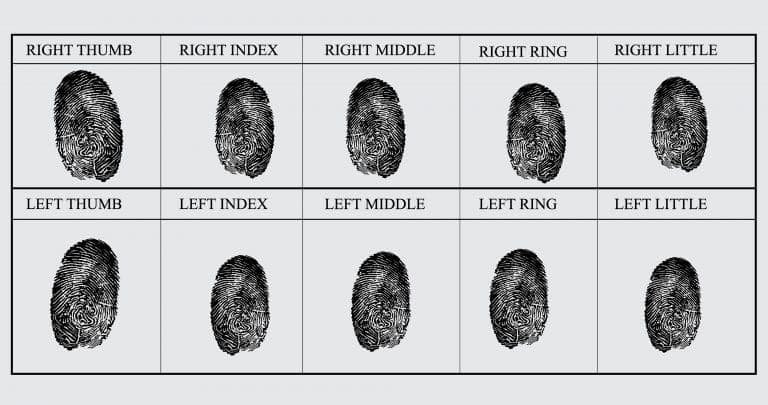
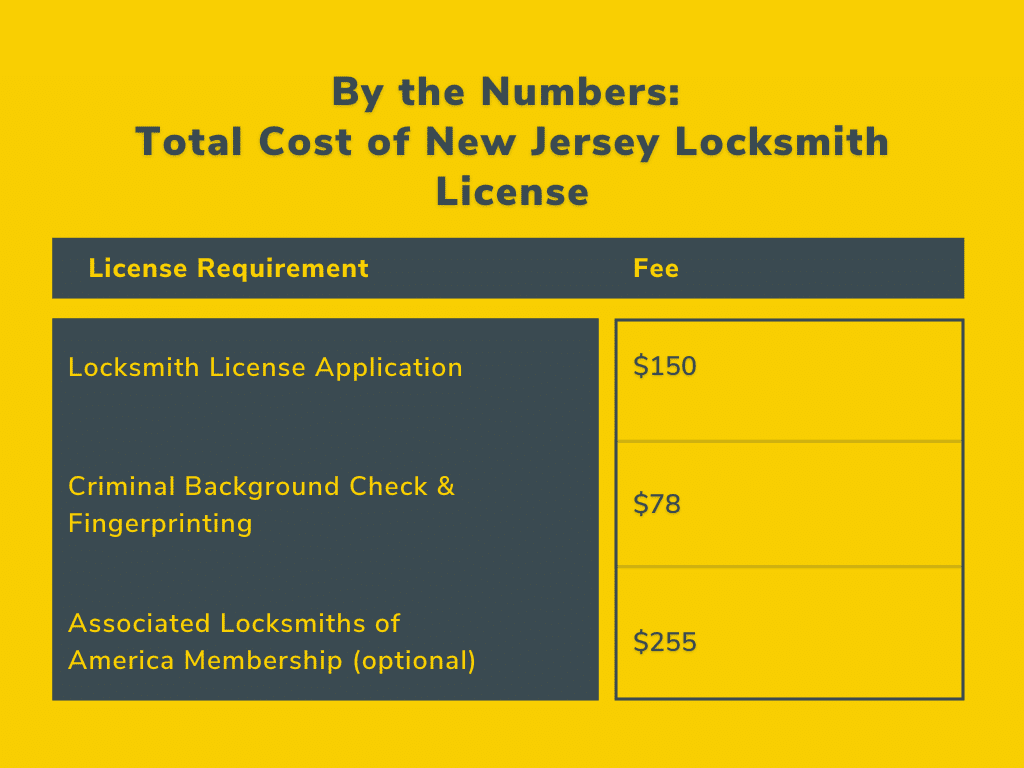
The NJDCA will conduct a background check on applicants and will provide fingerprinting services on location for a fee of $78.

What criminal history can get you disqualified?

You may be denied a locksmith license if, in the 10 years prior to applying, you have:

  • Been convicted of crimes related to locksmithing

  • Been convicted of a first, second, or third-degree offense

  • Failed to pay child support

If you have a criminal past, you will need to provide details, dates, and names of the parties involved in any offenses.
Finger Prints

3. Pass a locksmith licensing exam.

The locksmith examination must be completed with the Board of Examiners of Electrical Contractors.

How to pass your New Jersey locksmith licensing exam?

Aside from the information you learn on the job or at school, you will want to refresh your knowledge with practice tests so you can ace the exam on your first try. This is where online learning programs, such as the Associated Locksmiths of America (ALOA), can really give you a leg up. ALOA is a membership organization for locksmiths that aims to help you build your skillset and knowledge, prepare you for state examinations with tailored practice tests, and provide courses for certification.

By joining the organization (for a fee), you will have access to some of the best online training materials (e.g., books, DVDs, courses, webinars, and more) to prepare for your New Jersey licensing exam.

Where can you study locksmithing?

Looking to become a certified locksmith? Use our free online tool to find locksmith training schools by state and compare available programs. Explore detailed course information, certification requirements, and start your career journey with the right training.

Associated Locksmiths of America — certification, test preparation, and practice.

Taking A Test

4. Pay application fee.

The New Jersey locksmith licensing exam requires the payment of a non-refundable $150 application fee.

5. Submit your application.

Locksmith license applicants should print, complete, and mail or deliver the application forms to the following address:

Fire Alarm, Burglar Alarm, and Locksmith Advisory Committee

PO Box 45042

Newark, New Jersey 07101
By The Numbers The Total Cost Of Getting Your Locksmith License In New Jersey

Start Your Locksmith Career in New Jersey

After studying for and passing your exam, you'll absolutely need to be aware of the latest technology necessary for booking online jobs, tracking inventory, dispatching techs, invoicing, and more. Begin with Workiz 's Locksmith Management and Scheduling Software, which can perform all these tasks to help you stay productive, take on bigger projects, cater to more clients, and ultimately make more money.

It may not be in your job description as a locksmith, but trust us, if you do not plan to adopt digital business management tools to speed things up, you will end up wasting time that could have been spent on more customers. Don't believe us? Start a free trial of Workiz today.

Where can I find information about Locksmith licenses in other states?

Frequently asked questions

  • Yes, New Jersey requires locksmiths to obtain the appropriate license through the state's Fire Alarm, Burglar Alarm, and Locksmith Advisory Committee before performing regulated locksmith services.

    • Check eligibility: Applicants must be at least 18 years old and have a high school diploma or equivalent.

    • Meet experience requirements: Document qualifying locksmith work experience or an accepted apprenticeship.

    • Complete background screening: Submit the required information for a criminal background check and fingerprinting.

    • Apply through the state: Use the official New Jersey Division of Consumer Affairs to review licensing requirements and application forms.

    Once you understand the licensing process, explore Workiz's guide on how to start a locksmith business to prepare for launching your services.

  • You’ll be required to pay $150 non-refundable application fee and a $78 fingerprinting fee, totaling $228 before training, examination, insurance, or other expenses.

    • Budget for application costs: Account for the state application fee and required background screening.

    • Plan for training expenses: Include apprenticeship costs, study materials, and professional courses where applicable.

    • Consider business insurance: Locksmith business owners should budget for the required liability coverage.

    • Verify current fees: Confirm payment amounts and accepted payment methods with the licensing authority before submitting your application.

    Review the official New Jersey licensing applications for current forms and fee instructions, and consider the startup expenses outlined in Workiz's locksmith business guide.

  • Applicants can prepare for the New Jersey locksmith licensing examination by combining practical locksmith experience with structured study, technical training, and practice tests.

    • Review essential skills: Study lock installation, rekeying, troubleshooting, and locksmith safety procedures.

    • Use professional resources: Explore courses and examination preparation materials from the Associated Locksmiths of America (ALOA).

    • Practice regularly: Take sample examinations to identify technical subjects that need additional study.

    • Organize documentation: Prepare records of employment, apprenticeship training, and qualifications before applying.

    To build practical expertise alongside exam preparation, review the essential locksmith tools every technician needs.

  • After obtaining the required license, locksmith business owners should establish compliant business operations, organize technician workflows, and implement reliable systems for scheduling, customer management, and billing.

    • Confirm business requirements: Maintain applicable insurance, licensing records, and other required documentation.

    • Create service procedures: Standardize how technicians handle emergency lockouts, rekeying, installations, and customer verification.

    • Organize dispatching: Establish a process for prioritizing emergency requests and assigning available technicians.

    • Track business performance: Monitor job completion times, expenses, revenue, and customer satisfaction.

    Applying field service dispatching best practices can help newly licensed locksmith businesses reduce delays and manage growing demand.

  • Workiz helps locksmith businesses coordinate scheduling, dispatching, customer information, invoicing, and payments through a centralized field service management platform.

    • Schedule appointments: Organize residential, commercial, and automotive locksmith service calls.

    • Dispatch technicians: Assign jobs and coordinate field teams as new requests arrive.

    • Manage customer records: Keep service details and customer information accessible.

    • Streamline billing: Create invoices and manage payment collection after completing jobs.

    Explore Workiz locksmith management software to see how a newly licensed business can organize operations as its customer base grows.

  • Yes, Workiz supports locksmith businesses with scheduling, technician coordination, mobile job information, invoicing, and payment collection for both emergency and routine service calls.

    • Prioritize urgent requests: Coordinate emergency lockouts and dispatch technicians based on availability.

    • Keep job details accessible: Give technicians access to relevant customer and appointment information while in the field.

    • Generate digital invoices: Prepare and send invoices after completing locksmith services.

    • Simplify payment collection: Reduce manual paperwork and keep transaction records organized.

    With the Workiz mobile app, locksmith technicians can manage job information and administrative tasks while working on-site.