Why reviews are essential in HVAC marketing
Online reviews aren’t just nice-to-haves; they’re game-changers for HVAC advertising marketing. In an industry where services involve entering homes and handling critical systems like heating, ventilation, and air conditioning, potential customers rely heavily on social proof. According to a study by BrightLocal, 87% of consumers read online reviews for local businesses in 2023, and for service-based industries like HVAC, this number is even higher.
The impact on visibility and SEO
Positive reviews directly influence your search engine rankings. Google prioritizes businesses with a high volume of recent, authentic reviews on its search results and Google Maps. This means more visibility for your HVAC marketing efforts without pouring money into paid ads. For instance, a business with 50+ reviews often outranks competitors with fewer, even if the latter has a more polished website.
In HVAC digital marketing, reviews also feed into local SEO. Platforms like Google My Business (now Google Business Profile) use review data to match your services with searches like “emergency HVAC repair near me.” Integrating keywords from reviews naturally into your HVAC marketing plan can amplify this effect.
Building trust and driving revenue
Trust is the cornerstone of how to market your HVAC business. A single negative review can deter prospects, but a stream of 5-star HVAC business reviews reassures them of your reliability. Research from ReviewTrackers shows that businesses with 4+ star ratings see up to 20% more conversions. For HVAC contractors, this translates to more calls for tune-ups, installations, or repairs.
Moreover, reviews influence pricing perception. Customers are willing to pay a premium for highly rated services, knowing the value outweighs the cost. By focusing on get more HVAC reviews, you’re not just collecting feedback—you’re investing in long-term revenue growth.
Increased bookings: 68% of consumers trust online reviews as much as personal recommendations (Nielsen).
Competitive edge: Top-rated HVAC firms report 15-25% higher lead generation.
Customer loyalty: Reviewed businesses see repeat business rates climb by 10-15%.
To illustrate the revenue impact, consider this simple table:
Review rating | Average monthly leads | Revenue boost |
|---|---|---|
Below 3 stars | 10-20 | Baseline |
3-4 stars | 25-40 | +20% |
4+ stars with 50+ reviews | 50+ | +50% or more |
Source: Adapted from industry benchmarks by HomeAdvisor and Angi. Read the full BrightLocal study for more insights.
Understanding the online review landscape for HVAC businesses
Before diving into tactics, it’s vital to map out where your HVAC business reviews live. The digital ecosystem for reviews is vast, but focusing on key platforms maximizes your HVAC contractor marketing ROI.
Key review platforms
Google Business Profile is non-negotiable for local HVAC marketing. It powers the knowledge panel in search results and integrates seamlessly with Google Maps. Encourage reviews here to boost local pack rankings.
Yelp and Angi’s List (formerly Angie’s List) are staples for home services. Yelp’s algorithm favors active responders, while Angi verifies reviews for authenticity, appealing to serious homeowners.
Facebook and Nextdoor offer community-driven feedback, ideal for neighborhood-based HVAC marketing ideas. Don’t overlook industry-specific sites like HomeAdvisor or Thumbtack, where reviews directly influence lead quality.
Google: Best for SEO and local search.
Yelp: Influences 30% of local decisions.
Angi: Trusted for vetted pros.
Social Media: Builds personal connections.
Common challenges in collecting reviews
Many HVAC pros struggle with low response rates or fake review fears. The good news? With the right HVAC digital marketing approach, you can overcome these. Remember, platforms like Google prohibit incentivizing reviews, so authenticity is key.
For further reading on platform guidelines, visit Google’s Review Policy.
Proven strategies to get more reviews from existing clients
Now, let’s get tactical. These HVAC marketing ideas focus on turning post-service satisfaction into actionable feedback. Implement them as part of your HVAC marketing plan to see steady growth in how to get more reviews from clients.
Timing is everything: When to ask for reviews
The sweet spot for requesting a review is right after a successful job. Send a follow-up email or text within 24-48 hours while the experience is fresh. For HVAC services, this could be post-installation or after resolving an AC breakdown.
Avoid asking during the service—focus on delivering excellence first. Use phrases like, “We’re glad we could help keep your home comfortable. If you have a moment, your feedback on Google would mean the world to us.”
Personalized follow-up tactics
Make it personal. Reference the specific service: “How did the new furnace installation go for you last week?” This boosts response rates by 30%, per customer service studies.
Email campaigns: Use tools like Mailchimp to segment clients by service type.
SMS reminders: Short and direct; 98% open rate.
Invoice inserts: Include a QR code linking to your review page.
For HVAC contractor marketing, train your team to mention reviews verbally at job completion, but keep it optional to avoid pressure.
Leveraging incentives ethically
There’s no compliant version of paying for reviews. Yelp, Google, and the FTC prohibit offering anything of value in exchange for one – that includes discounts, free filters, gift cards, branded swag, and raffle or prize entries, disclosed or not. A 10%-off coupon for reviewers will get your reviews filtered or removed, and can put you on the wrong side of an FTC action.
Table of ethical incentive ideas:
Tactic | What it looks like | Verdict |
|---|---|---|
Thank-you note | Handwritten card with a review link, given to every customer | Allowed |
Automated request | Same message, same link, triggered when the job closes | Allowed |
Public reply | Responding to reviews, positive and negative | Allowed |
Future discount | “10% off your next service for reviewed clients” | Prohibited |
Raffle or prize entry | Chance to win swag or a free filter kit | Prohibited |
Satisfaction screening | Survey first, review link only to happy responders | Prohibited |
Creating review-friendly service experiences
Proactive HVAC marketing starts with service. Educate clients on your process, communicate delays, and follow up on satisfaction. Send your review request to every customer on the job list, whatever you expect them to say.
Automating review collection for efficiency
In a busy HVAC business, manual follow-ups drain time. Automation streamlines get more HVAC reviews, fitting seamlessly into your HVAC digital marketing toolkit.
Tools and software recommendations
Start with Google Business Profile’s built-in review request feature. For broader automation, use platforms like Birdeye or Podium, which integrate SMS/email and track responses.
Birdeye: AI-driven review management; starts at $299/month.
Podium: Webchat and review widgets; ideal for contractors.
Review trackers: Multi-platform monitoring.
The most efficient option? Utilize your field service management software, like Workiz, to trigger reviews automatically post-job. This allows you to create HVAC-specific workflows without needing separate, expensive integrations.
Setting up automated workflows
Step-by-Step Guide:
This setup can increase review volume by 40-60% with minimal effort, enhancing your HVAC advertising marketing.
Integrating with your website
Add a dedicated reviews page to your site with embedded widgets from Google or Yelp. Use calls-to-action like “Share Your Experience” buttons on service completion pages.
For advanced HVAC marketing ideas, embed review forms via Typeform, routing positives to public sites. Explore Podium’s review automation features.
Best practices and common pitfalls in HVAC review marketing
To sustain how to get more reviews from clients, adhere to these guidelines while avoiding traps.
Encouraging quality over quantity
Focus on genuine 5-star stories. Respond to all reviews—thank positives and address negatives professionally. This shows accountability and can turn detractors into advocates.
Best Practice: Aim for detailed reviews by prompting specifics: “What did you like about our technician’s expertise?”
Handling negative reviews gracefully
Negatives happen; 1 in 10 services might yield criticism. Respond within 24 hours: Apologize, offer solutions, and invite offline resolution. This mitigates damage and showcases customer service.
Do: Be empathetic and solution-oriented.
Don’t: Argue or delete (against policies).
Legal and ethical considerations
Comply with FTC guidelines—no fake reviews or undisclosed incentives. For HVAC contractor marketing, transparency builds lasting trust.
Common mistakes table:
Mistake | Impact | Solution |
|---|---|---|
Ignoring negative feedback | Reputation damage | Respond promptly |
Over-automating without personalization | Low engagement | Add custom touches |
Not monitoring reviews | Missed opportunities | Use alerts |
Learn more about ethical review practices at the FTC Endorsement Guides.
Measuring the success of your review strategy
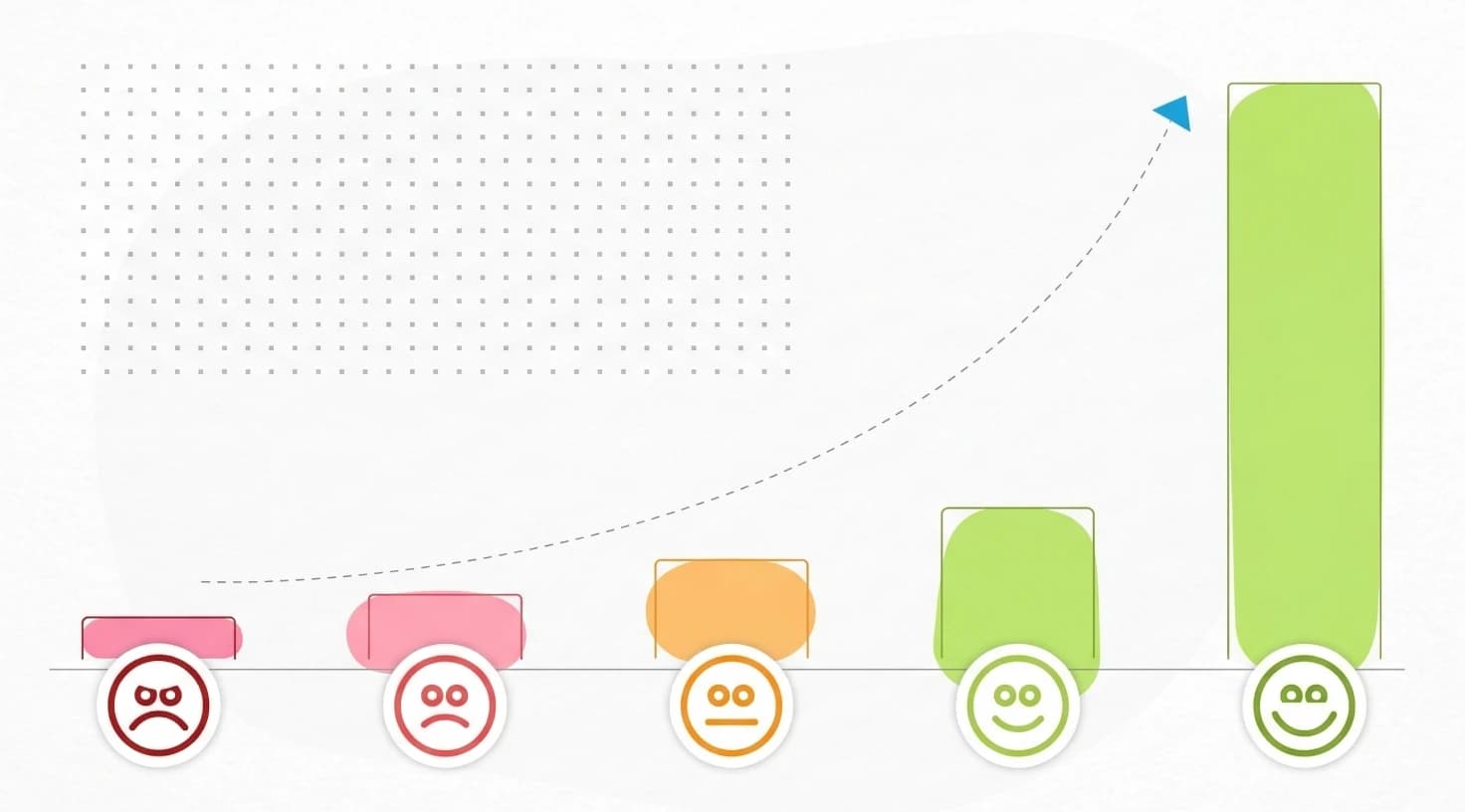
Track progress to refine your HVAC marketing plan. Key metrics include review volume, average rating, and response rate.
KPIs to monitor
Use Google Analytics and platform dashboards:
Review growth: Aim for 5-10 new reviews monthly.
Conversion lift: Track leads from review-heavy pages.
Sentiment analysis: Tools like Mention gauge positivity.
ROI Calculation: (Additional Revenue from Leads) / (Time/Tools Cost). Many see payback in 3-6 months.
Adjusting based on data
Automation is powerful, but it's not a “set it and forget it” magic wand. To maximize results, use your data to run small experiments (A/B tests). For instance, if you notice that SMS requests have a 30% response rate while emails lag at 5%, configure your software to prioritize text messages.
What to look for during your quarterly audit:
Channel performance: Does your audience prefer a quick SMS or a detailed email?
Timing tweaks: Try sending the request 1 hour after the job versus 24 hours. Which one gets more clicks?
Message freshness: If response rates drop, it might be time to rewrite your request template to sound more personal.
By consistently fine-tuning your approach based on real data, you transform a static review strategy into a dynamic growth engine. This proactive mindset doesn’t just increase your review count; it ensures you’re always engaging customers in the most effective way possible. Ultimately, these small quarterly adjustments compound over time, securing your position as the top-rated HVAC provider in your area.