What is HVAC billing software?
HVAC billing software is a specialized financial tool designed to bridge the gap between complex field repairs and real-time revenue collection. Unlike generic accounting apps, dedicated HVAC invoicing software automates the transition from a technician's mobile device to your office's bottom line. This ensures that parts tracking, labor hours, and dispatching costs are instantly reflected in every invoice.
Key benefits of cloud-based HVAC billing
By leveraging cloud-based HVAC billing, contractors can eliminate the "paperwork lag" that typically delays payments by 5–10 days. Whether you are managing high-volume residential calls or complex commercial contracts, the right platform acts as an all-in-one estimation and billing app.
A modern system provides three critical pillars for your business:
On-site Revenue Capture: Secure hvac payment processing directly at the job site through mobile billing for HVAC techs.
Operational Integrity: Seamless QuickBooks integration for HVAC to prevent double-entry errors and ensure a paperless HVAC business workflow.
Automated Collections: Using automated HVAC invoicing to recover overdue accounts without manual office follow-ups.
Quick comparison: Top HVAC invoicing software
Software | Best for | Standout feature | Mobile capabilities |
Workiz | High-growth teams | Workiz Pay + SMS automation | Fullmobile billing for HVAC techs |
Housecall Pro | Solo operators | Simple user interface | Basicautomated HVAC invoicing |
ServiceTitan | Enterprises | Deep commercial analytics | HVAC estimation and billing app |
FieldEdge | QuickBooks fans | Real-time accounting sync | HVAC billing systems connectivity |
The Top 8 HVAC billing solutions: A curated review
With countless options for HVAC billing software, selecting the right one can feel overwhelming. We’ve evaluated dozens based on features like mobile accessibility, automation, and integration capabilities, focusing on tools that drive efficiency for contractors like you. Our top picks prioritize workflow streamlining and user-friendly designs. Leading the pack is Workiz, a powerhouse built for field service pros in HVAC and beyond.
#1 Workiz: The gold standard for HVAC billing and field service
Workiz stands out as the premier choice for HVAC contractors seeking comprehensive, scalable billing solutions. Designed specifically for high-growth service businesses, it excels in "speed-to-pay" features that get you compensated faster without sacrificing accuracy or customer satisfaction.
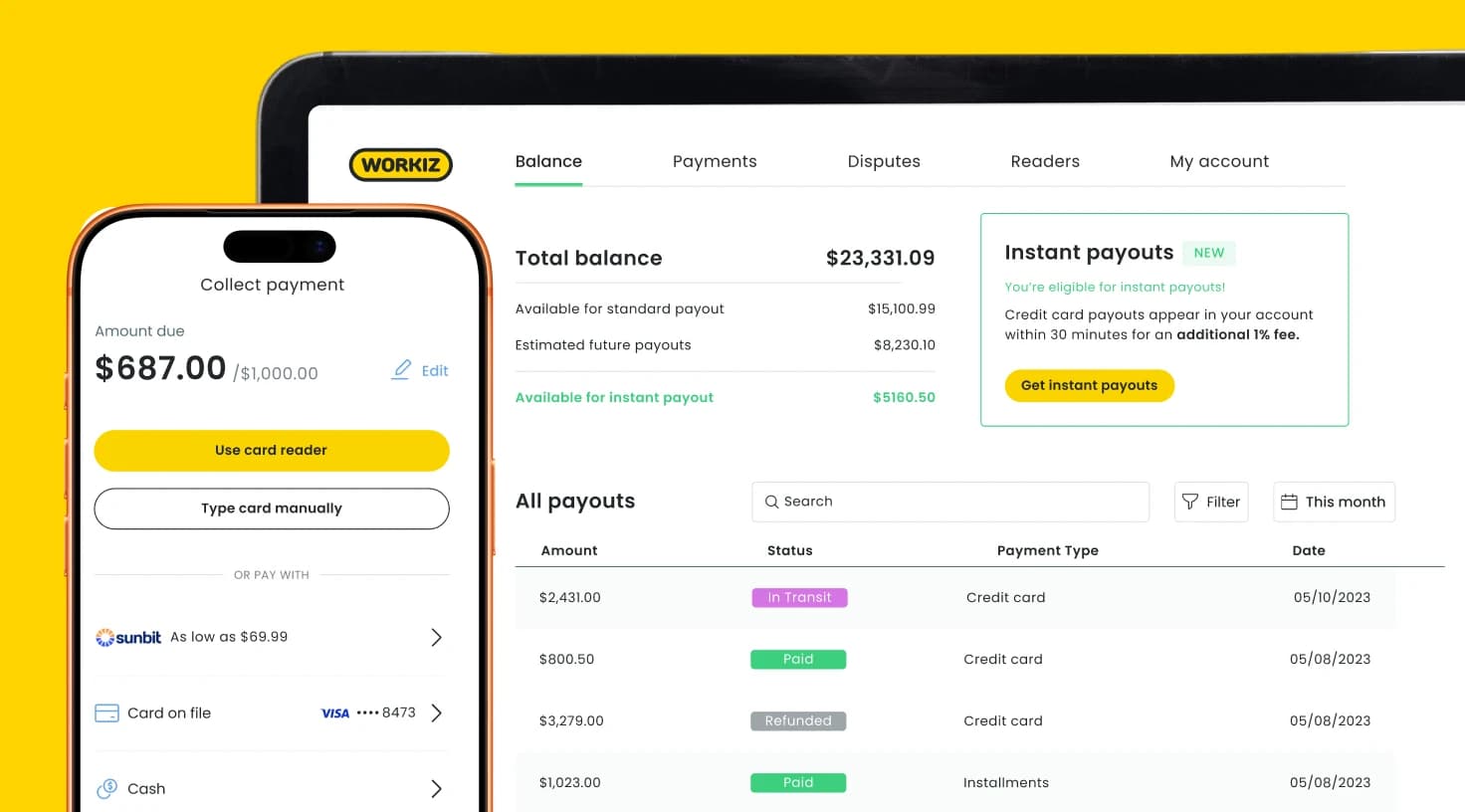
At its core, Workiz offers seamless HVAC payment processing through Workiz Pay. This allows techs to accept credit cards, ACH, and even financing options right on-site via mobile devices. This eliminates the wait for office processing and supports a true paperless HVAC business workflow.
Why Workiz is a game-changer for field techs:
Rapid on-site invoicing: Imagine your tech completing a furnace installation, snapping photos, and generating an invoice with precise labor and parts tracking in under five minutes through their mobile billing for HVAC techs app.
Customer trust via SMS: Automated updates for job status and payment confirmations reduce no-shows—a feature crucial for residential HVAC billing software users.
Seamless accounting: Its QuickBooks integration for HVAC is robust, automatically exporting invoices and payments to keep your books pristine.
Recurring revenue: For automated HVAC invoicing, Workiz shines with customizable templates for maintenance contracts, a staple in commercial HVAC invoicing tools.
As a leading hvac estimation and billing app, Workiz is ideal for growing teams looking for a scalable, cloud-based HVAC billing solution that handles everything from quick residential repairs to large-scale commercial contracts with real-time inventory tracking.
Other notable HVAC billing solutions
#2 Housecall Pro: Simple interface for smaller HVAC teams
Housecall Pro provides a straightforward approach to field service management billing, with basic mobile billing for HVAC techs and scheduling tools. Additionally, it's suitable for solo operators or small crews handling residential jobs, offering quick invoice generation and payment collection. While it lacks the depth of enterprise features, its ease of use helps with basic automated HVAC invoicing.
Best for: A solid residential HVAC billing software option for contractors who need a simple, user-friendly interface.
#3 ServiceTitan: Enterprise-level tool for large-scale operations
Aimed at bigger HVAC companies, ServiceTitan handles complex commercial HVAC invoicing tools and projects with robust reporting and dispatching. It supports HVAC estimation and billing apps for detailed quotes. Furthermore, its setup can be involved, making it better for teams already managing high volumes rather than startups.
Best for: High-volume enterprises requiring advanced field service management billing and deep analytical reporting.
#4 FieldEdge: Accounting-first solutions for residential service
FieldEdge emphasizes connectivity with QuickBooks, allowing smooth data flow for HVAC billing systems. Specifically, it's functional for tracking jobs and invoicing, particularly in residential HVAC billing software settings, though it may require add-ons for full mobile billing for HVAC techs functionality.
Best for: Office-centric teams looking for traditional hvac service billing solutions with a heavy focus on accounting synchronization.
#5 SimPRO: Project management with inventory handling
SimPRO caters to contractors needing advanced project tracking alongside billing, including inventory management for parts-heavy HVAC jobs. In addition, its HVAC service billing solutions are solid for commercial HVAC invoicing tools and work, but the learning curve might challenge smaller teams.
Best for: Complex, inventory-intensive projects requiring a deep hvac estimation and billing app experience.
#6 mHelpDesk: Advanced customization for service pros
mHelpDesk offers a robust set of hvac service billing solutions for contractors needing more than a basic template. It excels in consolidating scheduling and invoicing into one field service management billing platform. While its commercial HVAC invoicing tools allow for deep customization, the initial setup is more complex than standard hvac billing systems for small business.
Best for: Teams requiring a highly tailorable hvac estimation and billing app to match specific internal workflows.
#7 Service Fusion: All-in-one for mid-sized contractors
This platform combines dispatching, invoicing, and CRM features tailored for service pros. For HVAC payment processing, it includes options for on-site collections. Consequently, advanced automated HVAC invoicing may need additional configuration.
Best for: Mid-sized teams seeking a balanced field service management billing system with built-in customer management.
#8 RazorSync: Mobile-first for techs on the go
RazorSync focuses on mobile accessibility for field techs, with quick invoicing and GPS tracking. It's useful for residential HVAC billing software needs but falls short in deep QuickBooks integration for HVAC or other complex systems compared to more comprehensive platforms.
Best for: Small field teams needing basic mobile billing for HVAC techs and real-time location tracking.
Among these, Workiz consistently ranks highest for its tailored features that address the unique needs of HVAC contractors, from quick residential fixes to large commercial installs. When evaluating, consider how each aligns with your current workflow and growth plans.
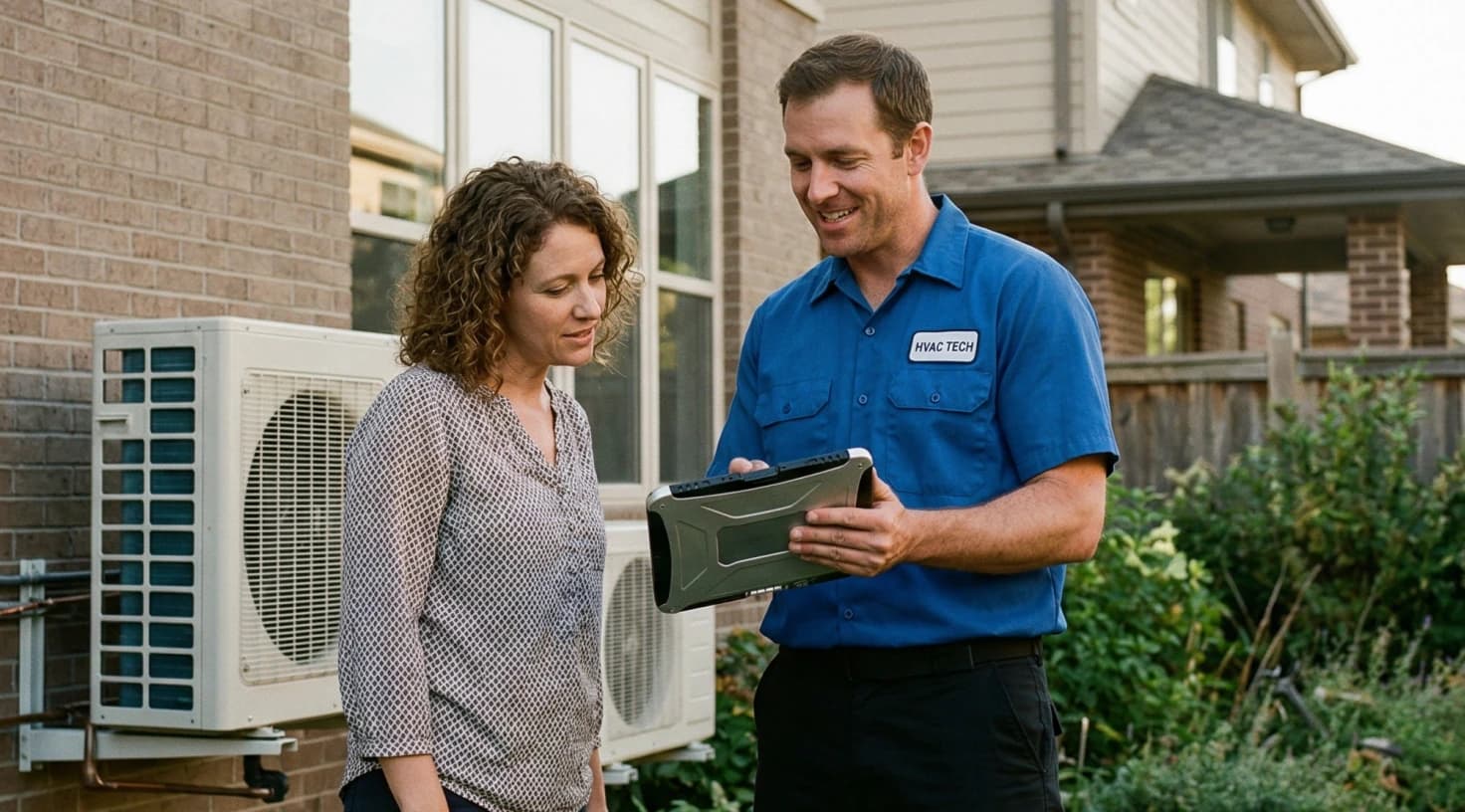
Expert billing tips for optimizing cash flow in your HVAC business
First, let's focus on foundational strategies. These can immediately improve your financial health before you explore software options. As HVAC contractors, you deal with seasonal demands, unexpected repairs, and tight margins—poor billing practices can erode profits quickly.
Analyzing your business efficiency
As shown in the chart above, manual processes and administrative “leakage” can consume over 62% of your weekly capacity. Furthermore, these inefficiencies directly impact your bottom line. Here are four proven tips to reclaim those hours and enhance efficiency, tailored specifically for your industry.
1. Implement on-the-spot invoicing for faster payments
One of the biggest pain points for HVAC business owners is the delay between completing a job and sending an invoice. Traditional methods often require returning to the office to generate paperwork. This can take days and lead to late payments. On-the-spot invoicing—creating and sending bills directly from the field—changes that dynamic entirely.
With mobile billing for HVAC techs, your technicians can input job details, parts used, and labor hours right after service. This not only ensures accuracy but also allows customers to review and pay immediately via integrated hvac payment processing options. Studies show that instant invoicing can reduce payment times by up to 50%, improving your cash flow and allowing you to reinvest in inventory or hire more staff. For residential HVAC billing software, this feature is invaluable during peak seasons when quick turnarounds keep your schedule packed.
Why real-time billing matters
2. Set up automated payment reminders to minimize overdue accounts
Late payments are a silent killer for HVAC contractors. They tie up capital needed for supplies, vehicles, and payroll. Manual follow-ups via phone or email are time-consuming and often inconsistent. Automated payment reminders, powered by HVAC invoicing software, send polite nudges via SMS or email at predefined intervals—say, 7 days, 14 days, and 30 days post-invoice.
This HVAC service billing solution not only recovers funds faster but also professionalizes your image. Customers appreciate the gentle reminders, and you avoid awkward collection calls. For commercial HVAC invoicing tools, where larger invoices are common, automation can prevent small oversights from becoming major cash crunches. Integrate this with your field service management billing system to track everything from one dashboard.
Reminder stage | Timing | Message type | Expected outcome |
|---|---|---|---|
Initial follow-up | 7 days | 80% payment rate | |
Gentle nudge | 14 days | SMS | Reduce delinquencies by 30% |
Final notice | 30 days | Both | Full collection in 90% of cases |
3. Transition to a paperless workflow to cut hidden costs
Paper-based systems in HVAC businesses lead to lost invoices, misplaced time sheets, and errors in tracking parts and labor—costs that add up quickly. A paperless HVAC business workflow, enabled by cloud-based HVAC billing, digitizes everything from estimates to payments, reducing administrative overhead by up to 40%.
Imagine scanning a faulty thermostat photo directly into your HVAC estimation and billing app, auto-populating the invoice, and emailing it to the customer—all without printing a single sheet. This not only saves on paper and storage but also minimizes “lost” expenses from undocumented jobs. For small businesses, HVAC billing systems for small business that go paperless mean less time on data entry and more on revenue-generating service calls.
4. Leverage integrations for seamless financial management
Disconnected tools create silos in your HVAC operations, from job scheduling to accounting. QuickBooks integration for HVAC software bridges this gap, automatically syncing invoices, payments, and expenses. This ensures your books are always up-to-date, simplifying tax prep and financial reporting.
For growing contractors, automated HVAC invoicing tied to your accounting system prevents double-entry errors and provides real-time insights into profitability per job. Whether handling residential or commercial work, this integration turns billing into a strategic tool for business growth.
Conclusion: Streamline your HVAC business for long-term success
Mastering HVAC billing and invoicing isn't just about software—it's about reclaiming time, reducing errors, and accelerating payments to fuel your business's growth. Overall, by adopting on-the-spot invoicing, automated reminders, paperless workflows, and smart integrations, you'll optimize cash flow and focus on what you do best: delivering top-notch HVAC services.
From our review, Workiz emerges as the definitive leader in HVAC billing software, offering unmatched efficiency for field service pros. As the industry evolves toward digital-first operations, investing in the right tools now will position your business for future demands like AI-driven forecasting and expanded service lines.
Take the first step today —audit your current process, trial a solution, and watch your profitability soar. Your customers, team, and bottom line will thank you.