1. 'Ask Maps': Google Replaces Legacy Q&A with AI Assistant
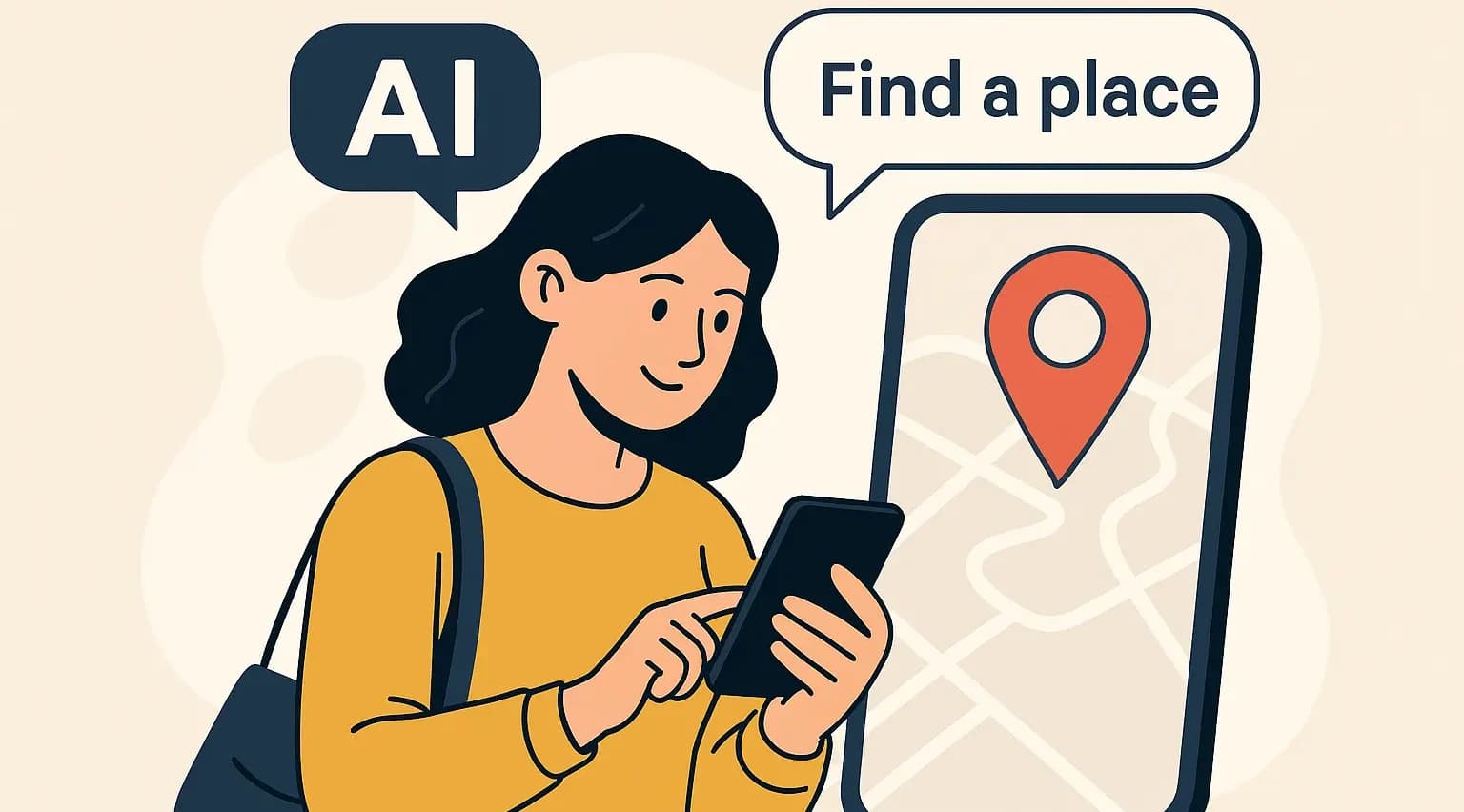
The traditional Google Q&A section on Maps is being phased out. In its place is "Ask Maps", an AI-driven tool that provides smart, real-time answers to user questions using data from across the web.
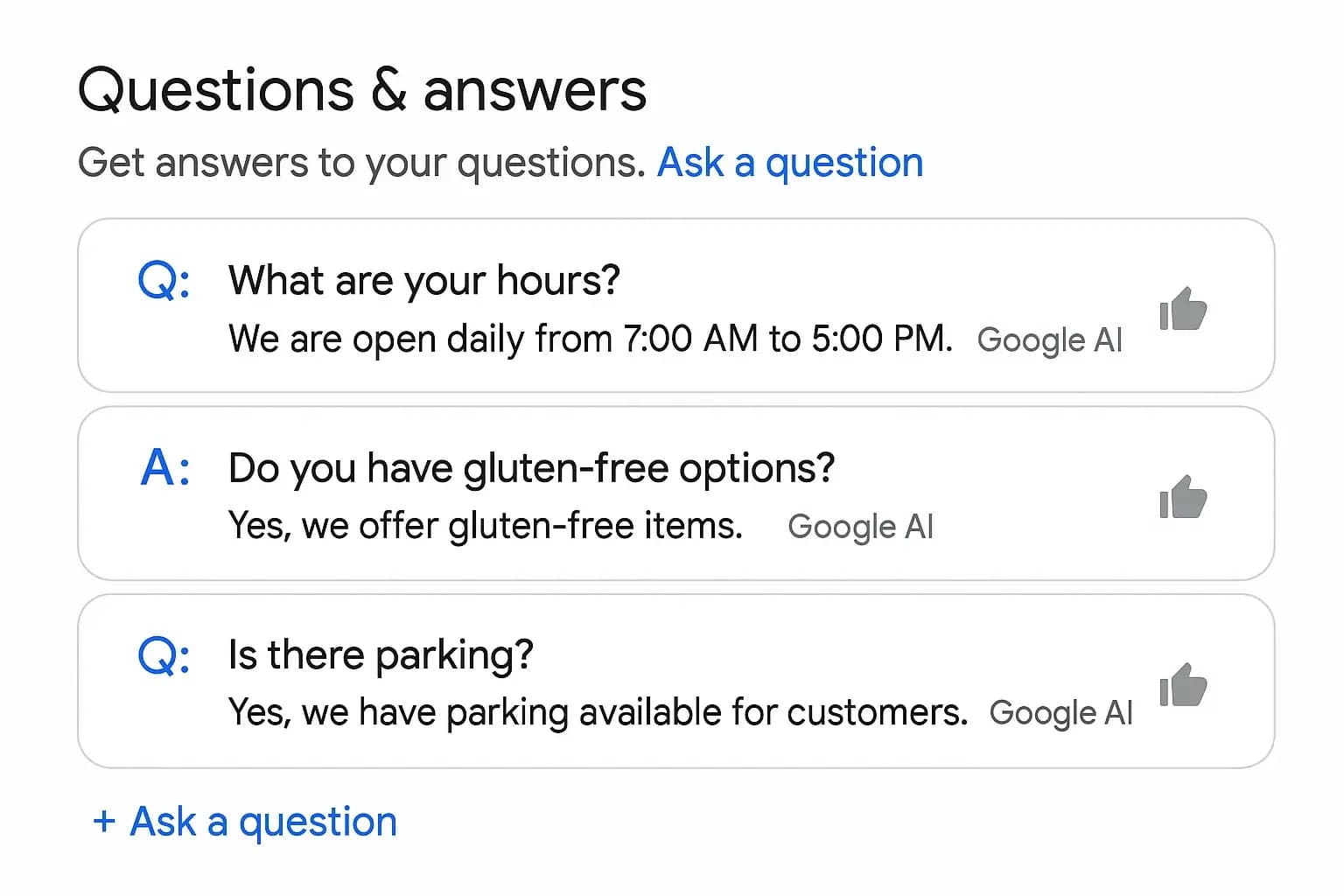
Old QA structure on Google My Business page:
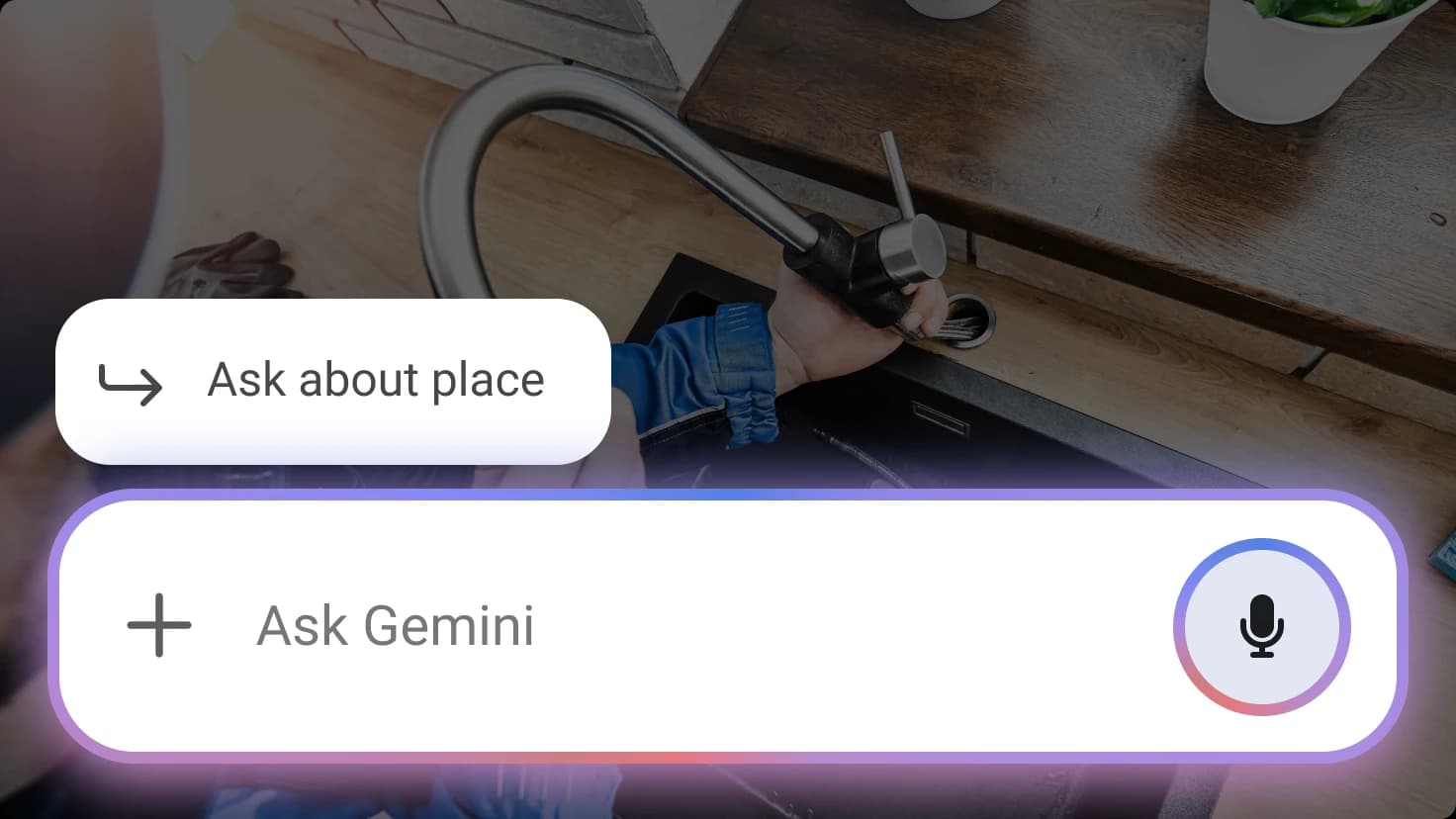
2. "Ask About Place" Appears Within Business Profiles
As part of Google's new AI-driven updates, a smart search box called "Ask about place" now appears on select Google Business Profiles in Maps. Users can type in their own questions or choose from AI-suggested prompts such as:
"Is it quiet inside?"
"Do they offer emergency service?"
"Is this location wheelchair accessible?"
What makes this evolution so powerful isn't just the feature itself — it's what it represents.
We're moving into a world where search engines are becoming "speech engines." Instead of typing keyword-stuffed phrases and scanning pages of links, users can now speak or type natural questions in their own language, and AI systems like Gemini will interpret the intent and deliver precise answers — instantly.
This marks a major shift: 🔍 From searching for information 💬 To asking for answers
It eliminates the endless scroll, saves time, and makes digital interaction feel more human. Whether you’re on a phone in the car, a smart speaker at home, or your laptop in another language — you'll get tailored, real-time data from sources you trust.
The importance of AI in promoting your business online
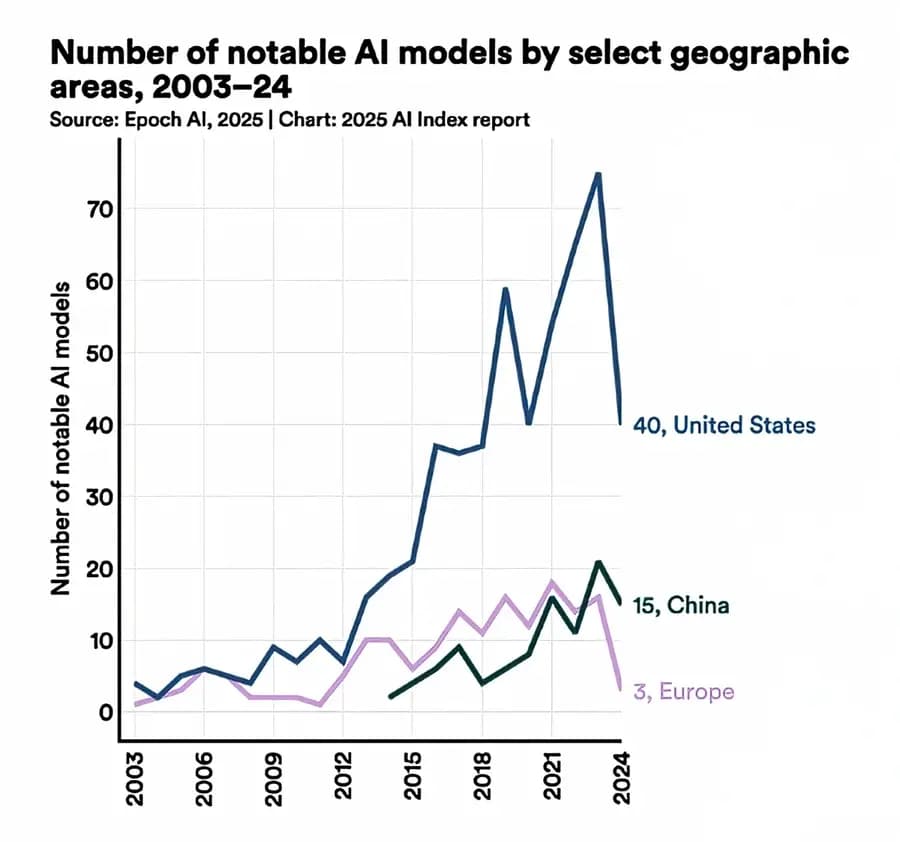
Artificial Intelligence (AI) is crucial for promoting businesses online by enabling personalized marketing, optimizing ad campaigns, and enhancing customer experiences through automation and data-driven insights. By leveraging AI, businesses can improve engagement, streamline operations, and stay competitive in the digital landscape. 5 Stats:
80% of marketers using AI report increased customer engagement (Salesforce, 2023).
AI-driven advertising can boost campaign ROI by up to 30% (McKinsey, 2022).
64% of businesses using AI chatbots see improved customer satisfaction (Gartner, 2024).
AI-powered personalization drives 10-15% higher conversion rates (Forbes, 2023).
85% of e-commerce businesses plan to invest in AI for marketing by 2025 (Statista, 2024).
The web is evolving into a conversation, and local businesses are right at the center of it.
3. How can I embed it on my website?
You don’t need to do anything special to embed/allow this feature on your Google My Business location page – but you can help to make sure that the information it presents is accurate and up to date. Gemini pulls information from ‘multiple trusted sources’ for example:
🖥️ Your Business Website Your site is the #1 data source you control. Gemini looks for structured and semantically rich content. A solid business website should include:
A clearly defined Home page with value propositions
A Services page outlining what you do, for whom, and where
A Contact page with address, phone number, and embedded Google Map
A Location page (if multi-location) with local schema markup
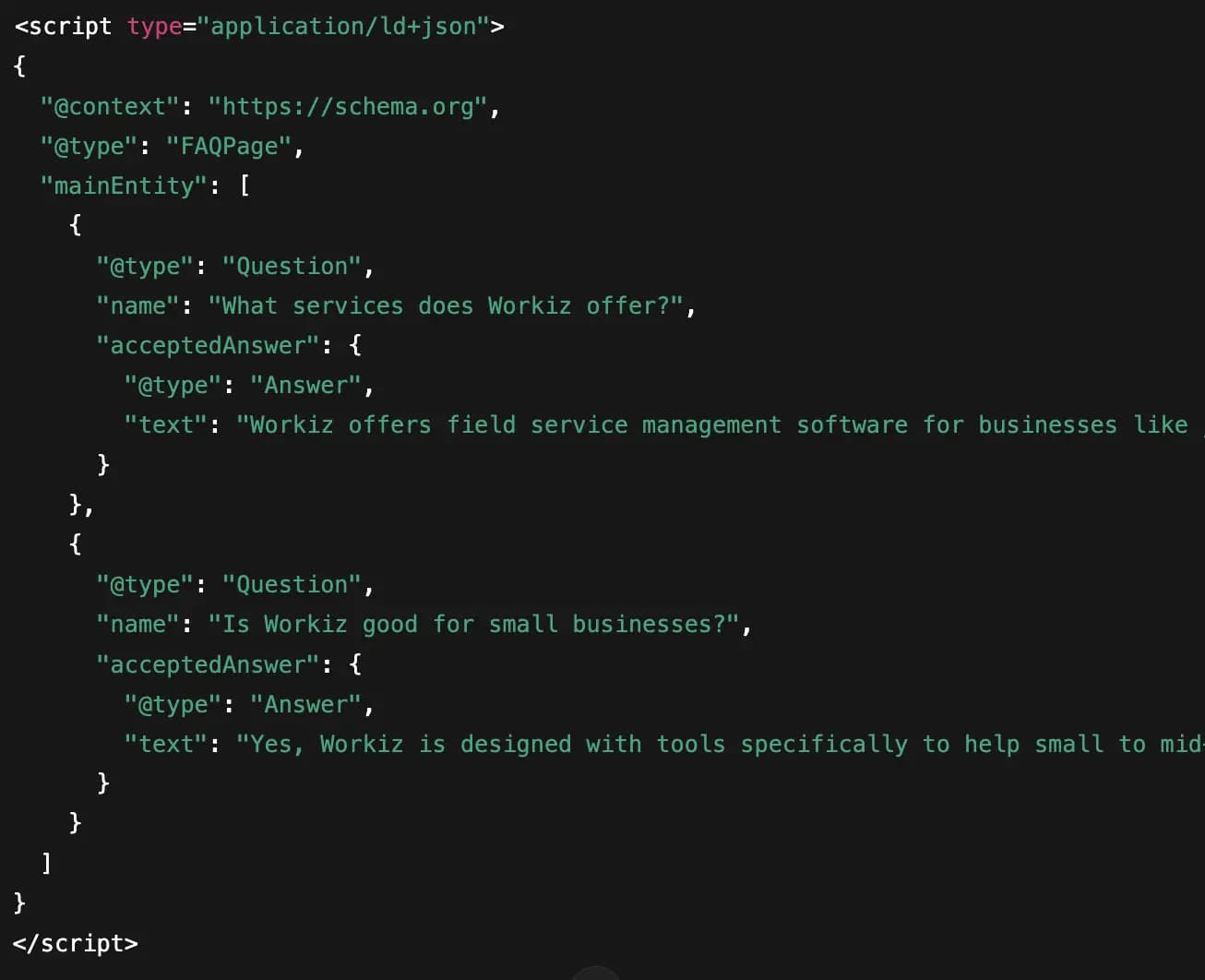
A Schema.org-defined FAQ page, ideally marked with structured data to help AI easily extract Q&A content
A Testimonials or Reviews page to highlight social proof
A Gallery or Portfolio page showing real work or results
A Blog or Resources section answering customer questions in long form
📍 Google Business Profile (GBP) Your Google Business Profile is the foundation of your local search presence and the primary data source Google uses to populate Maps, Search, and now Ask Maps responses. So the more reviews you collect, the more information Google has to answer questions for new leads.
Business name, address, and phone number (NAP)
Business hours (including holiday and special hours)
Categories and services
Photos, videos, and logos
Products or menu items (if applicable)
Posts and promotional updates
Google encourages owners to verify and optimize their GBP regularly. The more complete and active your profile, the more Gemini AI can pull from it. Adding attributes like "Veteran-led," or "Wheelchair accessible" also helps provide accurate answers to users asking those specific questions.
📅 Want to let customers book services directly from your Google listing? Check out our Reserve with Google integration to streamline your scheduling and boost conversions.
💬 Don't overlook the Questions & Answers and Messaging features either. These interactions may feed directly into Gemini's AI understanding and influence the quality and tone of responses.
🛠️ Tip: Treat your GBP as a living profile, not a one-time setup. Update images, respond to reviews, and post regularly to maintain freshness and relevance.
✅ Already working with Google Local Services? Learn how we partner with Google to help field service pros stand out in Maps and Search: Explore Workiz + Google Local Services
⭐ Reviews Google heavily relies on reviews — not just for reputation, but also as a source of facts. When customers leave a review, Google sometimes asks:
"What did you like about this business?"
"What services did you use?"
"Was this location clean, quiet, or family-friendly?"
"How long was your visit?"
These user-prefilled questions, combined with written review content, are parsed by AI to extract descriptive details that show up in search, summaries, and now in Ask Maps responses.So the more reviews you collect, the more information Google has to answer questions for new leads.
📲 Social Media Profiles When Google doesn't find enough data from your website or GBP, it looks to your brand's social media presence for additional context. Maintaining active, consistent, and professional profiles across these top 10 platforms helps reinforce your digital authority:
Facebook – Great for reviews, business updates, and messaging
Instagram – Ideal for visual proof and behind-the-scenes content
LinkedIn – Especially for B2B businesses or professionals
YouTube – Product demos, customer testimonials, and video SEO
X (Twitter) – Good for news, updates, and community engagement
TikTok – Relevant for Gen Z–focused or creative consumer brands
Pinterest – Great for design, lifestyle, fashion, or food-related businesses
Yelp – Must-have for restaurants, beauty, home services, and local retail
Trustpilot – Especially important for eCommerce and SaaS companies
Google Posts (via GBP) – Often underused, but feeds Gemini directly with timely updates
🔍 Pro Tip: Keep all profile info identical (name, address, phone number, etc.), and link back to your website to strengthen citation trust.
4. Not All Listings Are Eligible
The "Ask Maps" feature isn't universally available — yet. As of now, it's limited to the U.S. and is being selectively rolled out to certain business categories. Notably, several industries are excluded, including:
Healthcare providers
Legal services
Locksmiths and movers
Drug rehabilitation centers
Counseling and social services
Highly regulated industries (e.g., firearms, marijuana, dating services)
🔒 Why Are These Categories Excluded?
These industries often deal with sensitive, personal, or safety-critical information where accuracy is paramount. An AI-generated answer that is even slightly misleading — like giving outdated advice on medical care or wrongly recommending a legal service — could have serious real-world consequences.
Additionally, many of these categories are:
Highly regulated, subject to federal and local laws (e.g., HIPAA in healthcare)
Prone to scams or spam, especially locksmiths and moving companies, which are often targeted by bad actors
Ethically complex, where AI cannot provide reliable or context-sensitive answers (e.g., mental health services, legal outcomes)
For these reasons, Google is playing it safe by excluding or limiting AI features in these spaces — at least until it can guarantee higher reliability, trust, and transparency in how responses are generated.
5. Sometimes There Are No Answers
One of the most noticeable things about Ask Maps is that it’s not always able to help. When there isn't enough structured or trustworthy information online about a business, Gemini responds with a simple — and telling — message:
"There's not enough information about this place."
This isn't just a technical limitation — it's a missed opportunity.
📉 Why This Happens
Google’s AI depends on data. If your business doesn't have a well-structured website, an active Google Business Profile, consistent citations, and a presence across the web, then Gemini has nothing to work with. No data = no answer.
It's a reminder that in today's AI-powered world, content equals visibility.
📊 What's Likely Coming Next
As this feature matures, it's likely Google will begin offering analytics or insights to business owners, showing:
What kinds of questions users are asking
Which ones Gemini was able (or unable) to answer
How often people interact with your listing's Q&A
Gaps in your web presence that are blocking answers
Imagine being able to see that dozens of people asked "Is your salon kid-friendly?" — but Gemini didn't answer because your website never mentioned it. That's valuable marketing intelligence handed to you for free.
✅ Be Proactive: Don't Wait
Even if Ask Maps hasn't appeared on your profile yet — or isn't fully rolled out in your industry — the work you do today will power the answers shown tomorrow.
This is your chance to:
Anticipate customer questions
Address them clearly on your site and GBP
Add FAQs, service breakdowns, photos, and testimonials
Strengthen your brand voice across all digital touchpoints
🎯 Being attuned to your customers’ questions is no longer just good UX — it's now how AI decides whether you even show up in the conversation.
6. This Feature Ups the Importance of Local SEO
To show up in Ask Maps and actually benefit from it, your local SEO needs to be on point. That means optimizing:
Your business website
Your Google Business Profile content
How you gather and manage reviews
Images Matter More Than Ever Photos aren't just for show — AI uses them to understand your business’s physical layout, vibe, and credibility. Make sure to:
Upload original, high-resolution images
Include shots of both your storefront (outside) and workspace (inside)
Show your team, vehicles, equipment, and work in progress
Rename image files with descriptive names (e.g., inside-hair-salon.jpg)
Geotag your photos when you can
Social Media Isn't Just SocialIf people don't find the info they need on Google, they'll often reach out on social media. That includes:
Facebook Messenger
Instagram DMs
LinkedIn messages
Yelp questions
Trustpilot comments
Ensuring someone is monitoring and responding to these channels builds trust and signals credibility to Google as well.
7. Reviews Are Crucial
With the rollout of Ask Maps, Google's AI now summarizes both the best and worst aspects of a business directly in Maps — often without users ever clicking through to read full reviews. This means the tone, variety, and trustworthiness of your reviews directly shape your business’s AI-generated public reputation.
But it's not just about having reviews on your website — in fact, third-party review platforms are even more important. Gemini pulls from a variety of external, trusted review sources, which vary depending on your industry.
📣 Learn how to turn reviews into your biggest growth engine with this guide: Use Google Reviews to Get More Business
🌐 Top Review Platforms by Industry
Here are the most important third-party review sites your business should be visible on, beyond your own website:
Industry | Top Review Platforms |
|---|---|
Hospitality & Restaurants | Yelp, TripAdvisor, OpenTable, Google |
eCommerce & Retail | Trustpilot, SiteJabber, ResellerRatings, Google Shopping |
Home Services | Angi, HomeAdvisor, Thumbtack, Yelp, Google |
Healthcare | Healthgrades, Zocdoc, Vitals, RateMDs, Google |
Legal Services | Avvo, Lawyers.com, Justia, Google |
Automotive | DealerRater, Carfax, Edmunds, Google |
Real Estate | Zillow, Realtor.com, Redfin, Google |
Beauty & Wellness | Yelp, Vagaro, Booksy, Mindbody, Google |
B2B & Professional Services | Clutch.co, G2, Capterra, Google |
Education & Courses | Course Report, Trustpilot, Google |
📈 Why It Matters
AI doesn't just look at how many reviews you have — it looks at:
Frequency: Are they current and consistent?
Diversity: Do they mention a range of services/products?
Depth: Are the reviews detailed and authentic?
Sentiment: Is there a balance of pros and cons?
If Gemini sees repeated praise for "quick response time" or "clean environment," it will include that in its summary. The same applies to negative themes.
💡 Pro Tip: Make it easy for customers to review you on multiple platforms. Include direct links in follow-up emails, on your website, and in thank-you messages.
Investing in a diverse, regularly updated review footprint across Google and industry-specific platforms strengthens your business's authority in both search and AI-generated results.
Would you like a ready-made review request message template you can send to clients? I've got you covered.
8. Content on Your Website Becomes AI Fuel
Your website is no longer just a destination — it's a training ground for AI.
Google's Gemini uses your site as one of its most trusted sources when generating answers in Ask Maps. The more structured, specific, and helpful your content is, the more likely AI will use it to generate answers about your business.
📄 What Kind of Content Does Gemini Love?
To help the AI better understand your business, you should use structured data with Schema.org markup. It's a behind-the-scenes way of tagging your content so that search engines — and now AI — can read and interpret it more effectively.
Here are the top Schema.org content types that help AI generate rich responses:
Schema Type | Purpose / Benefit |
|---|---|
LocalBusiness | Defines your business location, hours, NAP, and website links for local visibility. |
FAQPage | Provides common customer questions and answers; used in rich results and AI answers. |
Product | Describes your products or services in detail, ideal for ecommerce or pricing-based queries. |
Review / AggregateRating | Helps AI understand the quality and trustworthiness of your business based on reviews. |
Service | Outlines specific services you offer, including area, price range, and availability. |
Event | Promotes scheduled events, workshops, or promotions with details for Maps and Search. |
💡 Example: FAQ Schema Markup
Here's an example of what a properly structured FAQPage looks like using JSON-LD (which you can paste into the of your page or embed via a plugin):
🔗 Want Help Embedding This?
We've created a simple tutorial to help you add schema to your site — whether you use WordPress, Webflow, or custom code.
👉 Visit: YourAIWebPartner.com/schema-guide (Coming Soon – let us know and we'll notify you once it's live!)
🧠 Remember: Content that's well-structured, localized, and relevant helps not just search engines — but also AI assistants like Gemini deliver accurate, branded answers for your business.
9. Zero-Click Behavior is Rising
We're in the middle of a massive shift in how people interact with businesses online — and it's being fueled by AI and mobile-first behavior.
With the rise of features like Ask Maps, users are now getting complete answers directly inside Google Maps, without ever needing to click through to your website. This is called zero-click behavior, and it's quickly becoming the norm — not the exception.
💥 What Is Zero-Click Search?
It's when users:
Find your address, hours, and contact info on your GBP
Get answers to questions via AI summaries
Read reviews, see menus, or preview services without leaving Google Maps or Search
Interact with your business through chat, reviews, or directions without touching your actual site
Your Google Business Profile is now more important than your homepage — especially for local businesses.
📱 It's Not Just Google — It's Social Too
This "stay-on-platform" behavior is happening across every major platform:
Facebook lets users book appointments, message you, and view menus without leaving the app.
Instagram serves as a visual portfolio — users browse reels or highlights to get a feel for your brand.
LinkedIn acts as a full-blown services marketplace for B2B professionals.
TikTok and YouTube show reviews, how-tos, and first impressions long before anyone searches for your website.
Trustpilot, Yelp, and G2 often appear above your website in branded search results — acting like your “review homepage.”
Every profile has become a micro-landing page. It’s where people discover, vet, and decide — all in-platform.
📌 What This Means for You
Each profile is a first impression. Treat it like a branded asset, not an afterthought.
Keep details consistent and updated: logos, bios, services, hours, and contact links.
Regularly post updates, offers, and media to signal activity and build trust.
Use tools to monitor and respond to questions and reviews across platforms in real-time.
📣 You don't need to fight zero-click behavior — you need to win at it. By treating every online profile as a landing page, you’re not just being found — you're converting at the moment it matters most.
10. The Shift Favors Proactive Businesses
The AI transformation of search isn't something that's coming — it's already here.
With Google's Gemini powering features like Ask Maps, businesses that actively manage and optimize their online presence are already gaining a major advantage. The future of search is AI-curated, user-first, and data-dependent — and the winners will be those who feed the AI exactly what it needs.
🚀 What Does "Proactive" Look Like?
Proactive businesses are those that:
Keep their Google Business Profile (GBP) fully updated with posts, photos, services, and hours
Maintain a well-structured, SEO-optimized website with rich content and Schema markup
Collect diverse, authentic reviews on relevant platforms consistently
Respond to reviews and Q&A in a timely, brand-aligned tone
Post regularly on social media, keeping messaging consistent across platforms
Monitor what people are saying — and asking — about them online
🧠 Why It Matters
AI doesn't think like a human — it predicts based on patterns and data. So, if your business has no data trail — or a weak one — the AI either says nothing, or worse, misrepresents you.
But if your digital presence is full of:
Clear service explanations
Verified reviews
Accurate business details
Helpful media (photos, videos, FAQs)
Structured data (like Schema.org)
Then Gemini (and other AI engines) are far more likely to pull accurate, positive responses — giving you more visibility, trust, and engagement.
🚀 Want to see how AI is already transforming real-world field service businesses? Read: How AI Is Supercharging the Field Service Industry
🥇 Your Digital Reputation Is Now Algorithmic
This shift is bigger than SEO or even content marketing — it's about controlling your brand's story in an AI-powered world. Businesses that:
Think ahead
Write for both humans and machines
Optimize for questions (not just keywords)
…will not only rank better — they’ll own the conversation.
📍 Final Thoughts:
Ask Maps isn’t just a feature — it's a signal that local SEO is evolving, fast. Now’s the time to audit your online presence and treat your Google Business Profile like your new digital front door.