

The AI Search Revolution: Why It Matters
In 2025, Google's search engine market share has dipped below 90% for the first time in over two decades, currently hovering at ~87% (down from its historical dominance). Meanwhile, AI-powered tools are capturing a growing slice of the pie. Gartner predicts that by 2026, traditional search volume will drop by 25%, with AI chatbots and virtual agents picking up the slack. Why? Users crave fast, concise, ad-free answers—something AI excels at delivering.
Consider this: 37% of Google SERPs now feature AI Overviews (up from 25% in August 2024), each typically citing 5 links. Meanwhile, ChatGPT handles ~14 million searches daily compared to Google's 8.5 billion, signaling a shift in user behavior, especially among Gen Z, who often bypass Google for social platforms or AI assistants.

Search Market Share Snapshot (March 2025)
Platform | Estimated Market Share | Daily Search Volume (Approx.) |
|---|---|---|
87% | 8.5 billion | |
Bing (via Copilot) | 5% | 425 million |
ChatGPT Search | 0.2% | 14 million |
Social Media | 4% | 340 million |
Others (e.g., Perplexity) | 3.8% | 321 million |
Note: Data is illustrative, based on trends from your input and industry estimates.
Actual tips you can implement today
🔍 1. Use Clear, Structured Content
Write in question-and-answer format where possible. Why? Because this is how people write. And even if we don’t write in a question format, the search engine would (on many occasions) rephrase our query as a question behind the scenes. AI Prompt might also be a request, but it could also be considered a question. Matching a possible query gives us more of a chance to appear as the answer that fits.
Use headings (H1, H2, H3…) clearly and logically. It’s also important to note that the order matters. Think of it like a book. The main title is its name, direct subtitles are chapters, and deeper subtitles are topics inside that chapter. Keeping a tree-like title layout would also help you when making your website more accessible (ADA accessible)
Summarize content in short, clear paragraphs. We’ve all seen it. An 8-line paragraph is a creature most of us can’t cope with. Make things readable, clear, and separated by subtopics that would make life easier for those visiting our website.
Use bullet points and numbered lists —AI tools love scanning structured data.
[image of: dont and do’s – maybe a very long paragraph to the right with X on and a few organized to the left with check on it]
📌 2. Include Schema Markup Works!
Add structured data (Schema.org) to your site (FAQ, How-To, Organization, Product, etc.). This helps AI and search engines understand what your page is about, not just what’s written.
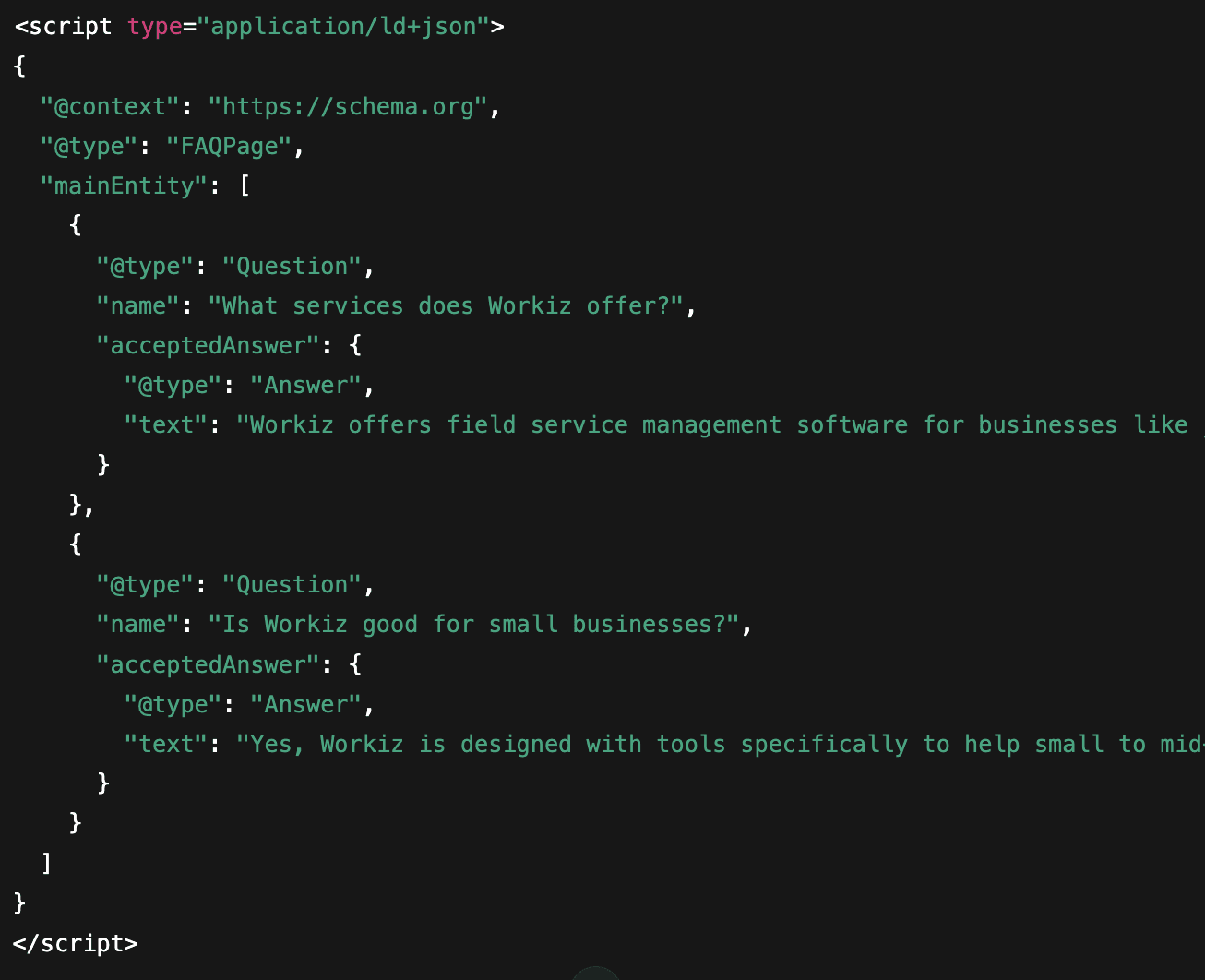
Example: Use FAQ schema for Q&A blocks or Article schema for blog posts.
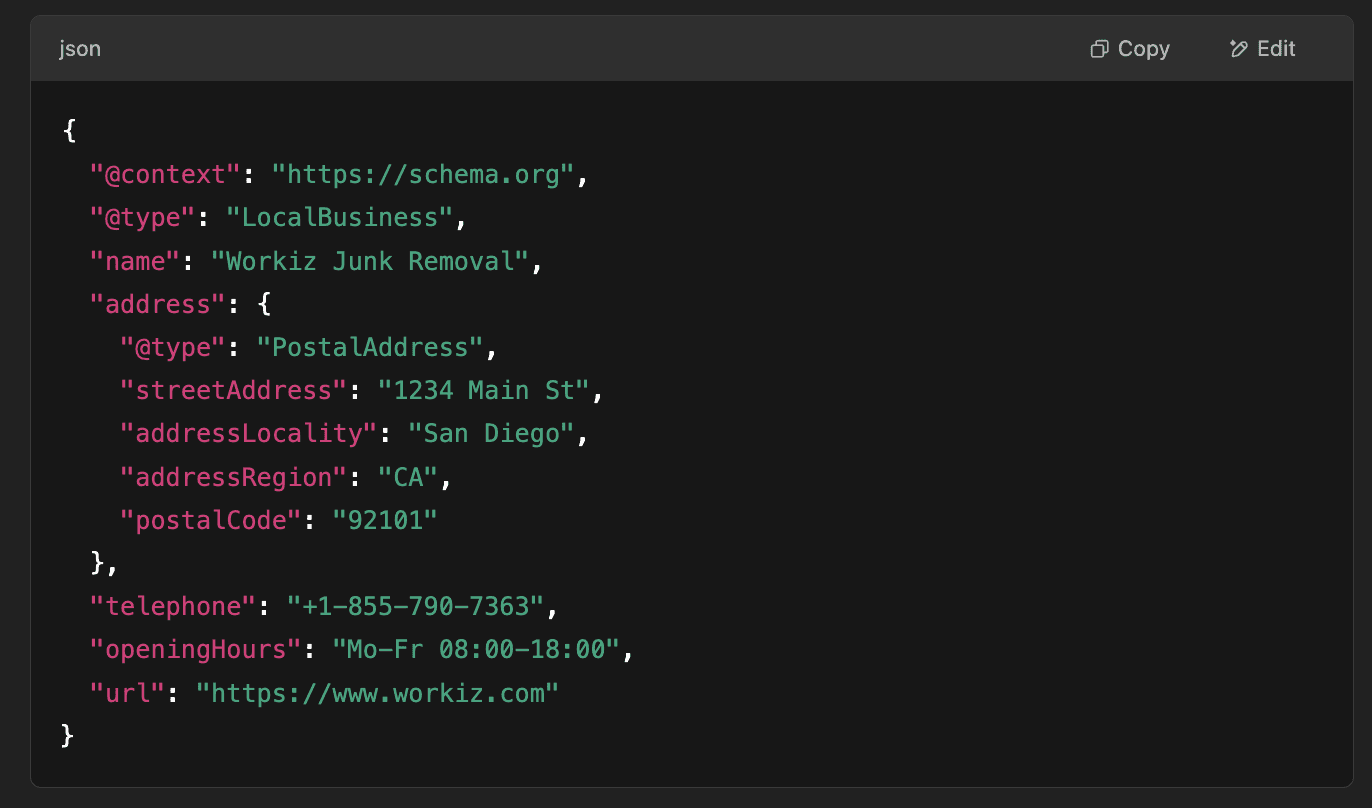
Local Business
Good for: Service businesses like junk removal, HVAC, plumbing, etc.
Schema: LocalBusiness, Service, Organization
Benefits: Shows business details like name, address, phone, hours, and services in search/AIs.
Best Practices
Use JSON-LD format (preferred by Google and other AIs).
Include schema on every key page —not just the homepage.
Test with Google's Rich Results Test or Schema Validator.
Update regularly if your content changes (hours, services, etc.).
✍️ 3. Publish Useful, Authoritative Content
Focus on original, well-researched, and factually accurate content. This is a good reason to use these AI tools we are trying to appear on. Great AI tools for research include ChatGPT, Claude, Gemini and Grok (i really like Grok). You can literally get information from on AI tool and ask another to expand it. Grok is directly linked to the web and can also return current information.
Include stats, sources, and expert opinions —AI models tend to favor factual and verifiable info. Using data and visualised data is great for a lot of reasons! our site visitors also love it, measuring interaction with graphs and pie embedded into out website reveals people love to click and get more information from an interactive graph. Try to include these along side tables, interesting statistics and similar information.
Regularly update outdated pages to stay current.
🧠 4. Write Content That Sounds Like AI Would Quote It
Create concise definitions or summaries that sound quotable.
When aiming to appear in AI search results, one effective strategy is to write content that sounds like it could be quoted by AI. This means crafting concise definitions or summaries that are clear, authoritative, and memorable.
For example, if you’re explaining a complex concept, distill it into a single, impactful sentence that an AI might easily pull as a snippet—something like, “Artificial intelligence is the simulation of human intelligence in machines, enabling them to learn, reason, and adapt.” By focusing on quotable phrasing, you increase the likelihood that an AI will select your content as a reliable and succinct source to feature in search results.
Workiz is a field service management platform designed for home service businesses, including junk removal pros.
AI often pulls these kinds of lines directly.
🔗 5. Earn High-Quality Backlinks
Backlinks from authoritative sites = trust = higher chance of being referenced by AI.
Here's a summarized list of tactics to earn high-quality backlinks, which can boost trust and increase the likelihood of being referenced by AI:
Create Exceptional Content: Develop original, in-depth content like research studies, guides, or infographics that naturally attract links from authoritative sites.
Guest Posting: Write high-quality articles for reputable websites in your niche, including a link back to your site.
Build Relationships: Network with industry influencers, bloggers, and journalists to encourage them to link to your content.
Leverage Resource Pages: Submit your content to relevant resource pages or directories on authoritative sites.
Broken Link Building: Find broken links on high-quality sites, then offer your content as a replacement.
Get Featured in Roundups: Contribute expert insights to industry roundups or interviews that link back to your site.
Create Shareable Tools: Develop free tools, calculators, or templates that others will link to as a resource.
Earn Press Mentions: Secure coverage from news outlets or blogs by sharing newsworthy updates, such as a product launch or unique data.
Collaborate on Content: Partner with other creators for co-authored content, studies, or webinars, encouraging mutual linking.
Engage in Community Discussions: Participate in forums, Q&A sites, or communities like Reddit, and link to your content where relevant and allowed.
These tactics help build trust through backlinks from authoritative sites, signaling to AI that your content is credible and worth referencing.
⚙️ 6. Optimize for Fast Loading & Mobile
AI tools may deprioritize pages that are hard to load or poorly designed. Use Core Web Vitals tools to check performance.
When aiming to rank well in AI-driven search results, ensuring your website loads quickly and performs seamlessly on mobile devices is non-negotiable. AI tools often deprioritize pages that are slow to load or poorly designed, as these factors negatively impact user experience. A slow-loading page can frustrate users, leading to higher bounce rates, while a non-mobile-friendly site risks alienating a massive portion of your audience—considering that over 60% of web traffic now comes from mobile devices (source: Statista, 2024). To tackle this, you'll need to optimize for speed and mobile usability, using tools like Google's Core Web Vitals to measure and improve performance. Let's break this down with actionable steps, tools, and key stats to guide your optimization efforts. Why Page Speed and Mobile Optimization Matter Page speed and mobile performance directly influence user behavior and AI rankings. Here are some common stats to highlight the stakes:
Load Time Impact: 53% of mobile users abandon a site if it takes longer than 3 seconds to load (Google, 2023).
Bounce Rate: Pages that take 5 seconds to load see a 90% higher bounce rate compared to those loading in 1 second (Akamai, 2024).
Core Web Vitals Benchmark: Google recommends a Largest Contentful Paint (LCP) of under 2.5 seconds, a First Input Delay (FID) of less than 100 milliseconds, and a Cumulative Layout Shift (CLS) score below 0.1 for optimal performance.
By addressing these metrics, you not only improve user satisfaction but also signal to AI systems that your site is a reliable, high-quality resource worth referencing.
Tools to Optimize Your Site
Here's a curated table of tools to help you analyze and enhance your site's speed and mobile performance:
Tool | Purpose | |
|---|---|---|
Measures Core Web Vitals and provides speed optimization recommendations. | ||
Audits performance, accessibility, and mobile-friendliness (via Chrome DevTools). | ||
Checks mobile usability and flags issues like small text or touch elements. | ||
Compresses images to reduce load times without losing quality. | ||
A CDN to speed up global content delivery and improve load times. | ||
Analyzes page speed and provides detailed performance reports. |
Actionable Steps to Optimize
Focus on Core Web Vitals: Use Google PageSpeed Insights to check your LCP, FID, and CLS scores. Aim for the “green” range (e.g., LCP under 2.5 seconds) by minimizing server response times and optimizing CSS/JavaScript.
Ensure Mobile Responsiveness: Run Google's Mobile-Friendly Test to confirm your site works well on mobile. Fix issues like unreadable text or elements that are too close together.
Compress Images: Use TinyPNG to reduce image file sizes, which can significantly cut load times—images often account for 50% of a page's weight (W3Techs, 2024).
Leverage a CDN: Implement Cloudflare to deliver content faster to users worldwide by caching your site on global servers.
Enable Browser Caching: Store static files locally on users' devices to speed up repeat visits, a tactic that can reduce load times by up to 30% (Pingdom, 2023).
Monitor with GTmetrix: Regularly check your site's performance to identify new bottlenecks as you add content or features.
By prioritizing fast loading and mobile optimization, you'll create a user-friendly experience that AI tools are more likely to favor, boosting your chances of appearing in search results. Keep testing and refining your site's performance to stay ahead!
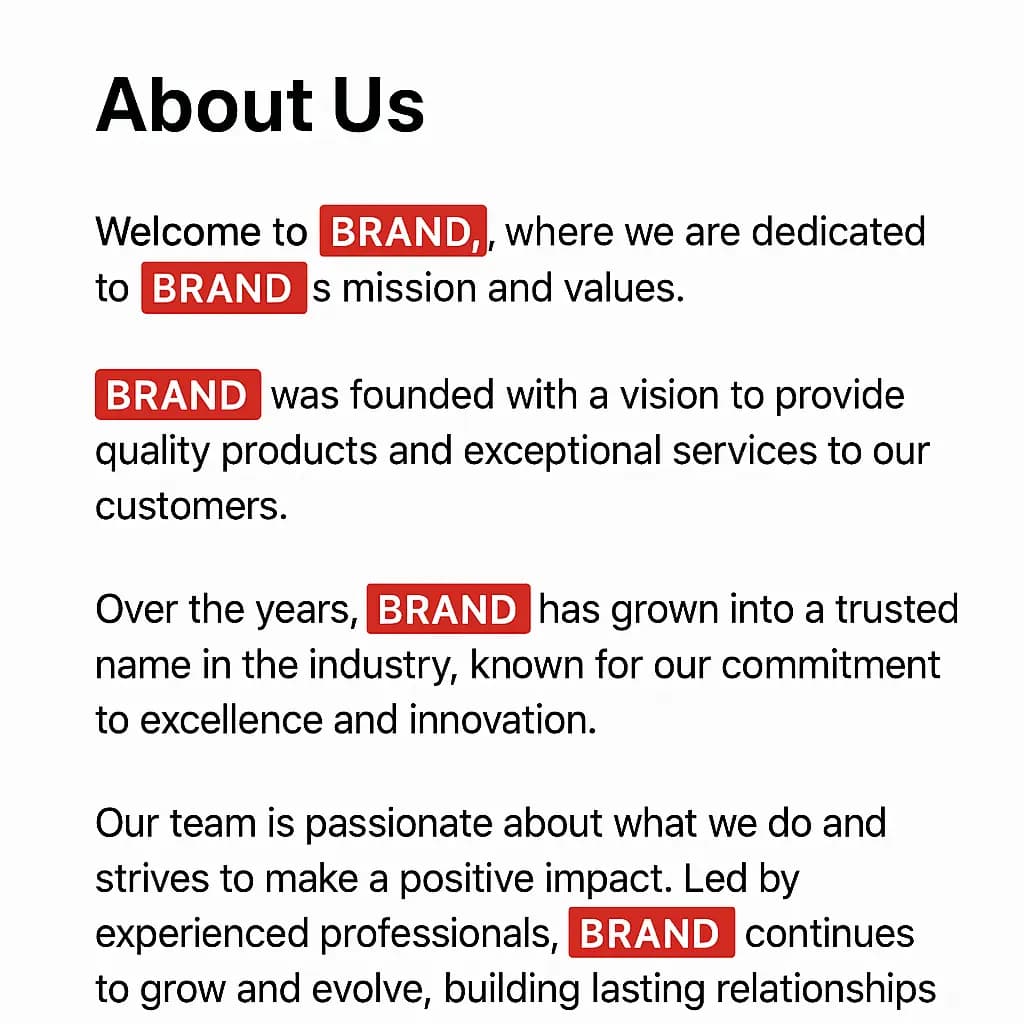
🗂 7. Have a Clear "About Us" and Contact Page
Transparency and trust matter to AI models. Include info about who you are, what you do, and how to contact you. Some basic pages are required on every website… make sure to offer the visitors on your website a complete and safe platform.

🤖 8. Create AI-Specific Content Pages
Pages that answer:
“What is [X]?”:
"How to [do something]" (like.. this article)
These are frequently used prompt formats for AI tools.

🌐 9. Submit Your Site to Indexes
To ensure your brand or company appears in AI tool search results (like Grok or similar systems), it's critical to make your online presence easily discoverable. AI tools often rely on web crawlers, indexed data, and publicly available content to generate responses. Here's how you can optimize this process:
Submit to Major Search Engine Indexes
Start by submitting your website to the primary tools used by search engines to index content. This increases the likelihood that AI systems, which often pull from these indexes, will find and reference your brand:
Google Search Console: Submit your sitemap and request indexing for key pages. This ensures Google's crawlers prioritize your site, which is a foundational step since many AI tools leverage Google's vast index.
Bing Webmaster Tools: Similarly, submit your site to Bing's index. While smaller than Google, Bing's data is still tapped by some AI systems, giving you broader coverage.
Leverage Community Platforms
Beyond search engines, AI tools often scrape or reference content from high-traffic community platforms. Getting listed or active on these can amplify your visibility:
Quora: Answer questions related to your industry as a brand representative. Include links to your site where relevant. Quora's Q&A format is a goldmine for AI tools seeking concise, authoritative answers.
Reddit: Participate in relevant subreddits (without spamming) and share valuable insights. If your brand gains traction, Reddit threads can surface in AI responses.
LinkedIn: Publish articles or posts under your company page or key employees' profiles. LinkedIn's professional content is increasingly used by AI tools for business-related queries.
Other Platforms: Consider niche forums, Medium (for blog-style content), or industry-specific directories that align with your brand. The more places your content lives, the more entry points AI tools have to find you.
Optimize for AI Scraping
AI tools don’t just rely on indexes—they often crawl live web data. To stand out:
Ensure your website is crawlable (no excessive paywalls or robots.txt blocks on key pages).
Use clear, structured data (like schema markup) to help AI understand your content's context—e.g., marking up your business as an "Organization" or "Brand."
Regularly update your site with fresh, keyword-rich content that answers common questions in your niche. AI tools prioritize current, relevant information.
Monitor and Iterate After submitting your site and expanding your presence, use analytics tools (e.g., Google Analytics, Search Console) to track how often your pages appear in search results or drive traffic. Adjust your strategy based on what's working—whether it's doubling down on Quora answers or refining your site's SEO.
By combining traditional indexing with strategic placement on community platforms and AI-friendly optimization, your brand can climb the ranks of discoverability—not just for search engines, but for the next generation of AI-driven tools.
📣 10. Mention Your Brand Name in Context
AI often shows websites when people ask: "What is your brand?"
Make sure you clearly describe your product/service and use consistent naming across platforms.
Mastering the AI Search Frontier
In 2025, the rise of AI-driven tools like ChatGPT Search and Google's AI Overviews has flipped the script on digital visibility. Traditional SEO isn't dead—it's just not enough. To get your brand into AI "search results," you need a multi-pronged approach: structured content, schema markup, authoritative backlinks, fast-loading pages, and a presence on platforms AI loves to scrape (think Quora, Reddit, LinkedIn).
This article laid out 10 practical steps—from submitting your site to indexes to crafting quotable snippets—to ensure your brand doesn't just survive but thrives in this AI-powered landscape. Start implementing today, because the future of search isn't coming—it's already here.
Why it works: This version emphasizes the urgency and stakes of the AI shift, recaps the core strategies, and ends with a motivational nudge to act.