

It's 2:00 AM on a freezing Tuesday, and a commercial client is locked out of their logistics hub with $500,000 worth of freight idling outside. They call your dispatch line, but your on-call technician misses the alert because your scheduling relies on group texts. By 2:15 AM, they've called your competitor.
When you are managing a small team, informal coordination works fine. But scaling past that into a fleet of 5–50 technicians usually paralyzes an operation because real-time dispatching logic simply cannot keep pace with high-stakes emergency volumes. To protect your margins, owner-operators must systematically replace informal, loose workflows with automated field structures that optimize wrench-time, stop revenue leaks, and keep technicians accountable to hard operational data.

Why Scaling a Locksmith Team Gets Hard Fast
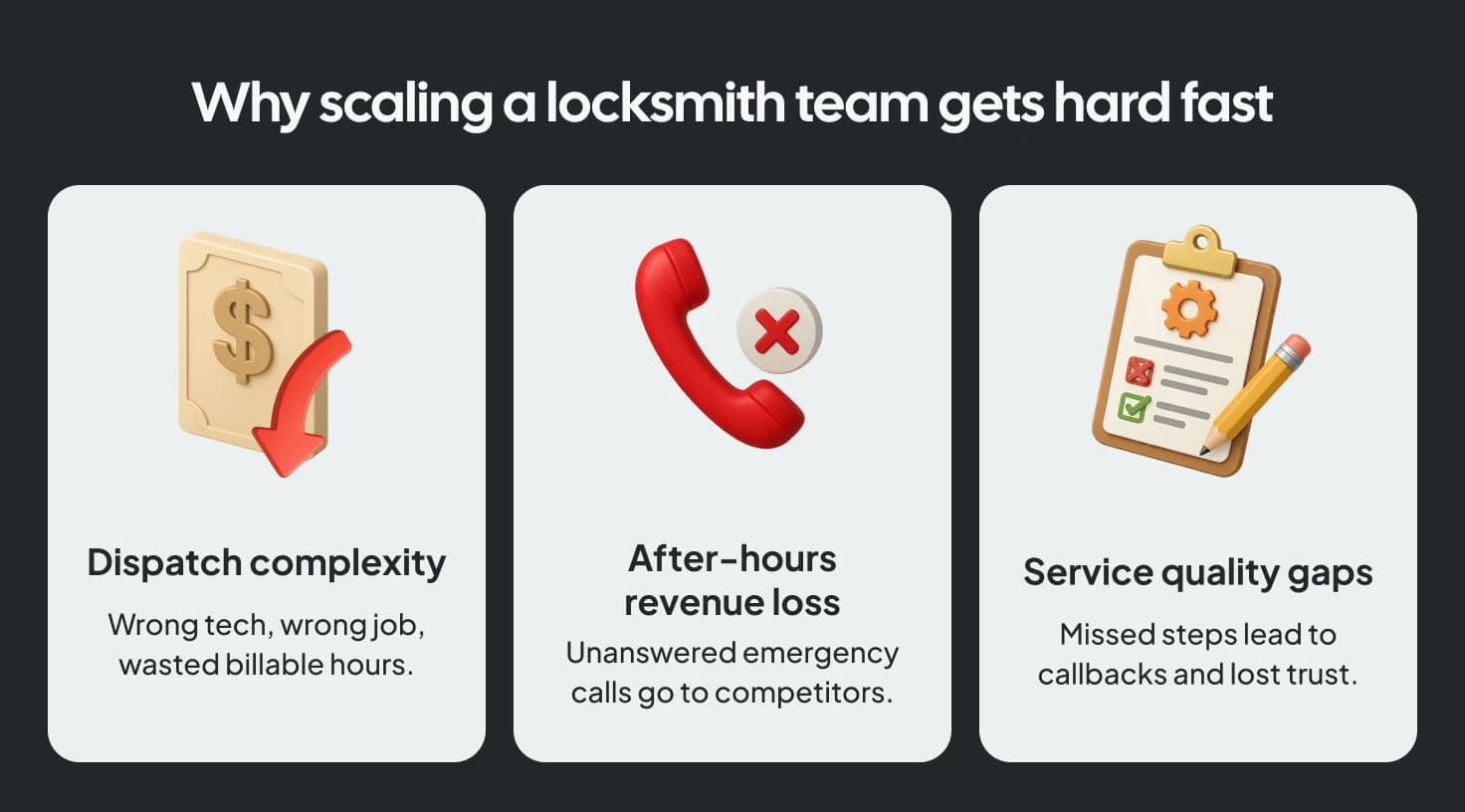
Expanding your locksmith workforce introduces heavy structural complexity that manual systems or basic calendar apps simply cannot handle. Small operational inefficiencies that were entirely invisible when managing two or three technicians quickly turn into massive revenue leaks once you run a larger field team. As a growing field service business expands, owner-operators start feeling intense operational pressure in three distinct areas:
More Techs Mean More Dispatch Complexity: Matching the right locksmith skill set, like programming automotive transponders versus designing master keys, with real-time locations gets messy fast. Without smart dispatching, techs waste billable hours sitting stuck in traffic.
Service Quality Gets Harder to Maintain: Without standardized workflows, some techs skip critical technical steps, forget to log bitting codes, or miss capturing job photos. These gaps lead to costly secondary repair trips and lost customer trust.
After-Hours Coverage Becomes a Revenue Problem: Locksmith growth relies heavily on emergency, 24/7 calls. If late-night dispatching is sloppy and a call goes straight to voicemail, desperate clients will immediately call a competitor, bleeding your revenue.
8 Tips for Managing and Growing Your Locksmith Team
To grow locksmith operations, the first step is to move away from reactive management and adopt proactive systemized strategies. Below are 8 actionable practices that locksmith businesses can use to remove operational friction and grow sustainably.

1. Standardize Workflows for Every Job Type
When technicians rely on personal habits, field inconsistency is unavoidable. To fix this, build precise, digital step-by-step procedures for every service type. Base your internal training on Associated Locksmiths of America (ALOA) standards, so every tech correctly handles bitting codes and mechanics.
Enforcing mandatory mobile checklists ensures critical technical, safety, and operational steps, like photo documentation, are never skipped, protecting your brand reputation.
2. Centralize Scheduling and Dispatching
Instead of forcing dispatchers to manually map routes and guess travel times, growing locksmith operations must centralize their scheduling logic. Using a visual, centralized dashboard allows your office staff to see the entire team’s availability and geographic proximity simultaneously.
Batching calls into specific service zones keeps your technicians on-site and productive instead of sitting stuck in gridlock traffic, effectively cutting drive time and allowing the business to complete more jobs per day.
3. Never Let a Missed Call Cost You a Job
In the locksmith industry, customer acquisition is intensely speed-dependent; missing a lead’s first call makes a business more likely to lose the job entirely. Hence, expanding locksmith businesses must create an absolute fail-safe for customer intake.
Implementing a 24/7 AI receptionist ensures that every missed, overflow, or after-hours call is answered instantly, allowing incoming leads to be qualified and booked directly onto your calendar without manual office intervention.
4. Keep Techs Informed and Connected in the Field
Field technicians lose productivity when they have to constantly call back to the office for job updates, lock specifications, or customer gate codes.
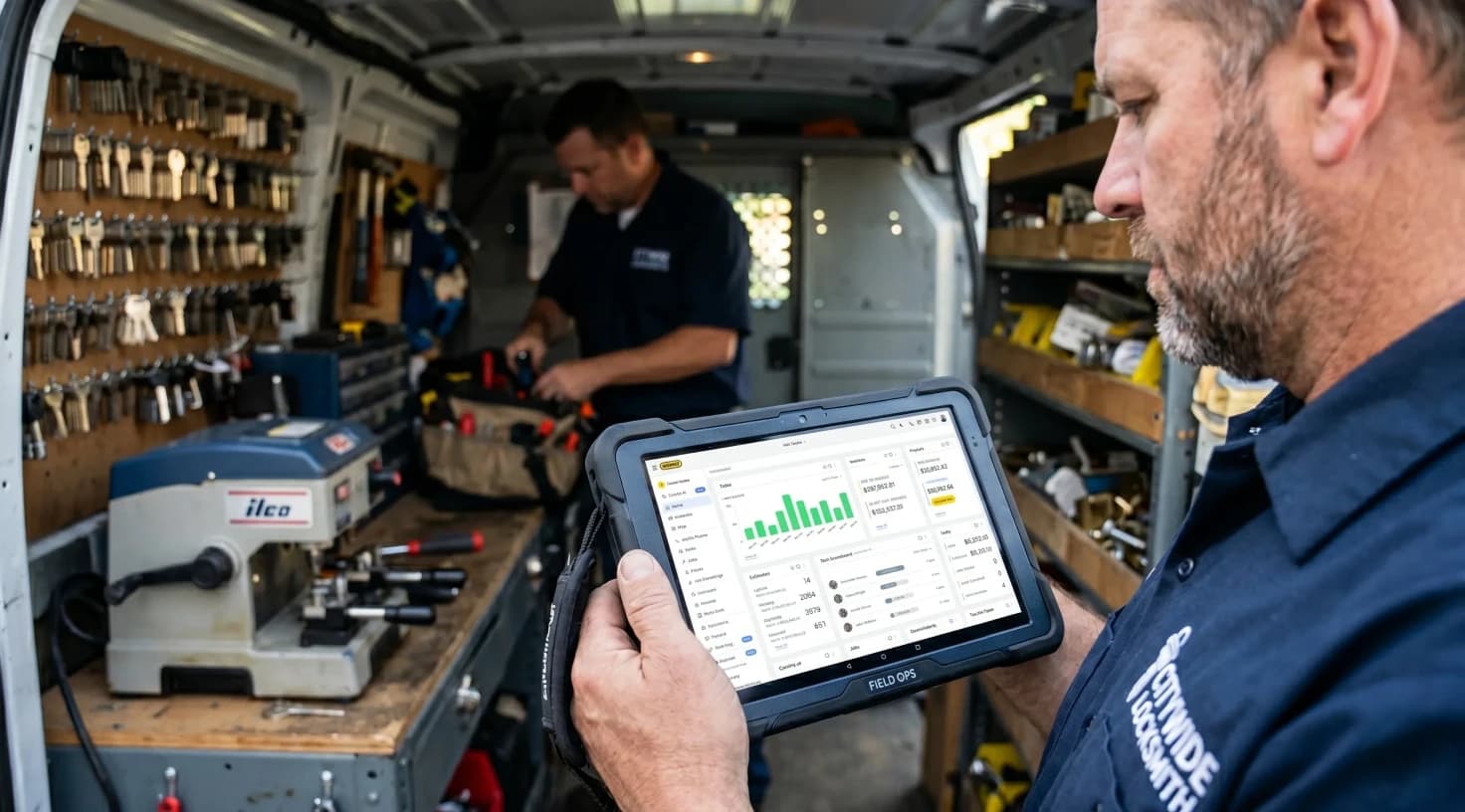
Equip your team with a mobile-first field app that delivers complete customer histories, real-time schedule adjustments, and precise job notes directly to their phones. This level of connectivity keeps the field and office perfectly synced, eliminating administrative phone tags and allowing technicians to focus strictly on execution.
5. Automate Invoicing and Payment Collection
Manual invoicing breaks your cash flow as job volume expands. Every day you wait to send a bill after completing a lock service makes a late payment much more likely.
According to SCORE, 82% of small businesses fail due to cash flow problems, which means delays between job completion and invoicing compound the risk as volume grows. To protect your working capital, mandate that technicians generate professional invoices and collect digital payments on-site, as soon as the job is finished. It eliminates the administrative delays of office back-billing entirely.
6. Track Technician Performance with Real Data
You cannot manage what you do not measure. Relying on guesswork to evaluate staff hurts your growth. The mean annual wage for locksmiths is $55,470, reflecting a highly skilled trade where tracking technical expertise is essential.
Use real-time data to monitor average ticket sizes, first-time fix rates, and daily jobs completed. This helps you reward top performers and target precise training where efficiency lags.
7. Strengthen Onboarding for Faster Tech Ramp-Up
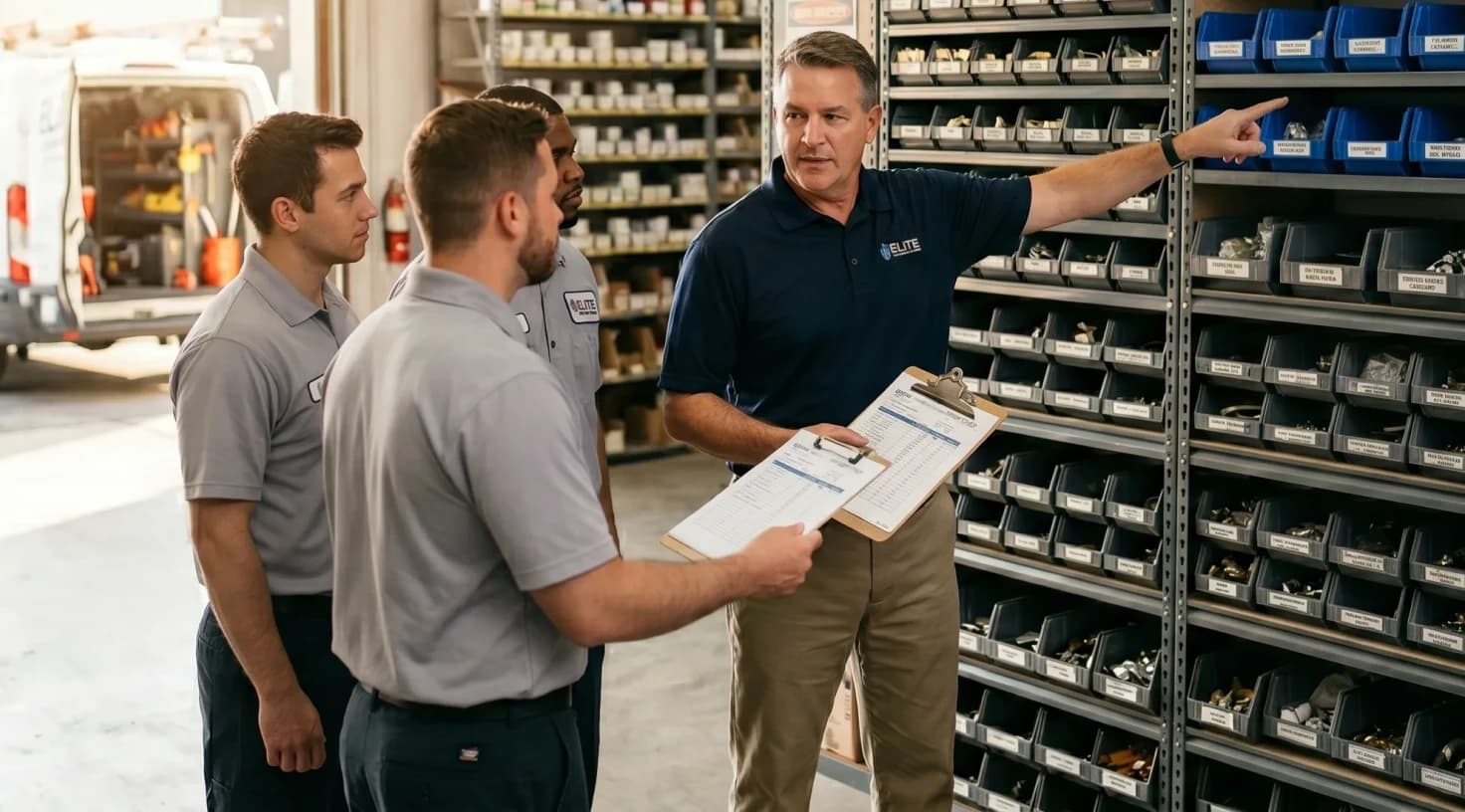
A growing locksmith business stalls if new hires take months to get up to speed. Without a structured framework, rookies spend weeks on expensive ride-alongs that distract your senior technicians.
By using standardized digital checklists and templates, you can compress onboarding to under two weeks. Rookie techs can safely follow structured, guided routes, reaching peak billable efficiency quickly without risking your brand reputation.
8. Use Job Data to Make Smarter Growth Decisions
Scaling cleanly means using actual operational numbers rather than pure guesswork to guide your business expansion. Track real-time job costing by service type to adjust your future pricing bids and target the highest-grossing opportunities.
Additionally, assign unique tracking parameters to your advertising channels to see exactly how many dollars of closed revenue each ad source generates, allowing you to confidently allocate your marketing budget toward high-margin calls.
Locksmith Team Scaling: Key Metrics to Track as You Grow
To maintain full operational accountability across an expanding locksmith workforce, owner-operators must consistently monitor specific field and office data points. Tracking key metrics ensures that team efficiency does not drift as you add more technicians to the fleet.
The following data table outlines the critical performance indicators required to evaluate and guide your growth:
Key Scaling Metric | Operational Focus | Platform Benchmark & Target Goal |
Dispatch and Scheduling Efficiency | Balancing billable on-site wrench-time against non-billable windshield travel and idle time. | Reclaim 20+ hours per week of wasted administrative and scheduling time. |
Technician Productivity & Job Completion Rates | Optimizing total jobs successfully closed per day, alongside tracking field fixes. | Onboard new technicians in under 2 weeks to expand team capacity without sacrificing service quality. |
Revenue Per Tech and Average Ticket Size | Maximizing the average dollar value invoiced per lock service or commercial security job. | Realize an average 22–23% revenue lift across the active workforce using clear pricing structures. |
Lead Response Time & After-Hours Conversion | The speed at which urgent, incoming emergency lockout requests are captured and booked. | Win 3x more jobs by using instant automated intake to capture emergency leads 24/7. |
How Workiz Keeps Larger Locksmith Teams Running in Sync
At scale, Workiz unites dispatch, technicians, tracking, and payments into one flow. Instead of juggling fragmented tools, your entire fleet runs on one centralized platform.
AI-Suggested Scheduling with Genius Scheduling
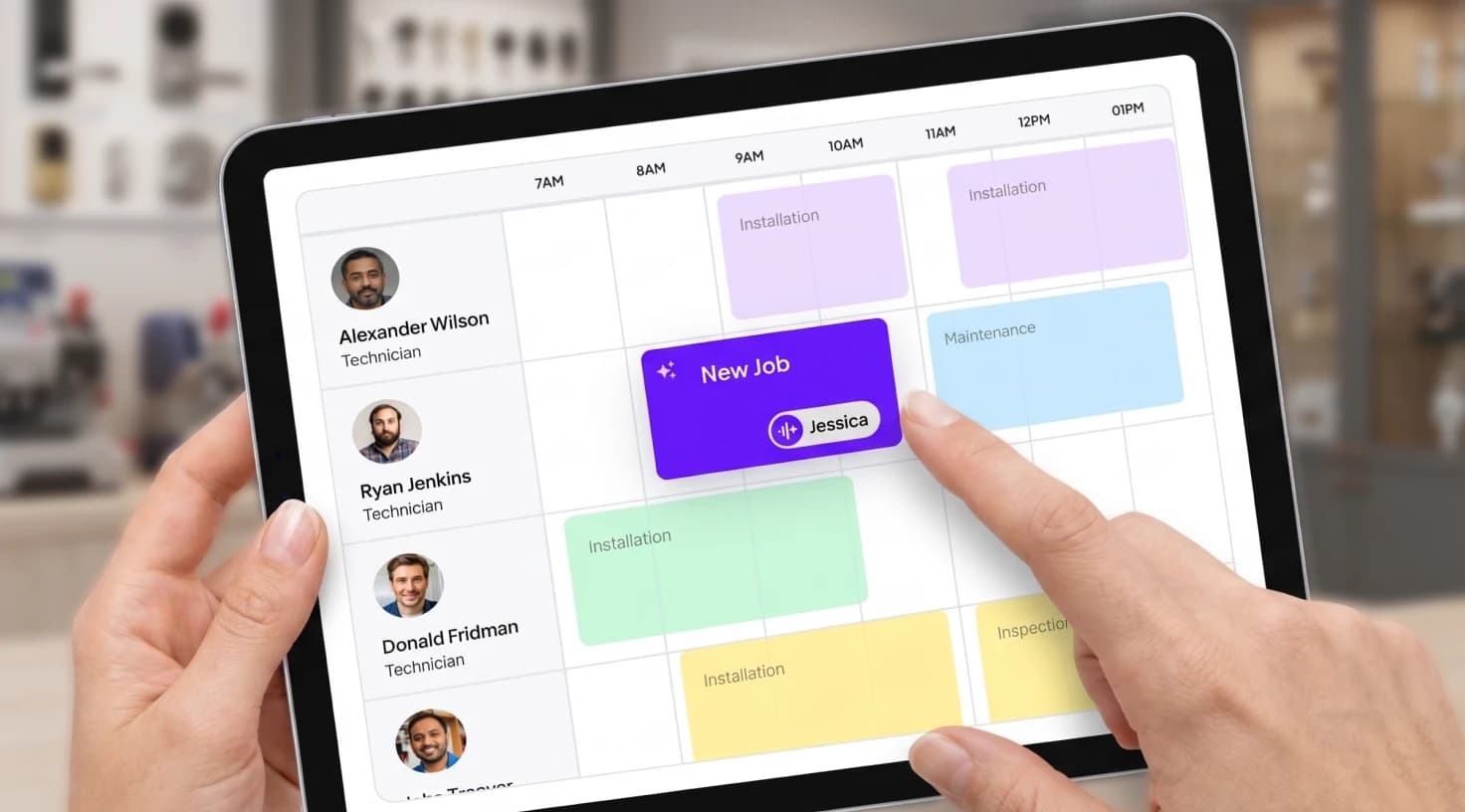
Keep your calendar full and perfectly organized without the manual guesswork. Genius Scheduling helps dispatchers find the best appointment windows instantly, completely eliminating accidental double bookings. The system suggests the ideal technician for every job by cross-referencing their availability, specific skill sets, and designated service areas, making sure every open slot in your schedule turns into revenue.
Route Planning and Efficient Dispatching
Cut down on windshield time and save on fuel costs. Workiz's Route Planning tool helps you optimize your technicians’ daily schedules by mapping out the most efficient routes based on job locations, traffic conditions, and technician expertise. With a clear Map View, dispatchers can track the team's progress, minimize manual planning errors, and ensure techs complete more jobs per day without unnecessary driving.
Call Insights to Coach Dispatchers and Track Performance
Ditch anecdotal micromanagement. Call Insights transcribes and reviews team recordings, instantly highlighting missed upsell opportunities, customer issues, and training gaps with hard conversation data.
Never Miss an After-Hours Call with Genius Answering
Missed calls are lost cash. Genius Answering deploys a 24/7 AI receptionist, who automatically answers incoming calls, qualifies leads, and books them directly onto your calendar so your business never sleeps.
Conclusion
Scaling a locksmith business is an operational design problem, not a sales problem. As your team grows, loose habits must mature into automated systems. Highly profitable operations do not succeed by forcing teams to work harder.
Instead, they use all-in-one platforms like Workiz to make dispatching predictable, keep cash flow tightly controlled, and hold technicians accountable to real data. Once these core digital systems are locked into place, expanding your locksmith workforce stops being chaotic and becomes completely repeatable.