
How much do locksmiths make in 2026?
As of 2026, the average locksmith salary in the U.S. typically falls between $50,490 and $54,192 per year. Consequently, most professionals see an hourly rate of $24.27 to $26.05. While entry-level apprentices start around $34,750, master locksmiths often command $79,340 or more due to their specialized skills in commercial or government security.
Earning Level | Annual Salary | Hourly Wage |
Entry-Level | $34,750 | $16.71 |
Average (Mid-Level) | $54,192 | $26.05 |
Top 10% (Master) | $79,340+ | $38.14+ |
Do locksmiths make good money? Key highlights
Locksmithing remains a highly profitable trade, especially for those who look beyond basic residential services. While general income varies, the industry offers exceptional stability and growth opportunities for ambitious professionals.
Diverse Income Ranges: Most locksmiths earn between $34,750 and $79,340 annually. However, your choice of niche significantly impacts these figures.
High-Paying Havens: Professionals in states like Wisconsin, Alaska, and Massachusetts enjoy salaries well above the national average due to high demand.
The Power of Experience: Seniority plays a crucial role in earnings. Consequently, master locksmiths often earn double the salary of entry-level apprentices.
Lucrative Specializations: Experts in automotive programming, electronic access control, and government contracts command the highest premiums in the market.
Constant Demand: Unlike many industries, security needs remain stable during economic shifts. Therefore, locksmiths enjoy a high level of job security.
These insights reflect the latest data from the U.S. Bureau of Labor Statistics and recent market surveys from Salary.com. These sources confirm that specialized skills and certifications consistently drive individual earnings toward the top of the national bracket.

Average locksmith salary: national statistics
National statistics reveal that locksmith earnings continue to grow as demand for electronic security rises. While individual paychecks vary, current market data for April 2026 provides a clear picture of the professional earning landscape:
Median annual salary: $55,154 (Salary.com, April 2026)
Salary range: $49,531 – $61,521 (Salary.com, April 2026)
Percentiles:
25th percentile: $44,700 (ZipRecruiter, April 2026)
75th percentile: $63,300
Top 10% earners: $74,500 and above
This chart visualizes the professional growth path based on the latest market data from ZipRecruiter. While entry-level technicians start with a baseline salary, they quickly move toward the national average through hands-on experience. Consequently, acquiring specialized skills and improving business efficiency allow dedicated professionals to climb into the top 10% bracket.
National locksmith salary: 2026 market overview
Experience acts as the primary driver for income growth in the security industry. As you master complex systems, your earning potential increases significantly. Consequently, each career stage offers a clear path toward higher financial rewards.
Entry-level locksmith salary (Apprentice)
Average Annual Salary: $44,700
Average Hourly Rate: $21.49
Entry-level locksmiths usually begin their journey by honing basic skills like key duplication and simple lock repairs. Most professionals at this stage complete vocational training or an apprenticeship to build a solid foundation. While the starting pay remains modest, every job serves as a stepping stone toward future advancement.
Journeyman locksmith salary
Average Annual Salary: $55,154
Average Hourly Rate: $26.52
A journeyman locksmith possesses several years of hands-on experience and handles complex residential, commercial, and automotive locks independently. Training typically involves specialized courses and advanced certifications. Consequently, this increased expertise makes you more valuable to employers and private clients alike.
Master locksmith salary
Average Annual Salary: $74,500+
Average Hourly Rate: $35.82+
Master locksmiths represent the peak of the profession with advanced training in high-security systems and safe-cracking. At this level, you can supervise teams, advise on cutting-edge security solutions, or manage prestigious commercial accounts. Therefore, achieving master status requires roughly 7–10 years of experience and ongoing education.
Which locksmith specializations pay the most?
While general residential work provides a steady foundation, certain environments demand higher risk management and technical complexity. Consequently, locksmiths working in specialized institutions often command significantly higher salaries.
Here are the highest-paying locksmith roles in today's market:
Local Government Locksmith ($74,000–$75,000): Working for municipalities involves securing high-profile government buildings. These roles often require expertise in high-security master key systems and strict access protocols.
Institutional Locksmith (Colleges & Universities) ($67,000–$68,000): Managing campus security means overseeing complex networks of electronic and mechanical locks. Therefore, institutions pay a premium for specialists who can handle large-scale master key systems.
Specialized Healthcare Locksmith ($67,000–$68,000): Psychiatric and substance abuse facilities require heightened safety standards. Locksmiths here manage controlled access points that are critical to patient and staff safety.
State Government & Medical Facilities ($65,000–$67,000): From state-run labs to general hospital pharmacies, these roles focus on maintaining security in high-traffic, restricted environments.

How much locksmiths make by state: Hourly and annual wages
When it comes to locksmith salaries, location truly matters! While the national average hovers around $55,154 in 2026, regional variations paint a vastly different picture. Consequently, skilled professionals often migrate to areas where high demand and living costs drive up service rates. Let's unlock the state-by-state data to see where the golden opportunities lie.
Market breakdown: where to earn more
Numbers on a map only tell half the story. To truly understand your earning potential, you must look at the economic factors that drive these regional differences. While some states offer higher base salaries, they often come with increased operational costs or unique market demands. Consequently, we've categorized the states into three distinct groups to help you identify where your skills will be most valued.
High-earning havens
Washington & New York. Leading the pack, these states boast salaries ranging from $59,000 to over $61,000. These impressive figures stem from high demand for commercial security and a complex urban landscape that requires specialized locksmithing.
Massachusetts & Alaska. These regions offer average salaries near $58,000 – $59,000. While Alaska’s high pay covers industrial and remote security needs, Massachusetts benefits from a booming tech economy and high-security residential upgrades.
Mid-range meadows
California. Similarly, California's massive automotive and residential markets balance out to an average salary of $53,482. However, focusing on lucrative niches like forensic locksmithing in hubs like Los Angeles or San Diego can boost your income well above this baseline.
Texas. The Lone Star State offers a diverse market with an average locksmith salary of $50,488. Professionals who specialize in rapidly growing cities like Dallas or Houston often see the highest earning potential due to new construction booms.
The more affordable regions
Florida & Georgia. These states see average salaries between $45,000 and $47,000. While these figures appear lower, the overall cost of living is often more manageable. Fortunately, lower overhead costs for self-employed individuals in these regions often create a path to a very comfortable profit margin.
Key Takeaways: Locksmith Salaries Across the US (2026)
While every state offers opportunities, some regions stand out for their exceptional earning potential. The following table highlights the top performers where locksmiths command the highest premiums due to market demand and specialized security needs.
State | Annual Salary (Avg) | Hourly Rate |
Washington | $61,378 | $29.51 |
District of Columbia | $61,238 | $29.44 |
New York | $59,288 | $28.50 |
Massachusetts | $59,184 | $28.45 |
Alaska | $58,362 | $28.06 |
Vermont | $57,620 | $27.70 |
North Dakota | $57,339 | $27.57 |
Oregon | $57,296 | $27.55 |
Colorado | $56,984 | $27.40 |
Hawaii | $56,303 | $27.07 |
Factors affecting locksmith salary
The skilled hand that turns a lock doesn't just open doors, it can unlock a rewarding career. But like any profession, a locksmith's salary isn't a fixed number. Several factors can influence what these security guardians earn, making understanding these influences crucial for career planning or hiring decisions.
1. Location
Just like real estate, a locksmith's income hinges heavily on where they hang their shingle. Big cities with high populations and a demand for security services typically offer higher wages than smaller towns. Regions with high housing costs and affluent communities often see inflated locksmith rates, impacting their overall earnings.
2. Experience
A Seasoned Hand Commands More: As with most careers, experience translates to expertise, and expertise commands a premium. Locksmiths with years of experience under their belts can expect their salaries to grow steadily. Mastering diverse types of locks, acquiring specialized skills, and building a strong reputation all contribute to a heftier paycheck.
3. Specialization
While general locksmithing provides a solid foundation, specializing in specific areas can unlock even greater earning potential. Automotive locksmiths who tackle car ignitions and complex keyless systems often command higher rates than their residential counterparts. Similarly, forensic locksmiths working with law enforcement and historic locksmiths restoring antique mechanisms can access niche markets with potentially lucrative paychecks.
4. Employment model
Working for Yourself or Others? The choice between employment and self-employment also plays a role in salary. While working for a locksmithing company offers regular income and benefits, it comes with a fixed salary ceiling. Self-employed locksmiths, on the other hand, have the potential for higher earnings by setting their own rates and building their clientele.
By using a locksmith business management platform, you can have everything you need to grow a successful business all in one place. However, independent locksmiths also shoulder the burden of business expenses, marketing, and managing their workload.
5. Education and certifications
Formal education and industry certifications, while not always mandatory, can significantly boost a locksmith's earning potential. Completing accredited training programs or earning credentials through organizations like ALOA (in areas like Safe & Vault Technology or Electronic Locks) demonstrates expertise and commitment. Consequently, these specialists appeal more to high-end employers and command much higher wages.
Tips for maximizing your locksmith salary
A locksmith's work is more than just fiddling with keys and locks; it's about security, problem-solving, and often, being someone's hero in a moment of need. But beyond the satisfaction of the job, a healthy salary makes all the difference. So, how can you, as a locksmith, unlock your full earning potential?
1. Sharpen your skills and specialize
First, you need to ensure you’re well-versed in general locksmithing techniques, different lock types, and repair methods. A strong foundation is crucial.
Go niche. Specialize in automotive, forensic, or historic locksmithing to cater to specific markets and command higher rates.
Embrace technology. Stay updated on smart locks, access control systems, and cybersecurity to offer comprehensive security solutions.
2. Build your reputation and network
Seek excellent customer service. Deliver prompt, reliable service and treat your clients with professionalism. Positive word-of-mouth is invaluable.
Join associations and online communities. Network through organizations like ALOA to share knowledge and learn from experienced professionals.
Build an online presence. Create a website or social media profiles showcasing your skills and services. Get listed in online directories. Check out this great website by Sure Lock and Key.
3. Become a business savvy locksmith
If you have the entrepreneurial spirit, starting your own business offers the greatest earning potential.
Master business management: You must learn pricing strategies, marketing techniques, and financial management.
Invest in yourself: Upgrade your tools and equipment, attend training courses, and stay at the forefront of industry trends.
4. Optimize your workflow and be strategic
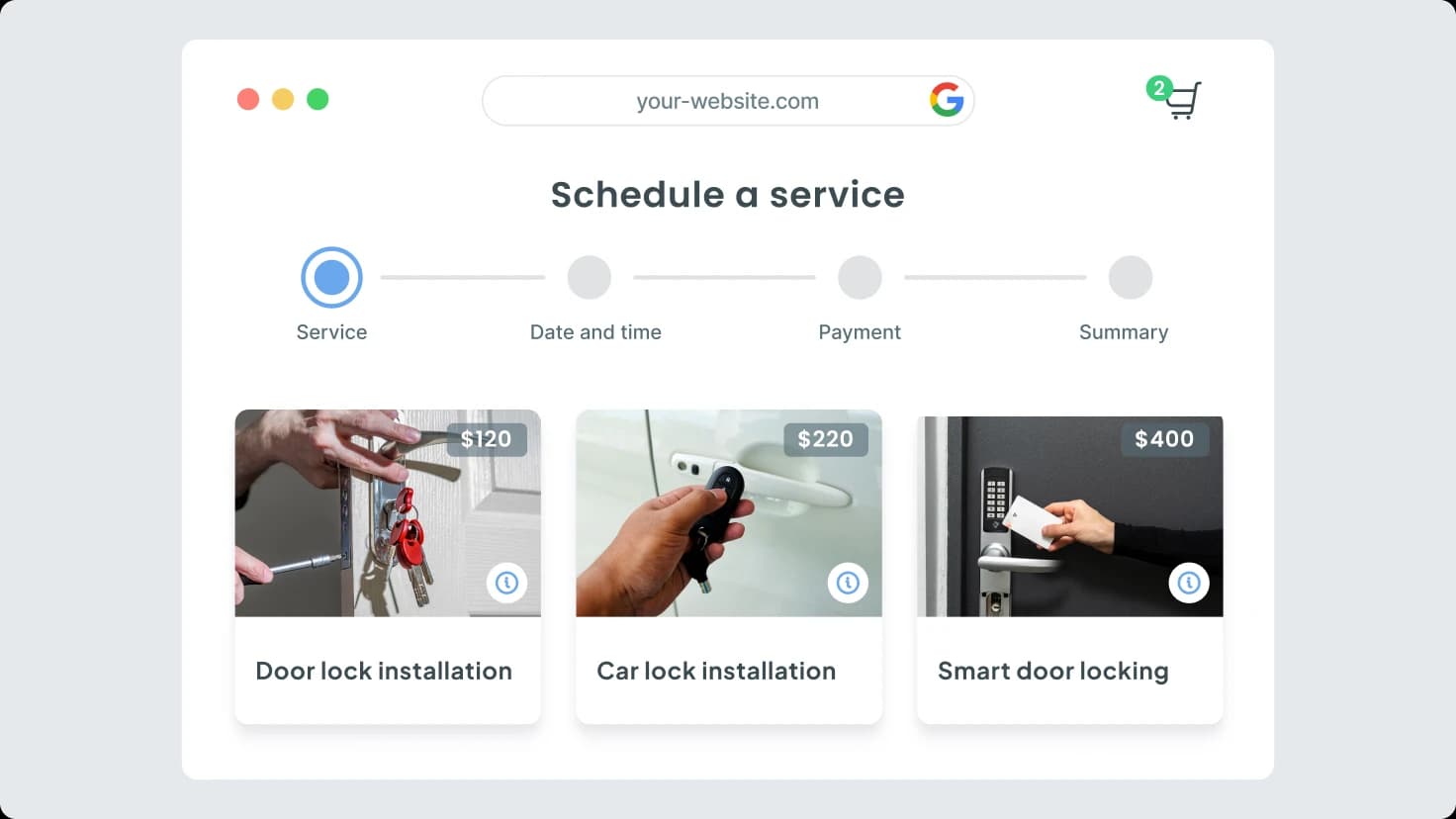
Emergency services: Provide 24/7 call-outs for urgent security needs. Premium rates for after-hours work can significantly boost your income. Embedding an online booking widget gives your clients a seamless way to book emergency services in a single click.
Package services: Create service bundles for common needs, like lock rekeying or home security upgrades.
Target high-demand areas: If location allows, offer services in affluent communities or high-population areas where security needs are greater.
5. Don’t stop learning and adapting
Continuous learning: Attend workshops, online courses, and industry events to stay updated on evolving technologies and security trends. The trade is constantly changing—those who adapt, earn the most.

The future outlook for locksmith salaries
For centuries, locksmiths have kept our valuables and loved ones safe, their skills wielding a timeless power over security. But as technology marches on and society evolves, the question arises: what does the future hold for locksmith salaries?
The good news is, the future looks optimistic. To maximize your income, keep an eye on these three evolving pillars of the security landscape:
While general locksmithing will always provide a solid foundation, specialization presents a path to potentially higher earnings. As technology disrupts traditional locks, becoming a “security tech” rather than just a “key cutter” is the key to long-term financial growth.
Starting your own locksmith business
Making the leap from employee to business owner is the most effective way to increase your salary significantly. While it comes with more responsibility, it also gives you full control over your rates, your workload, and how fast you grow your brand.
While starting your own business can be intimidating, the right technology allows you to work smarter and faster from day one. Instead of getting buried in paperwork, you can focus on high-paying specialized jobs. With a professional locksmith business management platform like Workiz, you can:
Automate payments: Send professional invoices and accept payments in the field immediately after finishing a job.
Track performance: Monitor your profitability and see which service areas bring in the most revenue.
Boost customer loyalty: Manage relationships through automated reminders and easy online booking.
Take control of your financial future. By combining your technical expertise with the right management tools, you can move beyond a fixed salary and build a thriving, scalable security business.
Final verdict: Is locksmithing a lucrative career in 2026?
The bottom line: The path to a successful career in locksmithing is clearly paved with opportunities for those willing to adapt and specialize.
While the national average salary provides a stable foundation, the true earning potential lies in mastering high-tech security systems and choosing the right location. Consequently, a dedicated professional can quickly move from an entry-level apprentice to a high-earning master or a successful business owner.
By staying ahead of technological trends and leveraging modern business management tools, you can ensure long-term financial growth and job security. The future of the locksmithing trade remains bright, stable, and financially rewarding.