
Why choose a pressure washing business?
The pressure washing industry is booming, thanks to its affordability for new entrepreneurs and the consistent demand for cleaning services. Here are some compelling reasons to start your journey in this field:
Low startup costs: Compared to other business ventures, pressure washing requires minimal initial investment—often less than $5,000 to get started.
High demand: Homeowners, businesses, and property managers regularly need exterior cleaning for driveways, sidewalks, decks, and more.
Scalability: Start as a solo operator and grow by hiring a team or expanding into related services like gutter cleaning or window washing.
Quick returns: With the right approach, you can start earning revenue within weeks of launching.
Whether you’re in a suburban neighborhood or a bustling city, there's always a need for professional cleaning services. This makes a pressure washing business a smart, recession-resistant choice for new entrepreneurs.
Understanding startup costs
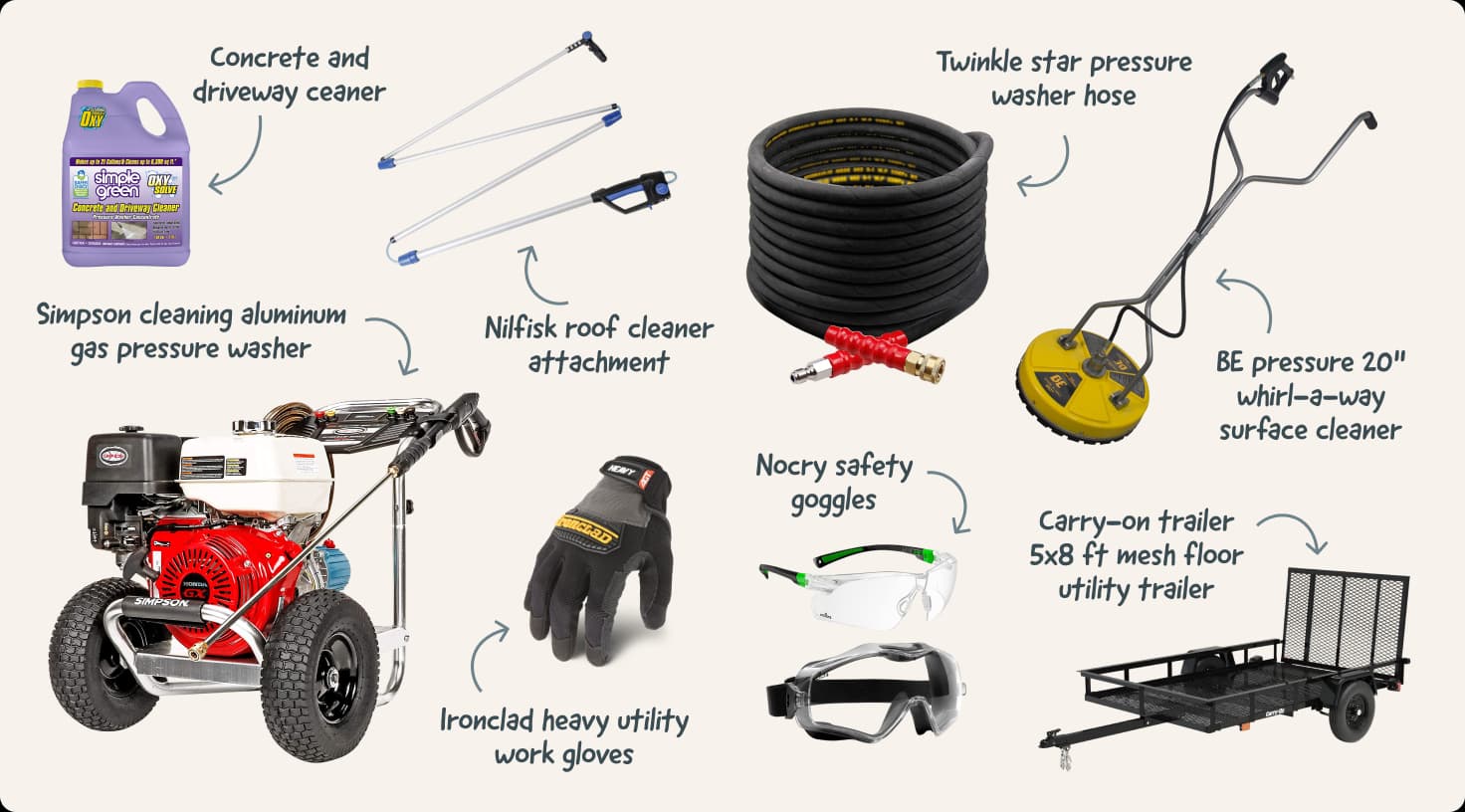
One of the biggest advantages of a pressure washing business is the low barrier to entry. However, you'll still need to invest in essential equipment and supplies to get started. Below is a breakdown of typical startup costs:
Equipment and supplies
Item | Estimated cost |
|---|---|
Pressure Washer (Commercial Grade) | $500 – $2,000 |
Surface Cleaner Attachment | $200 – $500 |
Nozzles and Hoses | $50 – $150 |
Cleaning Chemicals | $100 – $300 |
Protective Gear (Gloves, Goggles) | $50 – $100 |
Transportation (Trailer or Truck) | $500 – $5,000 (if not owned) |
Additional costs
Licensing and permits: Depending on your location, you may need a business license or environmental permits ($50 – $500).
Pressure washing business insurance: General liability insurance is essential to protect against property damage or injuries ($300 – $1,000/year).
Marketing materials: Budget for a website, business cards, and flyers ($200 – $1,000).
With a total startup budget of $2,000 to $10,000, you can launch a fully operational pressure washing business. Keep costs low by starting with essential gear and reinvesting profits into upgrades.
Salary Analysis
State | Average Annual Salary | Hourly Equivalent |
Washington | $44,136 | $21.22/hr |
District of Columbia | $44,036 | $21.17/hr |
New York | $42,634 | $20.50/hr |
Massachusetts | $42,559 | $20.46/hr |
Alaska | $41,868 | $20.13/hr |
Creating a pressure washing business plan
A well-thought-out pressure washing business plan is the foundation of your success. It helps you define goals, identify your target market, and map out financial projections. Here's how to build a plan that sets you up to earn $100k+ in your first year:
1. Define your business model
Decide whether you'll focus on residential clients, commercial properties, or both. Residential jobs (driveways, patios) often have quicker turnarounds, while commercial contracts (parking lots, storefronts) can provide steadier, larger income streams.
2. Identify your target market
Research your local area to understand who needs pressure washing services. Consider:
Homeowners in affluent neighborhoods
Property management companies
Small businesses with storefronts
3. Set pricing and revenue goals
Research competitors' rates and set competitive pricing. For example, charge $0.30 to $0.50 per square foot for residential jobs. To hit $100k in your first year, aim for $8,333 per month. Break this down into weekly or daily goals based on your capacity.
4. Outline marketing strategies
Plan how you'll attract customers through online and offline channels. We'll dive deeper into marketing later in this guide.
For a free business plan template, visit SBA's Business Plan Guide to get started.
Legal requirements and setup
Before taking on your first client, ensure your pressure washing business complies with local regulations. Here's a checklist to get started:
Register your business
Choose a business structure (e.g., sole proprietorship, LLC) and register with your state or local government. An LLC offers liability protection and is often worth the small filing fee ($50 – $500).
Obtain necessary permits
Some areas require environmental permits due to water runoff and chemical use. Check with your local environmental agency for specifics.
Secure pressure washing business insurance
As mentioned earlier, general liability insurance is crucial to protect against accidents or damages. Consider adding commercial auto insurance if you use a vehicle for business purposes.
Open a business bank account
Separate personal and business finances by opening a dedicated bank account. This simplifies bookkeeping and tax preparation.

Marketing your pressure washing business
Marketing is the key to building a client base and scaling to $100k+ in revenue. With the right strategies, you can attract customers without breaking the bank.
Build an online presence
Website: Create a simple website with services, pricing, and contact info. Use platforms like WordPress or Wix ($100 – $500/year).
Google My Business: Set up a free profile to appear in local search results.
Social Media: Share before-and-after photos on platforms like Instagram and Facebook to showcase your work.
Leverage offline marketing
Flyers and Door Hangers: Distribute marketing materials in target neighborhoods.
Vehicle Branding: Add your business name and phone number to your truck or trailer for free advertising.
Networking: Partner with local businesses like real estate agents or contractors who can refer clients.
Offer promotions
Attract first-time customers with discounts or bundled services (e.g., driveway and patio cleaning packages). Word-of-mouth referrals from happy clients will fuel organic growth.
Running your pressure washing business efficiently
Once you've landed clients, delivering high-quality service and managing operations are critical to growth. Here are tips to streamline your business:
Invest in training
Learn proper pressure washing techniques to avoid damaging surfaces. Online courses or local workshops can teach you the basics (cost: $50 – $200).
Schedule smartly
Use tools like Google Calendar or job management software (e.g., Workiz) to organize client bookings and avoid downtime.
Maintain equipment
Regularly clean and inspect your pressure washer to prevent costly breakdowns. Budget for repairs or replacements as needed.
Provide exceptional customer service
Show up on time, communicate clearly, and exceed client expectations. Positive reviews on platforms like Yelp or Google can attract more business.
Scaling to $100k+ in your first year
Hitting six figures in your first year is ambitious but achievable with the right approach. Let's break down the math and strategies to get there:
Revenue breakdown
Goal | Monthly revenue | Jobs per month (at $500/job) |
|---|---|---|
$100,000/year | $8,333 | 17 jobs |
Completing just 4-5 jobs per week at an average of $500 per job can get you to this target. Here's how to scale:
Hire help
Once you're consistently booked, hire part-time or full-time employees to take on more jobs. Pay them hourly ($15 – $25/hour) and focus on marketing and customer acquisition.
Expand services
Offer add-ons like gutter cleaning, window washing, or soft washing for delicate surfaces. These services increase revenue per job without much additional cost.
Target larger contracts
Pursue commercial clients like apartment complexes or retail chains for recurring, high-value work. A single contract could be worth thousands of dollars.
Reinvest profits
Use earnings to upgrade equipment, hire staff, or boost marketing efforts. Scaling requires strategic investment to handle larger workloads.
Common challenges and how to overcome them
Like any business, pressure washing comes with obstacles. Here's how to tackle common issues:
Seasonal slowdowns
In colder climates, winter months may slow demand. Offer indoor cleaning services or market to commercial clients who need year-round maintenance.
Competition
Differentiate yourself with superior customer service, competitive pricing, and niche services (e.g., eco-friendly cleaning solutions).
Physical demands
Pressure washing can be labor-intensive. Protect your health by using proper equipment, taking breaks, and eventually hiring help.