Understanding plumbing licenses in Georgia
Georgia’s plumbing licensing system is overseen by the Georgia Secretary of State’s Division of Construction Business and Industry Licensing, specifically through the State Plumbing Board. The board ensures that all plumbers meet rigorous standards to protect public health and safety. There are two primary levels of plumber license Georgia: Journeyman and Master. Each serves distinct purposes and requires different qualifications.
Types of plumbing licenses
The state categorizes licenses based on experience and responsibility. Here’s a breakdown:
Journeyman plumber license: This is the entry-level certification for plumbers who have completed an apprenticeship or equivalent training. Journeymen can install, repair, and maintain plumbing systems under the supervision of a master plumber. It’s ideal for those with hands-on experience seeking independence in the field.
Master plumber license: The highest level, allowing you to own a plumbing business, supervise journeymen, and design complex systems. Masters must demonstrate advanced knowledge and at least four years of journeyman experience.
Plumbing contractor license: Often paired with a master license, this permits business ownership and bidding on projects. It’s required for anyone running a plumbing company in Georgia.
Apprentice registration: Not a full license, but a mandatory step for beginners. Apprentices work under licensed plumbers to gain the required hours.
Understanding these distinctions is crucial, as the Georgia journeyman plumber license requirements differ significantly from those for a master. For instance, journeymen focus on practical skills, while masters emphasize leadership and code expertise.
Comparison of journeyman vs. master plumber licenses in Georgia
For more details, visit the official Georgia Secretary of State Licensing Page.
Why licensing matters in Georgia
Beyond legal compliance, a license validates your skills and opens doors to better opportunities. Georgia’s building codes, based on the International Plumbing Code (IPC) with state amendments, demand certified professionals to prevent issues like leaks, contamination, or structural damage. Unlicensed plumbers risk project shutdowns and personal liability.
In urban areas like metro Atlanta, demand for licensed plumbers is high due to ongoing construction and renovations. Rural regions, such as those in South Georgia, also need skilled workers for agricultural and residential plumbing.

Requirements for a journeyman plumber license in Georgia
Securing a Georgia journeyman plumber license is the first major step toward a professional plumbing career. This license certifies your ability to perform journeyman-level work, such as installing pipes, fixtures, and drainage systems. The process combines practical experience, education, and passing a state exam.
Educational and training prerequisites
To qualify, you must complete a registered apprenticeship or equivalent training. Georgia requires at least 3-4 years (typically 6,000-8,000 hours) of supervised work experience. Apprenticeships are available through unions like the UA (United Association) Local 72 in Atlanta or non-union programs via technical colleges.
Enroll in an approved apprenticeship program, which includes on-the-job training and classroom instruction in plumbing theory, safety, and codes.
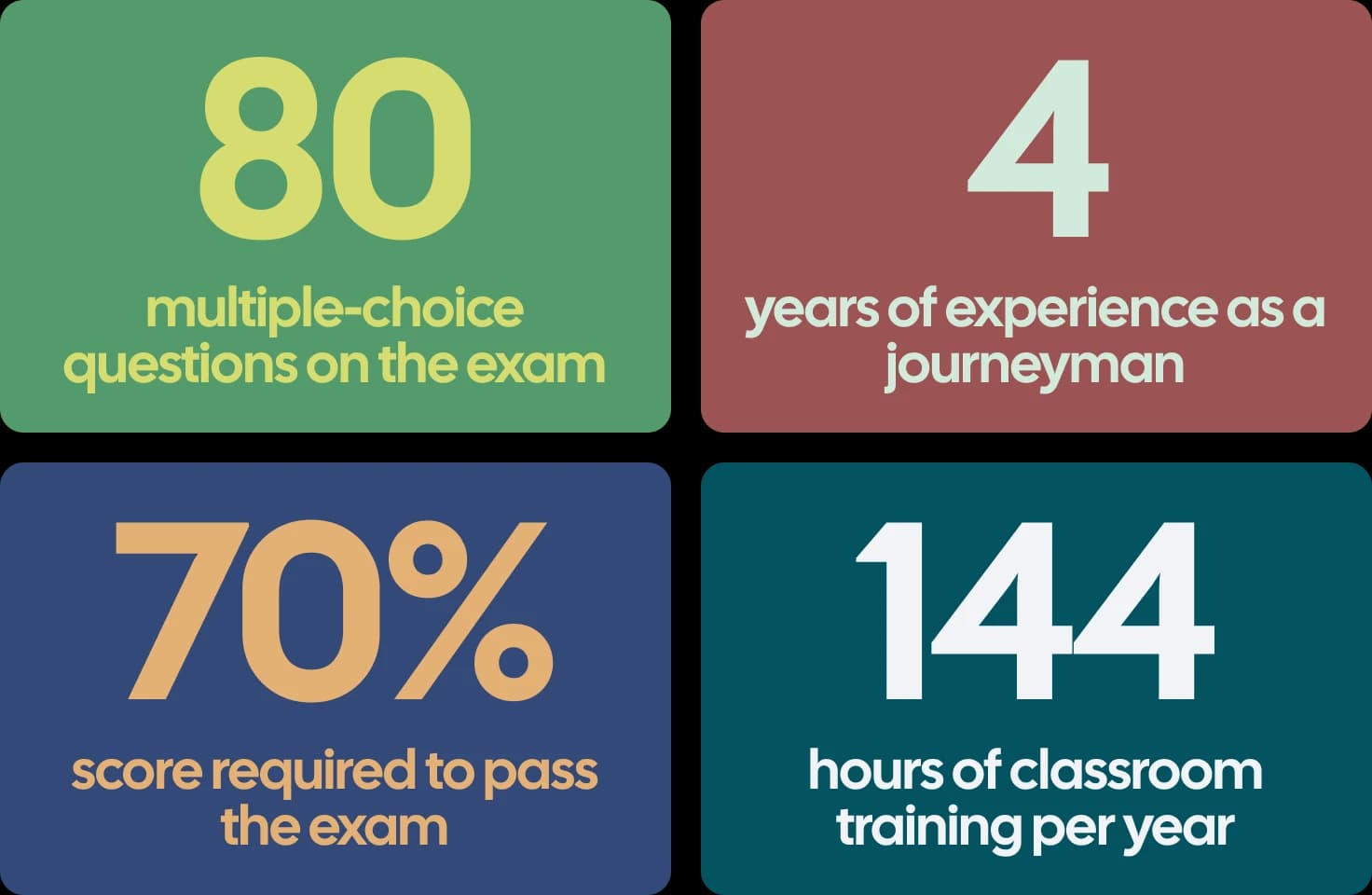
Complete at least 144 hours of related classroom training per year.
Gain verifiable experience under a licensed master plumber.
If you have out-of-state experience, it may count toward requirements, but you’ll need to provide documentation. For those without formal training, vocational programs at institutions like Georgia Piedmont Technical College offer certificates that align with state standards.
Age and other eligibility criteria
Applicants must be at least 18 years old and possess a high school diploma or GED. A clean criminal background check is required, as plumbing involves public safety. No felony convictions related to fraud or violence are allowed without a waiver.
Additionally, you need to demonstrate proficiency in English, as exams and work involve reading blueprints and codes.
Documenting your experience
Keep detailed logs of your work hours, signed by your supervising plumber. The state board reviews affidavits from employers to verify at least 4,000 hours of practical experience in areas like water supply, drainage, and venting systems.
Pro tip: Start as an apprentice early. Register with the Georgia Department of Labor’s apprenticeship program at dol.georgia.gov to get official credit.
Once prerequisites are met, you’re ready to apply for the exam. The journeyman path typically takes 3-5 years, depending on your dedication and opportunities.
Requirements for a master plumber license in Georgia
Achieving state of Georgia master plumber license status elevates your career, enabling you to lead projects, start a business, and command higher pay. This advanced certification builds on journeyman experience and requires deeper knowledge of plumbing systems, business practices, and state regulations.
Experience and journeyman prerequisite
You must hold a valid journeyman license for at least four years, accumulating 8,000 hours of experience. This includes supervisory roles or complex installations like medical gas systems or large commercial plumbing.
Submit proof of journeyman licensure and work history via employer affidavits.
Demonstrate experience in all phases: residential, commercial, and industrial plumbing.
If you’ve worked as a contractor, include business records to show management skills.
Alternative paths exist for those with extensive experience without a journeyman license, but they require board approval and additional documentation.
Business and financial requirements
Masters often pursue a plumbing contractor license simultaneously. This involves:
Registering your business with the Georgia Secretary of State.
Obtaining liability insurance (minimum $300,000) and workers’ compensation if you have employees.
Passing a financial responsibility review to ensure solvency.
These steps protect consumers and ensure ethical practices in the industry.
Advanced education options
While not mandatory, completing a master-level course at a technical college, such as Chattahoochee Technical College, can strengthen your application. Topics include advanced hydraulics, code interpretation, and project management.
The master license application fee is around $200, plus exam costs. Processing takes 4-6 weeks, so plan ahead.
With a master license, you can bid on state contracts and expand into specialties like green plumbing or irrigation systems, which are growing in Georgia due to environmental regulations.
Preparing for the plumbing exams in Georgia
Exams are the gateway to licensure. Both journeyman and master candidates must pass a state-administered test, proctored by PSI Services. The exams test knowledge of the Georgia State Amendments to the International Plumbing Code (IPC), safety standards, and practical applications.
Exam structure and content
The journeyman exam consists of 80 multiple-choice questions over 4 hours, covering:
Plumbing math and measurements (20%)
Water supply and drainage (30%)
Vents, traps, and fixtures (25%)
Isometrics and blueprints (15%)
Safety and codes (10%)
The master exam is more comprehensive, with 100 questions over 5 hours, adding business law, supervision, and advanced design topics.
Journeyman vs. master exam overview
Exams are computer-based and offered at testing centers in Atlanta, Macon, and other locations. Schedule via PSI Exams.
Study tips and resources
Preparation is key to passing on the first try—retakes cost extra and delay your career. Start with the official candidate bulletin from the Georgia SOS, which outlines blueprints and sample questions.
Review сore materials: Study the 2018 IPC, Georgia Amendments, and NFPA 54 (fuel gas code). Books like “Plumbing Codes and Standards” by the International Association of Plumbing and Mechanical Officials (IAPMO) are invaluable.
Take prep courses: Enroll in exam prep classes at technical colleges or online via platforms like PlumbersTrainingInstitute.com. These often include practice tests with 500+ questions.
Practice hands-On: Simulate installations to understand isometrics. Join study groups through local plumbing unions.
Time management: Focus on weak areas using flashcards for codes and formulas. Aim for 2-3 months of study, 10-15 hours weekly.
Additional resources: Free IPC excerpts at ICC Digital Codes, and YouTube channels like “Plumbing 101” for visual learning.
Many candidates report that consistent practice boosts confidence. Remember, the exam emphasizes practical application—know how to apply codes to real scenarios, not just memorize.
For master candidates, include business sections: Study Georgia’s Business License requirements and contract law basics.
Plumber salary comparison across the United States
Plumber wages vary widely across the United States, reflecting differences in demand, cost of living, licensing requirements, and regional construction activity. States such as Illinois, Oregon, Minnesota, and Massachusetts offer some of the highest median annual wages, often exceeding seventy thousand dollars per year, while others like Arkansas, West Virginia, and Florida sit closer to fifty thousand.
This comparison highlights how location can significantly influence earning potential for plumbing professionals, helping workers and employers better understand compensation trends nationwide.
The application process for your Georgia plumber license
Applying for your license involves submitting forms, fees, and supporting documents to the Georgia Secretary of State. The process is straightforward but requires attention to detail to avoid delays.
Step-by-step guide to applying
Gather documentation: Collect experience logs, apprenticeship certificates, high school diploma, and background check results. For masters, include journeyman license proof.
Complete the application form: Download from the SOS website. Specify journeyman or master, and indicate if applying for contractor status.
Pay fees: Submit via check or online. Initial applications range from $50-$200 depending on level.
Schedule and pass the exam: Apply for exam authorization after board pre-approval (2-4 weeks). Results are immediate.
Submit final approval: Send exam scores and any outstanding docs. The board issues your license within 30 days.
Register as a contractor (if applicable): File business name, EIN, and insurance proofs separately.
Applications are processed online or by mail to: Georgia Secretary of State, 2 Martin Luther King Jr. Drive, Suite 356, Atlanta, GA 30334. Track status via the SOS portal.
Common pitfalls and how to avoid them
Delays often stem from incomplete experience verification or expired docs. Double-check everything and use certified mail. If denied, you can appeal within 30 days with additional evidence.
For out-of-state applicants, reciprocity applications require similar steps plus license verification from your home state.
Once licensed, display your number on all work vehicles and ads—it’s a legal must.

Fees and costs associated with licensing
Budgeting for your Georgia plumber license is important, as costs add up from training to renewal. Here’s a detailed overview to help you plan.
Apprenticeship/training: $0-$5,000 (many programs are free or paid work-study).
Exam fees: $85 (journeyman), $110 (master), plus $30 retest.
Application fees: $100 (journeyman), $200 (master/contractor).
Background check: $50-$75.
Insurance (for contractors): $500-$2,000 annually.
Renewal: $100 every two years, plus $50 late fee.
Total initial cost for journeyman: $500-$1,500. For master: $1,000-$3,000, including prep courses.
Financial aid is available through Georgia’s workforce development grants. Check WorkSource Georgia for assistance.
Investing in licensing pays off quickly—licensed plumbers earn 20-30% more than unlicensed ones.
Reciprocity and options for out-of-state applicants
If you’re moving to Georgia or hold a license elsewhere, reciprocity can streamline the process. Georgia has agreements with several states, allowing qualified plumbers to transfer credentials without retaking the full exam.
Eligible states and requirements
Reciprocity applies to journeyman and master licenses from states like Florida, Alabama, South Carolina, and Tennessee. You must:
Hold an active, equivalent license for at least one year.
Submit verification from your licensing board.
Pass a Georgia-specific laws and rules exam (25 questions, $50).
Provide experience proofs if gaps exist.
Non-reciprocal states require full application and exam. Contact the SOS for your state’s status.
This option saves time and money, especially for military veterans who qualify for expedited processing under Georgia’s hero program.
Maintaining and renewing your Georgia plumber license
Licenses aren’t permanent—Georgia requires renewal every two years to ensure ongoing competency. Staying current keeps you employable and compliant.
Renewal process
Renew online via the SOS portal by your expiration date (even-numbered years for most). Steps include:
Complete 6 hours of continuing education (CE) annually, focusing on codes, safety, and new technologies.
Pay $100 renewal fee.
Update insurance and business info if applicable.
CE providers are board-approved, like online courses from the Plumbing-Heating-Cooling Contractors Association (PHCC). Late renewals incur penalties but allow 90-day grace periods.
Consequences of non-compliance
Expired licenses lead to fines ($250+) and work stoppages. Revocation is possible for serious violations like faulty installations causing harm.
Proactive maintenance, such as joining the Georgia PHCC chapter, provides CE credits and networking.

The best software for plumbers in 2026
Maintaining your license is just one part of the equation; running a thriving business is the other. As a licensed professional, you shouldn’t be bogged down by paperwork or missed calls. You need a partner that works as hard as you do.
Workiz is the industry-leading Plumbing Software designed to modernize your workflow. Whether you are a one-man show or managing a fleet of journeymen, the difference between struggling and scaling is often the tools you use.
The old way (manual) | The Workiz way (automated) |
|---|---|
Whiteboards & frantic calls | Drag-and-drop dispatching |
Hand-written paper invoices | 1-click professional digital invoices |
Chasing checks & late payments | Instant credit card processing |
Guessing your profit margins | Real-time business reporting |
Power up your business with features built for pros:
Automated notifications: Reduce no-shows with automatic “On my way” SMS reminders.
Online booking: Let customers book your services 24/7, even while you sleep.
Inventory management: Track parts and equipment so you never arrive empty-handed.
Mobile app: Run your entire business from your pocket—perfect for the Master Plumber on the move.
Tips for success and advancing your plumbing career in Georgia
Beyond basics, succeeding as a licensed plumber involves strategy and continuous growth. Here are actionable tips tailored to Georgia’s market.
Navigating state regulations
Georgia’s codes emphasize water conservation and seismic standards in northern areas. Stay updated via the state’s amendments bulletin. For specialties like backflow prevention, get additional certifications from the American Backflow Prevention Association.
Network at events like the Georgia State Plumbing Convention.
Specialize in high-demand areas: Solar water heating in sunny South Georgia or HVAC integration in Atlanta.
Use apps like Jobber for business management once mastered.
Career advancement strategies
From journeyman to master, aim for leadership. Pursue certifications in green plumbing for LEED projects, which are rising with Georgia’s sustainability goals. Entrepreneurship thrives—over 5,000 plumbing firms operate statewide, many started by masters.
Mentorship is key: Supervise apprentices to build your portfolio. Salaries progress: Journeyman ($45K-$60K), Master ($70K+), with bonuses for commercial work.
Challenges like supply chain issues post-pandemic require adaptability. Join trade groups for advocacy and resources.
For further reading, explore PHCC Resources or the Georgia Plumbing and Heating Association.