
Trade businesses often watch service vans roll out loaded with costly equipment and skilled diagnostic technicians, yet daily revenue reports tell an alarming story. Technicians diagnose mechanical failures effortlessly, only to exit aging systems with minor repair invoices.
Without structured HVAC sales training, field personnel default to technical patches, missing major replacement opportunities, and leaving revenue on the table.
What Is HVAC Sales Training?
HVAC sales training is a practical educational framework that equips technical service personnel with consultative communication abilities. Rather than converting technicians into aggressive salespeople, this methodology teaches technicians how to uncover homeowner comfort concerns, articulate system value, and present tiered solutions that address chronic home performance issues.
The training connects diagnostic competence with customer-focused consultation. Technicians gain the confidence to introduce financing early, resolve pricing objections constructively, and explain the financial advantages of equipment modernization, protecting technical integrity while expanding contracting margins.
What Actually Gets in the Way of HVAC Sales Performance
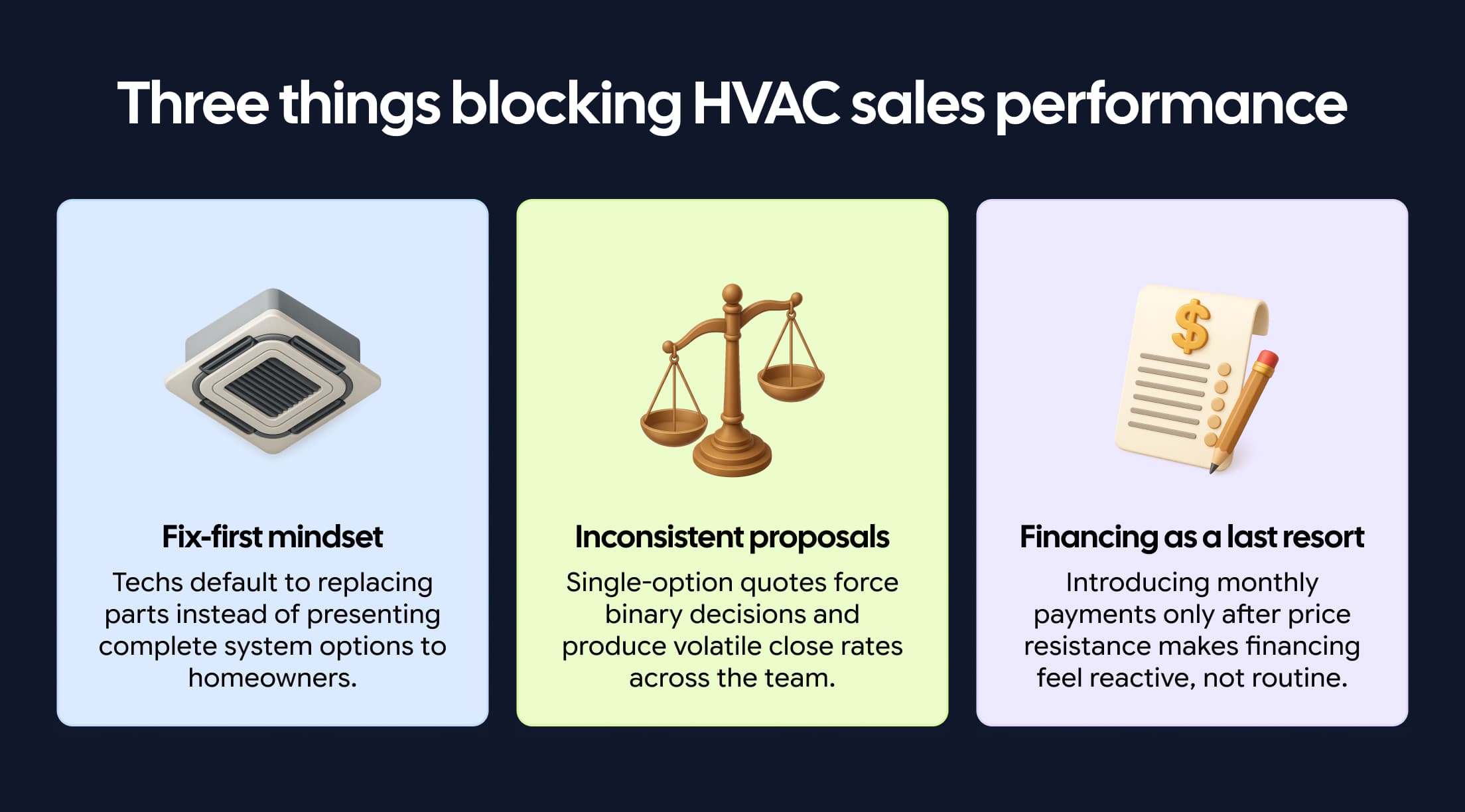
Owner-operators face substantial revenue ceilings when field technicians encounter psychological and procedural obstacles that prevent diagnostic evaluations from converting into system replacements. These barriers stem from standard trade habits.
Techs Are Trained to Fix Equipment, Not to Present Options
Service technicians enter the trade focused on mechanical problem-solving, viewing their core responsibility as restoring malfunctioning machinery. When inspecting degraded systems, technicians reflexively replace individual components rather than presenting complete replacements. Technicians often perceive system recommendations as manipulative upselling, failing to show homeowners how recurring repairs waste household capital.
Inconsistent Good/Better/Best Presentation Across the Team
Technicians frequently judge customer finances prematurely, presenting single repair options based on personal economic perspectives. Industry research reveals that offering four structured options achieves a 10% increase in close when compared to data of single bids. Inconsistent proposals across technician fleets produce volatile conversion rates, forcing customers into binary yes-or-no purchasing decisions.
No Financing Introduction Until After Price Resistance Surfaces
Field technicians routinely treat consumer financing as a defensive tactic, introducing monthly payments only after homeowners voice severe price resistance. Delaying financing makes installments feel reactive rather than routine. Introducing financing early lifts close rates, reframing major investments into accessible monthly allocations before sticker shock occurs.
Core HVAC Sales Skills Every Technician Needs
Transitioning technicians into effective commercial advisors requires instilling five foundational interpersonal disciplines that standardize customer communication and protect profit margins.
Core Skill | Operational Application in the Field | Quantitative Revenue Impact |
Active Listening Before the Recommendation | Ask about hot spots, drafts, dust, and utility spikes before opening equipment panels. | Uncovers comfort pain points to justify high-efficiency replacement bids. |
Good/Better/Best Presenting on Every Call | Present three clear quote tiers with monthly payments on the mobile app. | Lifts average ticket size and shifts buyers toward premium systems. |
Objection Handling Without Discounting | Walk through permits, labor warranties, and full job scope instead of slashing prices. | Defends gross profit margins against low-bid competitors. |
Financing Introduction Before Price Becomes a Barrier | Introduce monthly payment options during the initial walk-through before delivering quotes. | Drives higher replacement close rates and doubles financing adoption. |
Review Requesting Before Leaving the Job Site | Confirm customer satisfaction and text a review link before leaving the driveway. | Secures verified positive reviews to drive local organic inbound leads. |
The HVAC Sales Process: Step by Step
Top trades businesses replace field guesswork with a disciplined, repeatable sales process. This eight-step framework turns routine diagnostic calls into structured, consultative homeowner meetings that protect gross profit margins:
Prepare Before the Appointment: Review equipment history, past invoices, and dispatch notes for the booked job before pulling into the driveway. Staging diagnostic tools early proves professionalism immediately and prevents awkward delays in front of the homeowner.
Build Rapport with the Customer: Park on the curb, put on boot covers at the door, and meet at the kitchen table. Ask about family comfort challenges and hot spots before opening mechanical access panels.
Assess the Customer’s HVAC Needs: Inspect static pressure, ductwork, and temperature splits alongside primary equipment. Invite homeowners to observe diagnostic readings so technical findings become shared realizations rather than high-pressure sales pitches.
Recommend the Right Solution: Connect equipment capabilities directly to the comfort issues uncovered during discovery. Show how variable-speed systems eliminate drafts and slash utility bills instead of pitching generic hardware replacements.
Present Pricing and Financing: Show tiered Good/Better/Best proposals with monthly financing options side by side on the mobile app. Transparent monthly terms remove sticker shock and keep high-efficiency equipment affordable.
Address Questions and Objections: Validate homeowner price concerns without slashing margins. Walk through permit costs, labor warranties, and system sizing to prove why low-bid competitors cut corners on long-term reliability.
Ask for the Sale: Close with direct, low-friction choices. Ask which option best fits their home, then review installation schedule availability to lock down a firm date before leaving the driveway.
Follow Up with the Customer: Never leave unclosed bids to chance. Trigger automated text and email follow-ups over the next 48 hours to answer lingering questions and recover jobs lost to hesitation.
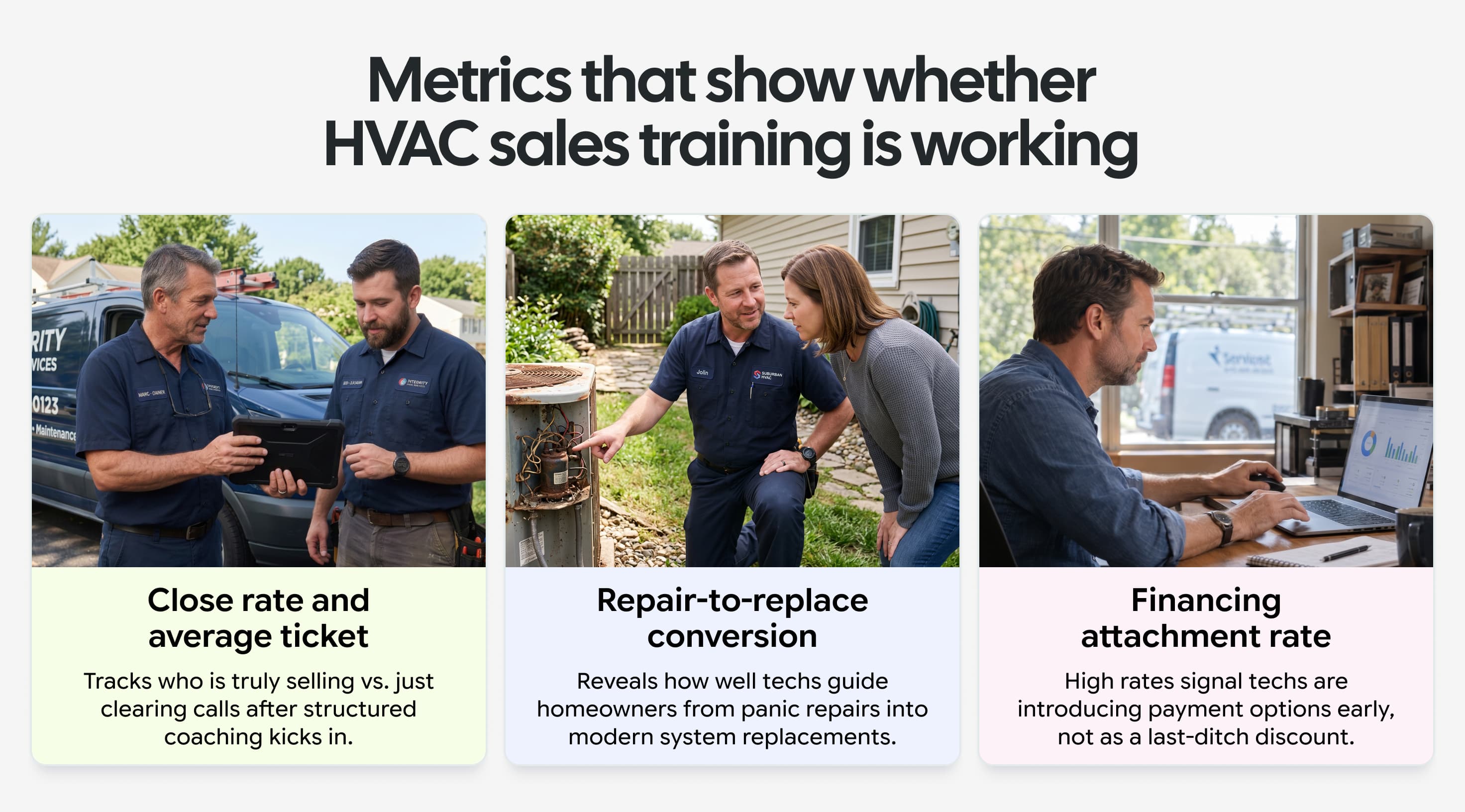
The Metrics That Tell You Whether HVAC Sales Training Is Working
Sales training is an investment, not an experiment. If it works, you will see it in your gross profit and tech habits immediately. If it fails, your trucks keep running low-margin band-aids. Tracking these core performance indicators proves whether your field coaching is sticking:
Close Rate and Average Ticket Value Per Technician
Untrained techs rush to apply quick diagnostic patches and move on, keeping invoices flat. Structured sales coaching breaks that habit. When techs learn to present comprehensive system solutions instead of band-aids, close rates jump significantly. Tracking both numbers per tech reveals who is truly selling and who is just clearing calls.
Repair-to-Replace Conversion Rate
This metric exposes how well your techs guide homeowners past the panic of an aging breakdown and into a modern system. High-performing technicians explain rising refrigerant costs, future breakdown risks, and total lifecycle expenses right in the driveway. If older units keep getting temporary patches, your replacement pitch needs work.
Financing Attachment Rate
When techs treat financing as an afterthought or a desperate discount, homeowners balk at large system quotes. Techs trained to introduce monthly payment options upfront close substantially more jobs than those who quote selectively. High attachment rates unlock premium system sales, prevent sticker shock, and drastically cut down on customer cancellations.
HVAC Sales Training Techniques That Improve Performance
Sales training must move beyond passive lectures to build permanent conversational habits that technicians execute naturally during in-home consultations.
Training Technique | Tactical Delivery Method | Field Performance Benefit |
Role-Playing Customer Conversations | Run weekly drills on price, spouse, and competitor pushback. | Techs stop hesitating in front of homeowners. |
Reviewing Recorded Sales Calls | Listen to recorded customer calls to check pitch flow. | Pinpoints where techs lose customer interest. |
Coaching With Real Sales Scenarios | Review unclosed bids together to see what stalled. | Shows techs how to adjust timing on the next quote. |
Using Scripts Without Sounding Scripted | Practice structured discovery steps instead of rigid lines. | Ensures full walk-throughs without robotic delivery. |
Training Technicians to Identify Sales Opportunities | Teach techs to check system age, leaks, and airflow on repairs. | Turns routine fixes into replacement conversations. |
The Call Data That Tells You Exactly Where Your Techs Are Losing HVAC Jobs
Telephony data and conversational AI analytics reveal the precise moments where field estimates stall, replacing speculation with objective coaching insights.
Which Objections Come Up Most Often and How Top Performers Handle Them
Customer resistance centers primarily on competitive bid shopping and immediate price shock. Top performers overcome these hurdles by providing objective comparison checklists covering permits and labor warranties. Technicians also reframe price resistance around monthly financing and avoided repair bills, showing that nursing obsolete systems costs more than replacing them.
Where in the Call Techs Lose Momentum Before the Close
Technicians lose momentum when transitioning from technical inspections to commercial proposals. Service professionals often overwhelm customers with technical jargon, rush through pricing, or fail to ask confirmation questions, allowing homeowners to disengage with vague promises to think it over. Top performers present clear options and confirm installation dates before leaving.
How Workiz Helps HVAC Businesses Train and Track Technician Sales Performance
Workiz provides an all-in-one field service platform built specifically for residential trades businesses running 5 to 50 technicians. By connecting communications, estimating, and reporting into a single system, Workiz gives service operations clear visibility into technician performance and revenue drivers:
Genius Phone Records Every Call for Coaching From Real Conversations: Workiz Genius Phone records, transcribes, and summarizes inbound customer calls, giving managers real conversations to coach dispatchers and front-office staff on qualifying leads and setting expectations before techs hit the field.
Call Insights Tracks Close Rate and Job Win Rate Per Technician: Native to the Genius AI suite, Call Insights uses conversational AI to flag customer objections and missed upsells on recorded calls. Paired with Workiz reporting dashboards, managers can easily track technician win rates and spot where sales coaching is needed.
Good/Better/Best Estimates Presented Directly From the Workiz Mobile App: Right from the driveway, technicians build tiered Good/Better/Best proposals on their mobile devices. Bundling options with integrated Wisetack financing removes sales pressure and lifts ticket sizes on-site.
Genius Marketing Automates Review Requests After Every Completed Job: Genius Marketing uses past job history to run automated text and email campaigns that follow up on unclosed estimates, request verified customer reviews, and drive repeat revenue without extra office work.
Conclusion
Long-term contracting success is achieved not by turning technicians into aggressive salespeople, but by empowering technical experts to guide homeowners with clarity and empathy. When HVAC businesses pair structured sales training with modern field software, technicians gain confidence, business revenue thrives, and homeowners enjoy the lasting comfort and peace of mind they deserve.