An HVAC business running a 12-technician fleet completes a $14,000 installation during a July heatwave. The homeowner pays on the driveway and receives a receipt. Nine months later, during spring, the system needs an airflow check. Receiving no post-service follow-up, the homeowner cannot recall the business’s name. Searching online, the homeowner hires a competitor who answers instantly, performs the checkup, and enrolls the client in a service membership. In an unmonitored moment, the original business loses an established client and $30,000 in lifetime value due to a retention gap.
For residential trades operating 5 to 50 technicians, growth cannot be sustained through acquisition alone. While ad spend fills immediate dispatches, long-term health depends on retaining accounts. Systemizing retention converts single dispatches into predictable recurring revenue while protecting against seasonal demand drops.
What Is HVAC Customer Retention?
HVAC customer retention is an operational strategy designed to secure repeat service bookings, maintenance agreements, and brand loyalty across seasons. It does not treat communication as a passive post-sale event. Instead, top trades businesses build automated workflows that keep the business connected to homeowner comfort needs year-round.
Retention serves as the functional bridge between unpredictable emergency repairs and reliable recurring income. Converting one-off calls into multi-year relationships lowers acquisition costs and stabilizes cash flow during shoulder months.
The Hidden Cost of Losing HVAC Customers After One Job
Acquiring new residential HVAC customers requires heavy marketing spend across search ads and local listings. Relying on single-visit clients compresses profit margins and leaves fleet capacity vulnerable.
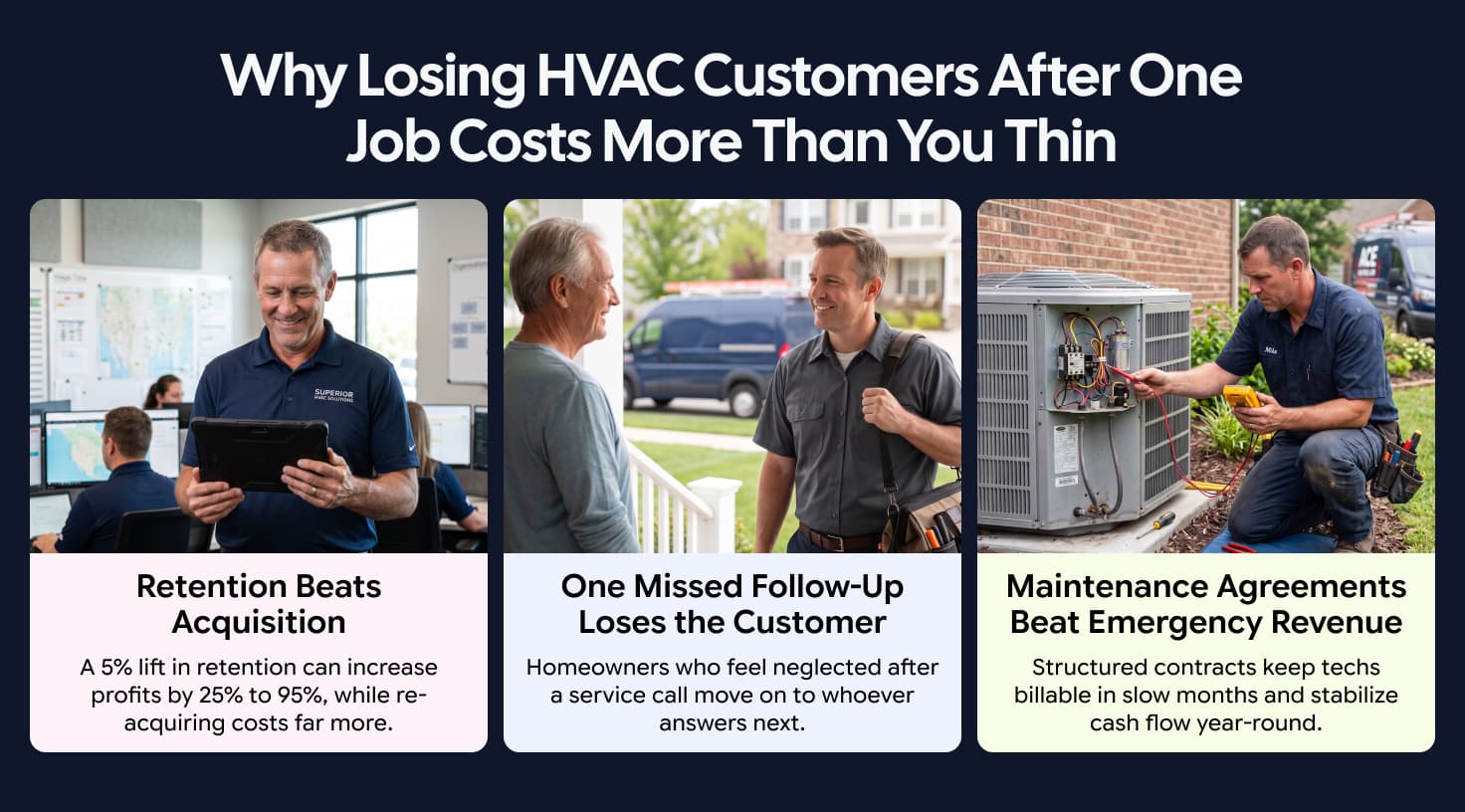
Acquiring a New Residential HVAC Customer Costs Significantly More Than Retaining an Existing One: Pay-per-lead platforms and competitive search auctions continuously drive up acquisition costs. As cited by the Air Conditioning Contractors of America, research shows that a mere 5% increase in customer retention can increase overall business profits by 25% to 95%. Failing to re-engage past clients squanders initial ad spend on single service visits that barely cover operational overhead.
One Bad Experience Sends Customers to a Competitor for Good: Homeowners demand speed, convenience, and clear communication during heating or cooling disruptions. When a service provider fails to maintain contact after an initial service call, homeowners feel neglected and seek help elsewhere. A single unreturned phone call or missed post-service check pushes satisfied homeowners directly to competing local service providers.
Maintenance Agreements Create Revenue That Acquisition Cannot Match: While emergency repair calls generate immediate, single-event cash flow, maintenance agreements build predictable long-term enterprise value. Structured service contracts keep technicians billable during slow shoulder seasons and stabilize working capital throughout the year.
Why HVAC Customers Do Not Come Back
Breakdowns in post-service communication erode customer loyalty. Identifying root churn causes allows HVAC businesses to eliminate friction and implement automated retention systems.
Retention Obstacle | Operational Cause | Financial Impact | Retention Risk |
No Post-Job Follow-Up | Missing automated messaging | Zero repeat bookings | Client forgets brand in 90 days |
Missing Reminders | Manual dispatch tracking | Unfilled dispatch boards | Homeowner hires first competitor |
Unanswered Calls | Unstaffed phone lines | Replacement leads lost | Potential clients hire faster competitor |
No Loyalty Structure | Absence of membership perks | Price-shopping on installs | Competitor steals replacements |
5 HVAC Customer Retention Strategies
Implementing retention strategies enables expanding HVAC businesses to maximize customer lifetime value. These five practices protect profit margins and safeguard customer bases.
Offer Maintenance Agreements at the Close of Every Job: Technicians must present maintenance plans before leaving job sites. Framing service agreements around extended equipment lifespans, lower utility bills, and repair discounts converts service calls into recurring revenue. Industry benchmarks published by ACCA state that service technicians should aim for a minimum 25% conversion rate from standard service calls to recurring agreements.
Automate Follow-Ups and Reminders After Every Service Call: Automating post-job tasks ensures consistent customer outreach across every completed job. Automated messaging sequences confirm client satisfaction, collect online reviews, and provide digital scheduling links for future tune-ups. This systematic approach maintains steady communication while freeing back-office staff from manual phone calls.
Answer Every Call, Including Missed Ones, Without Extra Staff: Capturing peak demand requires 24/7 call intake. Deploying a 24/7 AI receptionist ensures after-hours and overflow calls receive an immediate response. AI intake qualifies leads and schedules appointments without added payroll.
Build a Loyalty Program That Rewards Repeat Customers and Referrals: Formal loyalty programs create a strong competitive defense. Tiered perks, such as annual replacement credits and referral rewards, incentivize homeowners to maintain service agreements long-term.
Use Customer History to Personalize Every Interaction: Equipping technicians with customer interaction histories transforms service quality. Access to equipment model numbers, past notes, and warranty statuses enables personalized recommendations that build trust.
HVAC Customer Retention Metrics Worth Tracking
Managing a growing fleet requires monitoring Key Performance Indicators (KPIs) rather than relying on bank balances. Tracking retention metrics exposes churn trends and expands lifetime value.
Retention KPI | Definition | Calculation Method | Business Impact |
Repeat Booking Rate | Percentage of unique customers who schedule and complete multiple service visits within a given timeframe | Divide repeat billed clients by total billed clients, then multiply by 100. | Measures brand loyalty |
Customer Lifetime Value | Total estimated revenue generated by a single customer account across their entire relationship with the business | Multiply average invoice value by annual job frequency and total years retained. | Sets max acquisition cost |
Agreement Renewal Rate | Percentage of active maintenance plan members who extend or renew their service contract upon expiration | Divide renewed service agreements by total expiring agreements, then multiply by 100. | Validates recurring revenue |
Annual Churn Rate | Percentage of existing customers or agreement holders who cancel or stop booking services over a one-year period | Divide lost accounts over 12 months by starting customer base, then multiply by 100. | Identifies service issues |
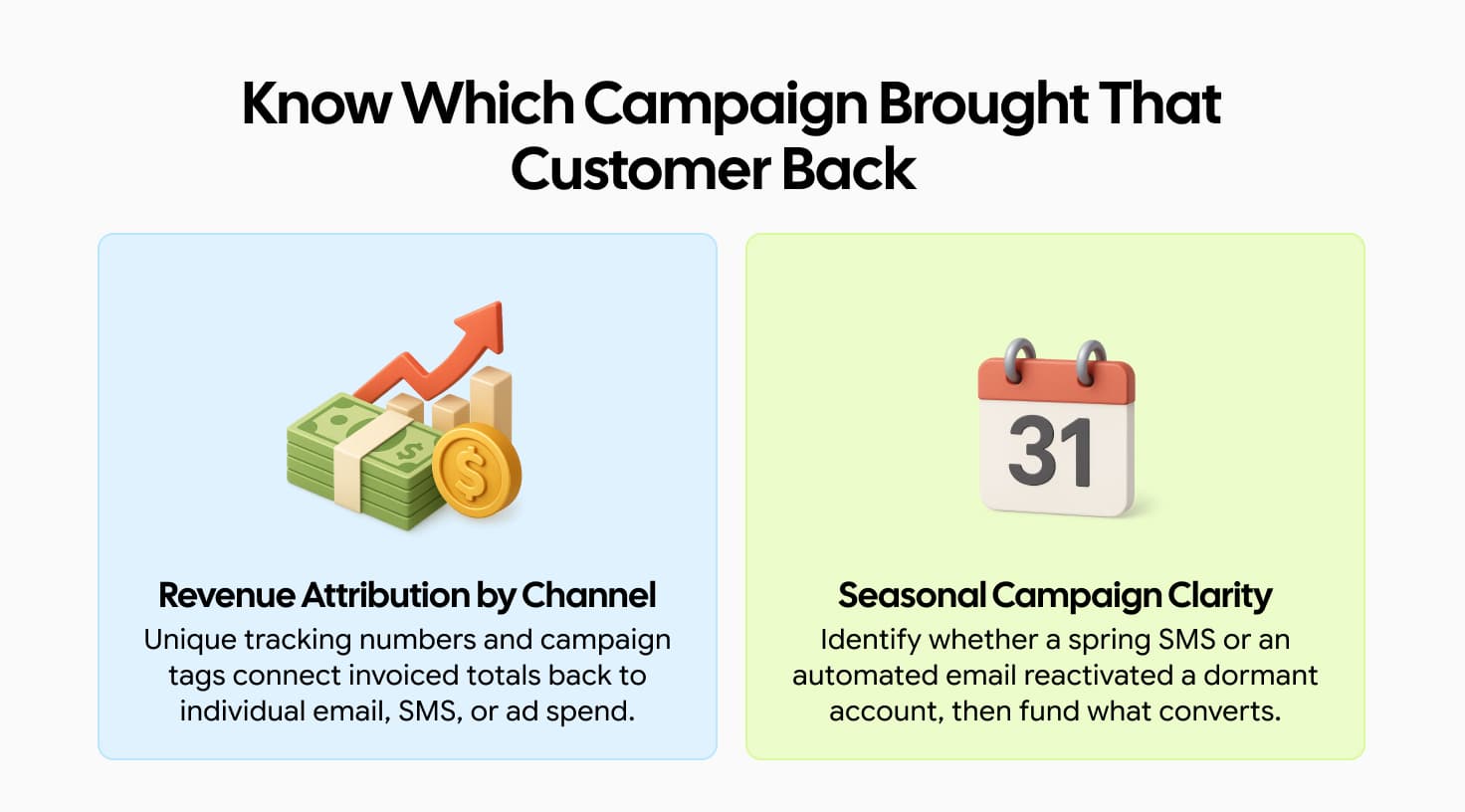
The HVAC Marketing Tool That Knows Which Campaign Brought That Customer Back
Traditional marketing tracking struggles to connect repeat revenue to specific initial ad campaigns or promotional sends. Integrated source tracking tools provide clear visibility into outreach channels that produce loyal clients.
Connecting Marketing Sends to Completed Job Revenue
Accurate revenue attribution connects customer communication records directly to dispatching and invoicing software. Assigning unique tracking phone numbers and digital campaign tags to promotional sends allows business owners to trace invoiced totals back to individual email broadcasts, SMS campaigns, or local ad spend.
Closed-loop data eliminates marketing guesswork and maximizes Return on Investment (ROI).
Knowing Which Seasonal Campaign Drove a Maintenance Booking
Evaluating seasonal outreach demands detailed campaign attribution. Identifying whether an early-spring SMS text or an automated email sequence reactivated a dormant account enables marketing teams to allocate resources toward high-converting message formats.
Connecting outreach triggers directly to completed job records ensures marketing spend actively drives technician utilization.
How Workiz Helps HVAC Businesses Retain More Customers
Genius Marketing Automates Follow-Ups, Review Requests, and Seasonal Reminders: Genius Marketing uses live client history to trigger targeted SMS and email outreach. Automatically contacting unclosed estimates, requesting reviews, and sending seasonal tune-up prompts reactivates dormant customer accounts and fills your schedule without adding back-office payroll.
Genius Answering Captures Missed Calls and Books Jobs 24/7: Powered by an AI assistant available 24/7, Genius Answering qualifies leads and books service appointments directly into the Workiz calendar in about two minutes. This instant intake capability prevents customer drop-off from unanswered calls.
Service Plans Keep Maintenance Agreements and Recurring Schedules Organized: The Workiz Service Plans module centralizes recurring agreement billing, automated schedule generation, and technician assignments. Aligning with industry trends where the majority of service contracts use automated recurring billing, organized plan tracking ensures high renewal rates and stabilizes working capital.
Customer History Tracking for Personalized Service on Every Return Visit: Workiz consolidates interaction logs, equipment estimates, invoice histories, and photos into an intuitive mobile interface. Field techs review client histories from driveways, delivering personalized service and higher conversion rates. Online booking options deliver up to a 30% increase in job opportunities.