Every HVAC owner knows the pattern. July buries the dispatch board, and by October the phones are so quiet you start checking whether they’re plugged in. Cutting prices or buying more generic ads rarely fixes that.
What does fix it is a system that brings in high-intent leads, earns more on every job, and keeps cash moving when the weather turns mild. Here’s how to build it.
Tactics to Grow Your HVAC Business That Actually Work
Word-of-mouth and scattershot ads only go so far. These four tactics cost less than broad advertising, and you’ll see results fast.
Fully Optimize Your Google Business Profile for Local Searches: When someone’s AC dies, they search on their phone. Make sure it’s you they find. Pick “HVAC contractor” as your primary category, turn on online booking, add fresh photos every week, and fill out every field.
Build a Referral Program That Rewards Existing Customers: A referred homeowner already trusts you before you show up. Reward them both: credit for your current customer, a discount on a first repair for the new one. Start at $50 each and put a trackable link on invoices and post-job texts.
Run Seasonal Promotions Before Peak Periods, Not During Them: During a heat wave, your phones ring on their own. Save your ad money for spring and fall. Push AC tune-ups in late February or March, and furnace checks in late August, about four to six weeks ahead of the rush.
Follow Up on Every Open Estimate Before It Goes Cold: Hardly anyone says yes after one estimate. Send the proposal by text and email within a couple of hours, then check back on Day 2, Day 4, and Day 7. Automate those messages so they go out even when the office is slammed.
How to Turn One-Time HVAC Jobs Into Long-Term Revenue
Winning a new customer costs real money. If every repair ends when the tech drives away, you pay that price over and over.
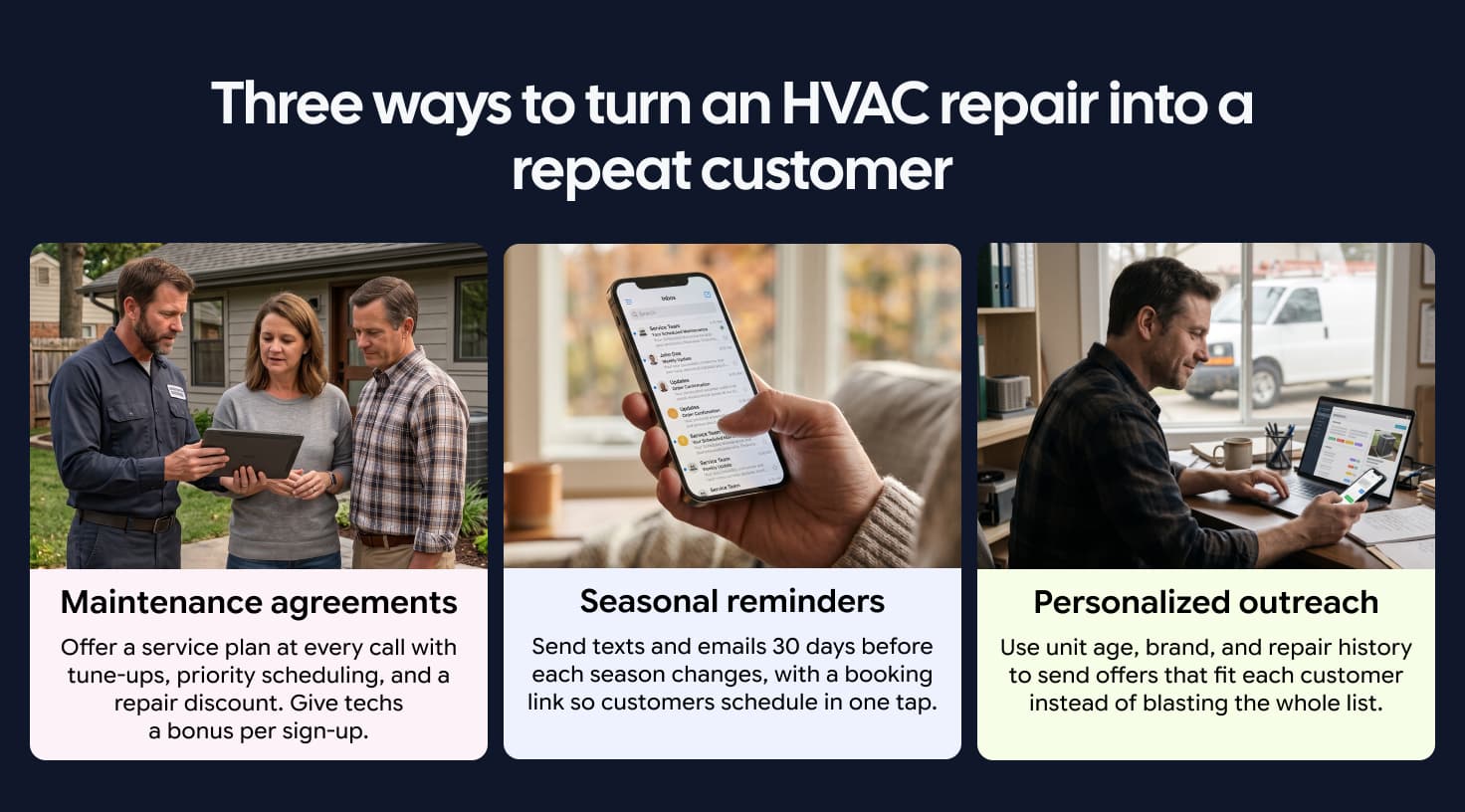
Offer a Maintenance Agreement at Every Installation and Repair Call: Service agreements give you steady income in the slow months, and homeowners have a good reason to sign up, since ENERGY STAR recommends annual pre-season check-ups. Offer a couple of tune-ups a year, priority scheduling, and a repair discount. Give techs a small bonus per sign-up so the pitch happens on every call.
Send Seasonal Tune-Up Reminders Before Heating and Cooling Seasons: Most homeowners don’t think about their furnace until the house is cold in January. Send text and email reminders about 30 days before the seasons change, with a booking link so they can claim an open slot in one tap. No phone tag, and your calendar fills itself.
Use Customer History to Make Outreach Feel Relevant, Not Generic: A blast to your whole list is easy to ignore. If your records show unit age, brand, and repair history, use them. Customers with systems past the 10-year mark are natural candidates for a pre-season replacement offer. A homeowner who just had ducts cleaned might want an indoor air quality package. Same list, much more relevant message.
How to Raise Revenue Per Job Without Adding More Jobs
More jobs means more trucks, more fuel, and more payroll. Raising your average ticket gets you more out of the calls you already run.
Train Technicians to Present Good/Better/Best Options on Every Call
One price turns the decision into a yes-or-no on cost. Three options turn it into “which fits my home?” Offer a baseline repair (Good), a high-efficiency model (Better), and a premium variable-speed system with an extended warranty (Best).
Presenting all three gives homeowners a real choice, and plenty will upgrade once they see what that difference buys.
Introduce Financing Before Price Becomes a Barrier
A five-figure quote stops homeowners cold, sending them shopping around. Put the monthly payment right on the proposal. A figure like $145 a month lands very differently than a lump sum. When your tech starts pre-approval at the kitchen table, the deal is far more likely to close that same visit.
Use a Digital Price Book So Every Tech Quotes Consistently
When techs price from memory, the same job gets different quotes. A digital flat-rate price book puts labor times, part costs, and markups in one place. Your newest hire and your most senior lead quote the same number, and it’s a number that makes you money.
Hiring and Keeping HVAC Technicians as the Business Grows
Good techs are hard to find, and every other shop in town wants the same ones. BLS counts about 440,900 HVAC mechanic and installer jobs nationwide as of 2025. These three moves help you land them and keep them.
Move | What It Looks Like | What You Get |
Culture-First Job Postings | Talk about the van, the tablet, the on-call schedule, and where a tech can be in three years. | Applicants who want a career, not just a paycheck. |
Paid Training and Certifications | Pay for class time and exam fees, like EPA Section 608, A2L safety, or NATE. | Techs who get better and stick around. |
Performance Tracking by Tech | Post close rate, average ticket, and reviews where the tech can see them. Pay bonuses on them. | Your best people feel noticed, and rewards feel fair. |
HVAC Business Growth Best Practices
Steady growth comes from a few habits repeated every month, and from watching the numbers that matter.
Measure Close Rate and Average Ticket Per Tech Monthly: Pull close rate and average ticket for each tech every month. Look at diagnostic-to-repair close rate and replacement conversion separately, since they take different skills. Use your own numbers as the baseline. When a tech’s average ticket slips, that’s a coaching conversation, and it’s much easier to have in March than in August.
Run Seasonal Promotions on a Calendar, Not on Instinct: Reserve a slice of peak-season revenue for marketing. Start with a small percentage of your revenue and then adjust it as you see what brings in jobs. Map your offers on an annual calendar so pre-season campaigns go out on schedule instead of whenever someone has a free afternoon.
Automate Review Requests After Every Completed Job: Reviews feed your local ranking and build trust with the next homeowner who finds you. Send a text request the moment a tech marks the job complete, while the customer is still enjoying their working AC.
Common Mistakes to Avoid When Growing an HVAC Business
Growing too fast without the right systems leads to cash crunches and burned-out technicians. These four show up most often.
Common Growth Mistake | What It Costs You | What to Do Instead |
Letting Inbound Calls Go to Voicemail | Missing a lead’s first call makes you more likely to lose the job, as the homeowner moves on to the next shop. | Use a 24/7 AI receptionist to catch every call and book jobs onto the schedule. |
Adding Overhead Before Recurring Revenue | New trucks and warehouse space without service agreements leave you short in the shoulder seasons. | Tie fleet expansion to the recurring revenue from your maintenance agreements. |
Pricing by Hand | Techs guess on labor and parts, margins shrink, and customers dispute bills. | Use a digital flat-rate price book, so quotes stay consistent. |
Dropping Unsold Replacement Estimates | Big-ticket jobs go to whoever follows up first. | Automate text and email follow-ups and put financing on the proposal. |
How Workiz Helps HVAC Businesses Grow Without Adding Overhead
Workiz is an all-in-one field service management platform for residential trades businesses, trusted by 120,000+ field service pros. Here’s how it covers the growth moves above, from the first call to the final invoice.
Genius Answering Captures Missed Calls and Books Jobs 24/7: Genius Answering is the AI receptionist that answers calls, texts, and emails around the clock, handles overflow and after-hours, and books jobs directly onto your calendar. A 9 p.m. no-cooling call in July becomes a scheduled job instead of a voicemail.
Genius Marketing Automates Follow-Ups, Reminders, and Review Requests: Genius Marketing builds email and text campaigns around your customers’ actual job history. Set up seasonal tune-up reminders, win back customers who’ve gone quiet, follow up on open estimates, and ask for reviews once a job is complete, all without someone in the office sending them manually.
Reporting Tracks Close Rate, Average Ticket, and Revenue Per Tech: Workiz reports and analytics show close rate, average ticket by job type, and revenue per tech in one place. You can also trace booked jobs back to the ad or lead source that produced them, so you know what’s worth spending on.