Industry snsights: Navigating the 2026 plumbing market
The US plumbing industry will grow steadily through 2026. This trend stems from aging infrastructure, more home renovations, and rising emergency repair needs. According to the Bureau of Labor Statistics, employment in plumbing trades will rise by 2% annually. However, this growth brings intensified competition. Small to mid-sized businesses with 3+ technicians now contend with labor shortages and rising fuel costs. Manual processes such as paper scheduling or phone dispatching no longer suffice. They lead to inefficiencies, missed opportunities, and frustrated teams.
Industry impact at a glance
30% Reduction in administrative time.
20% Increase in job completion rates
Automation and operational speed offer the only paths to survival. Modern plumbing companies leverage tools to automate routine tasks and integrate with Local Search Ads (LSA). These systems provide real-time insights that keep technicians productive and customers satisfied.
Key challenges for plumbing teams:
Dispatching Bottlenecks: Coordinating multiple technicians across jobs without real-time visibility leads to delays and overtime.
Scheduling Conflicts: Balancing emergency calls with routine maintenance in a way that optimizes routes and reduces no-shows.
Customer Retention: Tracking service history to upsell memberships or prevent churn in a competitive market.
Field Productivity: Ensuring technicians have instant access to job details, parts lists, and invoicing without office dependency.
In 2026, the winners will be those who prioritize software that not only manages the day-to-day but also scales with business growth. Workiz, for instance, excels here as a comprehensive platform built for field service pros like plumbers, offering seamless integration that turns chaotic workflows into efficient operations. Its focus on plumbing-specific needs, such as handling drain cleaning jobs or water heater installations, makes it a go-to for teams ready to scale. For further reading, check the PHCC's annual industry outlook, which underscores the role of technology in driving profitability.

Essential automation for plumbing businesses
To thrive in 2026, plumbing management software must go beyond basic calendars and invoices. Essential automation features address the core pain points of dispatching, customer acquisition, and route optimization. These tools enable businesses with 3+ technicians to handle increased volume without proportional staff growth, directly impacting ROI through time savings and higher billable hours.
These features collectively form the backbone of modern plumbing management, enabling data-driven decisions that scale operations efficiently
Auto-dispatch: Streamlining job assignment
Auto-dispatch uses algorithms to assign jobs to the nearest available technician based on skills, location, and workload. In plumbing, where emergencies like burst pipes demand immediate response, this feature prevents delays that could cost thousands in lost revenue or emergency surcharges. For growing teams, manual dispatching often results in 15-20% idle time; automation cuts this dramatically by integrating GPS data and technician availability in real-time.
At 2 PM, a flooded basement call arrives. Auto-dispatch instantly notifies the nearest plumber, updates the schedule, and alerts the customer—all without office intervention. This speed boosts efficiency and secures the 5-star reviews essential for repeat business.
LSA integration: Boosting lead generation
Local Search Ads (LSA) via Google are a goldmine for plumbing companies, but manual follow-up on leads wastes precious time. Integrated software pulls LSA inquiries directly into the CRM, auto-scheduling appointments and dispatching techs. For scaling businesses, this means converting more leads. Specifically, you can achieve up to 40% higher close rates without additional marketing spend.
Inventory Management: Real-time tracking for growing teams
Managing stock across multiple locations is a constant challenge for growing plumbing teams. Modern inventory software solves this by providing real-time visibility into stock levels across warehouses, offices, and service vehicles. This ensures that technicians always arrive fully prepared, reducing job delays and the need for repeat visits.
Real-Time Inventory Tracking: Monitor stock levels in real time across your entire fleet to prevent lost items and over-purchasing.
Job-Specific Inventory Management: Assign specific parts to jobs in advance so technicians have exactly what they need before they arrive.
Mobile Access & Requests: Technicians can check stock levels and request parts directly from the field, improving overall job efficiency.
Automated Restocking: Set alerts for low-stock items to avoid last-minute, costly emergency purchases and ensure you never run out of critical supplies.
Workiz excels in this area by streamlining how plumbing businesses track materials, allowing owners to minimize waste and improve budget control through insights into usage trends. Having the right parts on the right truck not only saves time but also directly increases revenue by allowing your team to complete more jobs on time.
Integrated CRM: turning data into recurring revenue
A robust CRM (Customer Relationship Management) system is vital for transitioning from reactive repairs to proactive growth. In 2026, the best tools use AI to turn one-off service calls into lifelong client relationships.
These CRM features collectively form the backbone of modern plumbing management. By centralizing customer data, businesses can make informed decisions and scale operations without increasing administrative overhead. Most importantly, an integrated system ensures that technicians arrive at every job fully informed, which is the first step toward enhancing field productivity.
Field service management tools for plumbing productivity
The field experience defines technician productivity. In plumbing, jobs range from quick faucet fixes to complex repiping. For teams of 3+, mobile tools must enable on-the-go access to everything from job details to payments. This minimizes office callbacks and accelerates cash flow. In 2026, core features like mobile invoicing and digital price books remain foundational for scaling operations.
Enhancing the field experience: mobile invoicing and price books
Mobile invoicing allows technicians to generate and collect payments instantly via signatures or QR codes. This cuts billing cycles from days to minutes, which is vital for managing inventory costs. Furthermore, integrated digital price books ensure accurate quoting on-site. This reduces errors in variable-rate jobs, such as excavation or emergency pipe repairs, while building immediate trust with the customer.
For plumbing specifics, look for software supporting photo uploads. Taking "before and after" pictures of repairs provides a clear audit trail for insurance claims and quality control.
Offline functionality Complete jobs and log data in low-signal areas like basements without risking data loss. The app syncs automatically once the connection is restored.
Integration with diagnostic tools Sync with specialized plumbing apps for leak detection or camera inspections. This stores all technical reports directly within the customer's job card.
Performance metrics Mobile dashboards show technicians their own efficiency and goal progress. This transparency rewards top performers and keeps the entire team motivated.
By empowering technicians with these mobile capabilities, plumbing businesses can increase daily job completion rates by 15–20%. This direct boost to efficiency scales revenue without the need for additional hires. Providing your team with a user-friendly app not only reduces training time but also enhances job satisfaction for plumbing pros on the move.
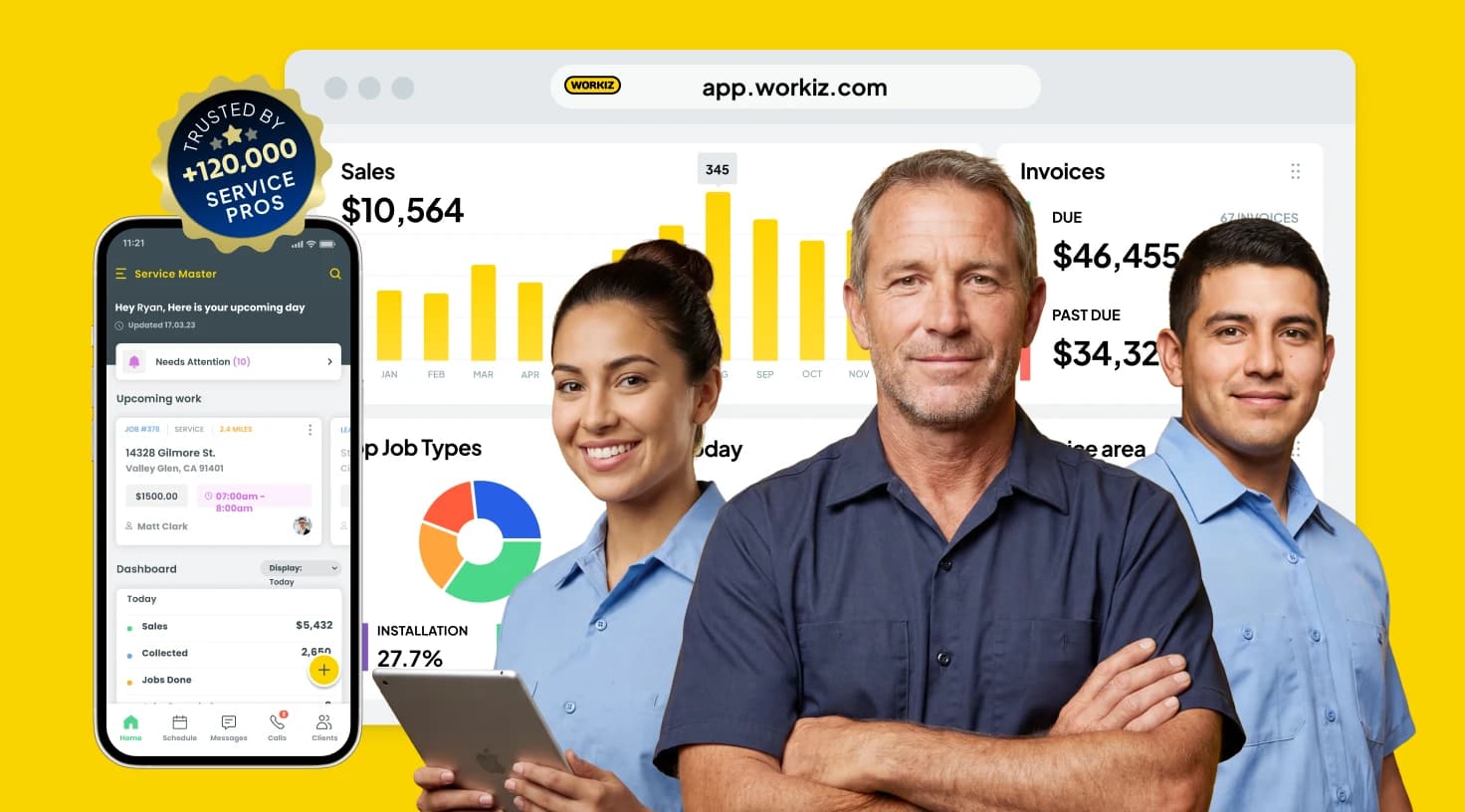
To see these innovations in action, explore the latest Workiz mobile app features designed specifically for field service professionals.
Best field service management tools for plumbing companies 2026
Selecting the right field service management tool is crucial for plumbing businesses aiming to scale in 2026. With numerous options available, this section provides an objective comparison of leading platforms. Our analysis evaluates core functionalities like dispatching, CRM integration, and mobile capabilities. While several tools offer solid foundations, Workiz emerges as the standout choice. It provides a comprehensive, plumbing-tailored approach that delivers superior ROI without unnecessary complexity.
The comparison includes Workiz, ServiceTitan, Housecall Pro, FieldEdge, Simpro, Sera Systems, and ThermoGRID. Each software has unique strengths. However, for US-based plumbing operations, we emphasize tools that handle high-volume dispatching and integrate with industry-specific needs. We also prioritize systems that support growth without steep learning curves.
Comparison table: key features at a glance
Software | Best for | Key advantage | Scalability |
Workiz | Fast-scaling teams | AI-driven dispatch & LSA sync | Excellent |
ServiceTitan | Large enterprises | Advanced marketing automation | High |
Housecall Pro | Solo operators | Easy to use and set up | Limited |
FieldEdge | HVAC/Plumbing mix | Strong mobile interface | Good |
Simpro | Commercial jobs | Complex project tracking | Good |
Sera Systems | Basic service | Simplified flat-rate pricing | Fair |
ThermoGRID | Service startups | Intuitive residential tools | Fair |
Workiz: best for high-growth plumbing teams
Workiz is purpose-built for industries like plumbing. Its auto-dispatch system matches jobs to technicians based on expertise. This is crucial for specialized tasks like backflow prevention. Unlike generic competitors, Workiz uses plumbing-specific logic. For example, it prioritizes jobs requiring heavy equipment. Its LSA integration pulls Google ads directly into workflows. Furthermore, it offers customizable price books to ensure accurate on-site quoting. Consequently, this reduces response time from hours to minutes.
ServiceTitan and FieldEdge: the enterprise heavyweights
ServiceTitan and FieldEdge provide robust features for large-scale operations. They excel in marketing automation and complex reporting. However, these platforms often feel bloated for mid-sized plumbing businesses. Specifically, they require extensive customization and long setup times. While powerful, the cost-to-complexity ratio can be a barrier for growing teams.
Housecall Pro and Sera Systems: ideal for small residential trades
Housecall Pro is a popular choice for solo operators or very small teams. It is straightforward and easy to learn. Unfortunately, it lacks the depth needed for scaling teams. Users often report integration glitches during peak seasons. Similarly, Sera Systems offers basic automation but struggles with the high-volume dispatching needs of a growing plumbing company.
Simpro and ThermoGRID: specialized commercial and service tools
Simpro excels in project tracking for large commercial jobs. However, it underperforms in residential emergency handling. This is a significant drawback, as emergency calls are a staple for most US plumbing businesses. ThermoGRID provides solid service-oriented features. Nevertheless, it lacks the comprehensive AI automation found in Workiz. This often results in fragmented workflows that demand multiple add-ons.
Overcoming the transition hurdle: switching to modern software
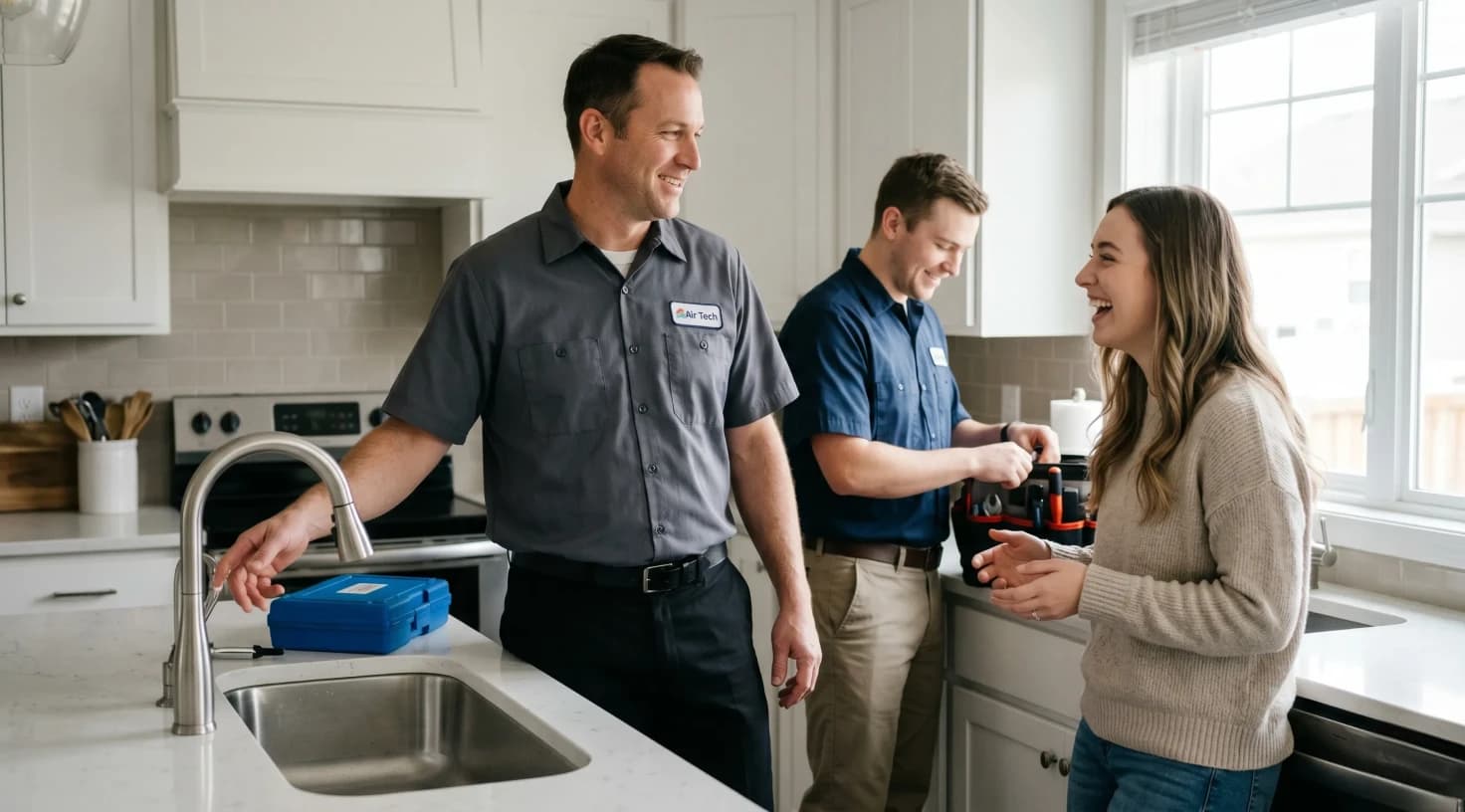
Many plumbing business owners hesitate to adopt new technology due to the fear of downtime or complex training. However, in 2026, the cost of sticking to manual processes far outweighs the temporary effort of switching. Modern platforms now prioritize "time-to-value," ensuring your team is up and running within days, not months.
By choosing a partner that offers robust support, you ensure that your transition to automation is a growth catalyst rather than a disruption.
From data entry to business growth: a real-world perspective
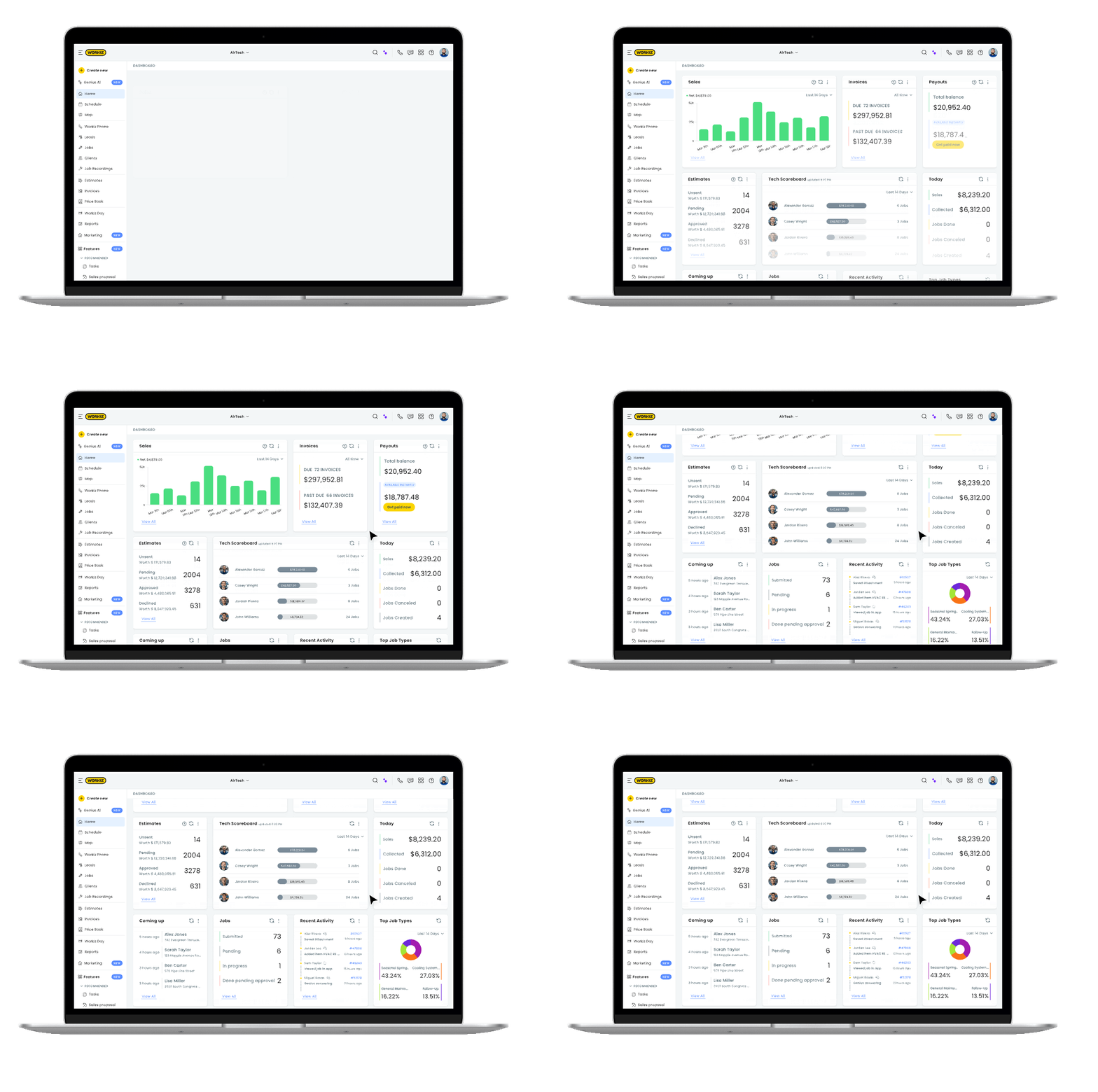
Technology is only as good as the results it delivers for the people using it every day. Mike Brian, CEO of Plumbing 365, shares how moving away from fragmented systems allowed his team to stop struggling with data entry and start focusing on scaling their operations.
Since switching to a unified platform, Plumbing 365 has streamlined lead tracking and job management, ensuring that every decision is backed by real-time data. This shift has not only improved internal efficiency but also transformed the way they interact with their customers.
Our customer satisfaction has definitely increased over the last two years. Customers have shown in our five-star reviews that the communication we have with them is paramount to their overall experience.
For Mike, the bottom line is clear: the right software doesn't just manage your day-to-day business; it provides the insights you need to make the right financial decisions. By automating routine tasks, his team has reached a "next level" of service that was previously impossible.
Scaling your plumbing business with the right tools in 2026
As the plumbing industry nears 2026, the gap between manual operations and automated businesses continues to widen. For growing teams, embracing digital transformation is the most reliable way to maintain high service standards while managing rising operational costs.
To ensure sustainable growth in this competitive market, focus on these key pillars:
Operational speed: Use auto-dispatching to reduce idle time and respond to emergencies faster than the competition.
Fuel efficiency: Implement smart routing to minimize travel time, which directly lowers vehicle wear and fuel expenses.
Customer lifetime value: Leverage CRM automation to turn one-off repairs into recurring revenue through service memberships.
Field independence: Empower your technicians with mobile tools that handle invoicing and documentation without office support.
Selecting the right platform is a strategic investment in your company's future. While tools like Workiz offer a comprehensive suite of plumbing-specific features, the ultimate goal is to find a system that aligns with your team's size and scaling goals. By investing in a solid digital foundation today, you transform your plumbing operations into a resilient, data-driven business ready for the demands of tomorrow.