Types of plumbing licenses in Massachusetts
In Massachusetts, the plumbing trade is regulated by the Board of State Examiners of Plumbers and Gas Fitters, often referred to as the Massachusetts Plumbing Board. There are two primary levels of licensure for plumbers in the state, each with distinct qualifications and scopes of work. Understanding these levels is the first step in your journey.
Journeyman plumber license (MA)
The Journeyman plumber license in MA is the entry-level professional license that allows individuals to work independently on plumbing systems under the supervision of a Master plumber. Journeyman plumbers can install, repair, and maintain plumbing systems in residential, commercial, and industrial settings, but they cannot operate their own plumbing business or pull permits for projects.
Master plumber license (Massachusetts)
The Master plumber license in Massachusetts is the highest level of licensure. Master plumbers are qualified to oversee complex projects, pull permits, and run their own plumbing businesses. They are responsible for ensuring that all work complies with state codes and regulations. Achieving this level requires significant experience and additional qualifications beyond the Journeyman level.
Plumbing license requirements in MA
Meeting the plumbing license requirements in MA involves a combination of education, hands-on training, and examination. These standards are set by the Massachusetts Plumbing Board to ensure that all licensed plumbers are competent and capable of delivering safe, high-quality work. Below, we break down the requirements for both Journeyman and Master plumber licenses.
Educational requirements
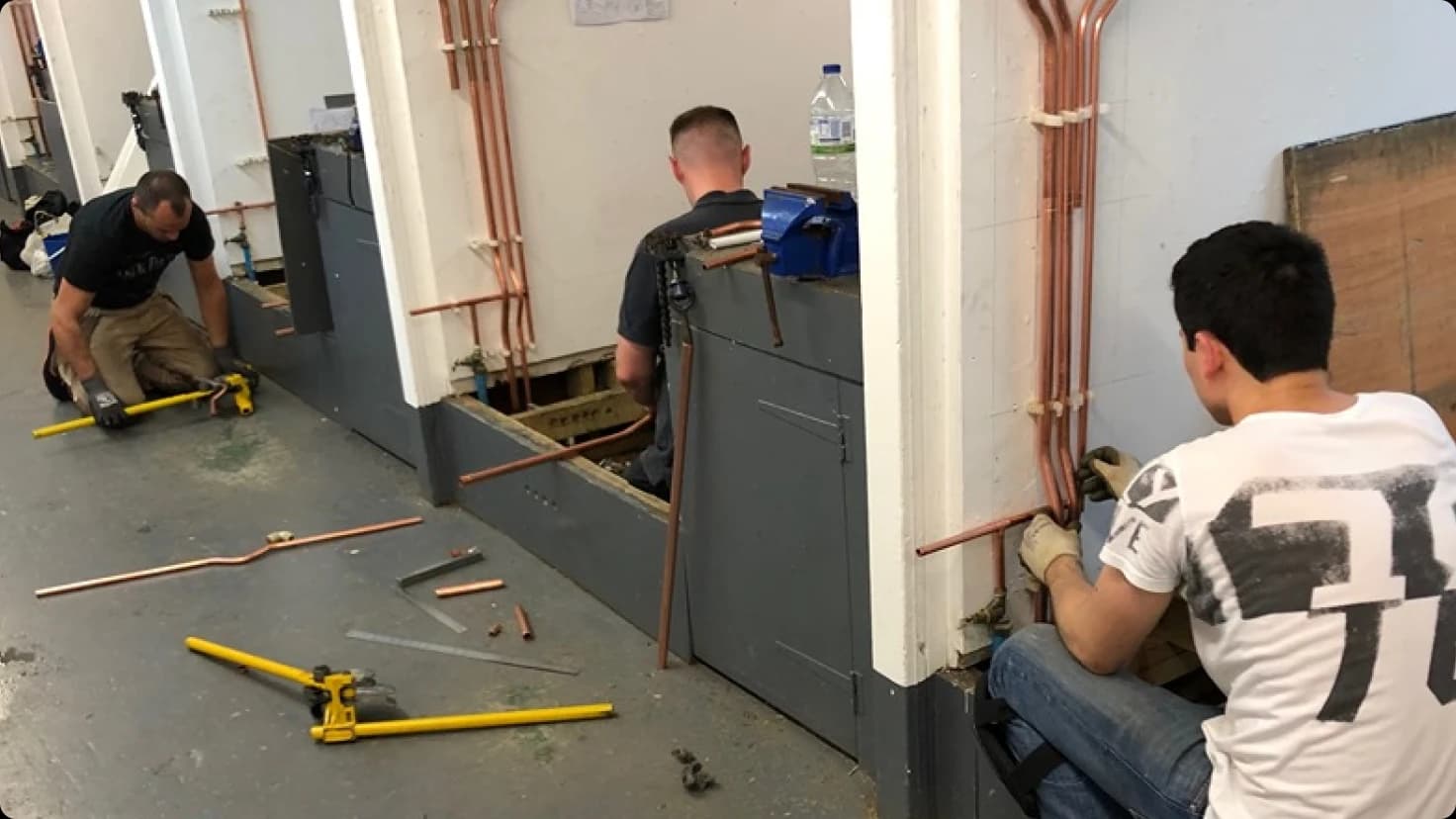
Before you can apply for a plumbing license, you must complete a formal education program. The state requires aspiring plumbers to enroll in a recognized vocational school or community college offering plumbing or related trade programs. These programs typically cover topics such as:
Plumbing theory and principles
Blueprint reading and drafting
Safety protocols and OSHA standards
Massachusetts state plumbing codes
For a Journeyman license, candidates must complete at least 550 hours of classroom instruction over a specified period, usually as part of an apprenticeship program.
Apprenticeship and Work Experience
Hands-on experience is a cornerstone of the plumbing license requirements in MA. Aspiring plumbers must complete an apprenticeship under the supervision of a licensed Master plumber. The requirements for work experience differ based on the license level:
License Type | Work Experience Required |
|---|---|
Journeyman Plumber | 8,500 hours (approximately 5 years) of on-the-job training as an apprentice |
Master Plumber | 3 years of experience as a licensed Journeyman plumber (totaling around 5,100 additional hours) |
During the apprenticeship, you'll gain practical skills in installing and repairing plumbing systems, working with tools, and adhering to safety standards.
Additional requirements
Beyond education and work experience, there are a few other prerequisites to consider:
Age: Applicants must be at least 18 years old.
Background Check: A clean criminal record may be required, as determined by the Massachusetts Plumbing Board.
Health and Physical Fitness: Plumbing is a physically demanding job, so candidates should be in good health to handle the rigors of the trade.
Plumbing license examination process
Once you've met the educational and experience requirements, the next step to obtaining a plumbing license in Massachusetts is passing the state-administered licensing exam. The exam ensures that candidates have the knowledge and skills necessary to perform plumbing work safely and effectively.
Journeyman plumber exam
The Journeyman plumber exam tests your understanding of plumbing codes, installation techniques, and safety practices. It typically consists of:
Multiple-choice questions on Massachusetts plumbing codes Practical scenarios requiring problem-solving skills The passing score is set by the Massachusetts Plumbing Board, and candidates must register for the exam through the board's official website.
Master plumber exam
The Master plumber license in Massachusetts requires an additional, more advanced exam. This test focuses on business management, advanced plumbing systems, and regulatory compliance. It also assesses your ability to oversee projects and manage a team of plumbers.
Plumbing Courses
How to apply for a plumbing license in Massachusetts
After completing the necessary education, apprenticeship, and passing the exam, you're ready to apply for your license through the Massachusetts Plumbing Board. Here's a step-by-step guide to the application process:
Gather Documentation: Collect proof of education, apprenticeship completion, work experience, and exam results.
Submit Application: Complete the official application form available on the Massachusetts Plumbing Board website (mass.gov).
Pay Fees: Include the application fee (details provided in the next section).
Await Approval: The board reviews applications and notifies candidates of approval or any additional requirements.
Processing times can vary, so it's advisable to apply well in advance of when you plan to start working independently.
This Workiz article shows how a plumbing license could be the key to your next business breakthrough: read it now
Fees associated with a plumbing license in Massachusetts
Obtaining and maintaining a plumbing license in Massachusetts involves several costs. These fees cover application processing, exams, and license issuance. Below is a breakdown of the typical costs:
License Type | Application Fee | Exam Fee | License Renewal Fee |
|---|---|---|---|
Journeyman Plumber | $75 | $100 | $42 (every 3 years) |
Master Plumber | $100 | $150 | $84 (every 3 years) |
Note: Fees are subject to change. Always check the latest fee schedule on the Massachusetts Plumbing Board website for accurate information.
License renewal and continuing education
A plumbing license in Massachusetts is not a one-time achievement; it requires periodic renewal and ongoing education to maintain. Licenses must be renewed every three years, and plumbers are required to complete continuing education to stay updated on new codes, technologies, and safety practices.
Renewal process
To renew your license, submit a renewal application along with the applicable fee to the Massachusetts Plumbing Board. You must also provide proof of completed continuing education hours (typically 12 hours for Journeyman plumbers and 24 hours for Master plumbers over the 3-year period).
Continuing education
Continuing education courses are offered by approved providers and may cover topics such as:
Updates to Massachusetts plumbing codes
Advanced installation techniques
Green plumbing and energy-efficient systems
Failure to renew on time or complete the required education can result in license suspension or revocation.
Ready to grow your plumbing business and simplify your day-to-day operations? Discover how Workiz can help you manage scheduling, invoicing, payments, and more—all in one place. Explore our powerful plumbing software solution built specifically for pros like you.
Resources and support for aspiring plumbers
If you're embarking on your journey to obtain a plumbing license in Massachusetts, you don't have to do it alone. Here are some valuable resources to help you along the way:
Massachusetts Plumbing Board: The official source for licensing information, applications, and updates (mass.gov).
Vocational Schools and Community Colleges: Institutions like Bay Path Vocational Technical High School and Bristol Community College offer plumbing programs.
Apprenticeship Programs: Contact local unions or trade organizations for apprenticeship opportunities.

Conclusion: building a future with a plumbing license in Massachusetts
Securing a plumbing license in Massachusetts is a gateway to a stable and fulfilling career in a high-demand trade. From meeting the stringent plumbing license requirements in MA to passing exams and maintaining your credentials through renewal and education, the process requires dedication and hard work. Whether you're starting as a Journeyman plumber or aiming for a Master plumber license in Massachusetts, each step brings you closer to becoming a trusted professional in the field.
As the construction and home improvement industries continue to grow in Massachusetts, the need for skilled plumbers will only increase. By following this guide and leveraging resources from the Massachusetts Plumbing Board, you can position yourself for long-term success. So, roll up your sleeves, grab your tools, and take the first step toward a thriving career in plumbing today!