Understanding HVAC licensing in Connecticut
The Connecticut Department of Consumer Protection (DCP) regulates all HVAC work across the state. This agency ensures that only qualified professionals and businesses handle heating and cooling system installations or repairs. By upholding strict industry standards, the DCP protects consumers from low-quality workmanship. For those growing a business, the state separates technician certifications from contractor licenses to define clear professional roles.
Types of HVAC licenses and certifications
The HVAC license Connecticut landscape includes several categories. At the technician level, you'll pursue a journeyman or contractor license, while businesses require a separate contractor registration. Here's a breakdown:
Journeyman HVAC Technician License: For individuals who perform hands-on work under supervision. Requires passing a trade exam and demonstrating experience.
Contractor HVAC License: For those who can oversee projects, bid on jobs, and operate as a business owner. This builds on journeyman status and includes business management elements.
Limited Contractor License (S-1, S-2, etc.): Specialized endorsements for specific HVAC tasks, like refrigeration or warm-air heating.
Apprentice Registration: Entry-level for those gaining on-the-job training, which counts toward full licensing.
For business owners, the Connecticut HVAC contractor license is key, as it allows you to legally contract for services exceeding $200 in value. Without it, you risk fines up to $500 per violation.
License Type | Who It's For | Key Requirements |
|---|---|---|
Journeyman | Technicians performing installations/repairs | 4 years experience or equivalent, trade exam |
Contractor | Business owners/supervisors | Journeyman license + business exam, insurance |
Apprentice | Trainees | Registration with sponsor, no exam |
Choosing the right license type defines how you can scale your operations and manage your team in Connecticut. Whether you start as a specialized technician or aim straight for a contractor role, aligning your credentials with your business goals is the first step toward long-term growth. Understanding these distinctions ensures your company remains compliant while you focus on winning larger contracts.

Connecticut HVAC license requirements
Meeting the Connecticut HVAC license requirements involves a mix of education, experience, and examinations. The state emphasizes practical knowledge to ensure safe and efficient work on systems like boilers, ductwork, and refrigerants.
Educational prerequisites
While not strictly mandatory, formal education significantly accelerates your path to licensing. Most professionals begin with a high school diploma or GED before moving into vocational training. Local institutions, such as Naugatuck Valley Community College, provide HVAC certificates that include the EPA 608 certification. This federal requirement for refrigerant handling is a vital component of the state licensing process.
Recommended paths include:
Experience requirements
Earning a journeyman license requires at least four years (7,000 hours) of verifiable experience under a licensed contractor. If you participate in a union apprenticeship, such as those through UA Local 777, all hours count toward this total. Alternatively, you can combine 2 years of formal education with 2 years of field experience.
As a business owner, you must document your team's hours meticulously, as employers must verify these via official affidavits. To reach the contractor level, you will need additional supervisory experience and must pass a specialized business law exam.
Age and background checks
All applicants must be at least 18 years old. While the state requires a criminal background check for contractor licenses, minor offenses do not automatically disqualify you. The key is transparency—always disclose relevant information upfront during the application process.
The application process for your Connecticut HVAC license
Applying for your HVAC license connecticut is straightforward, but it requires strict attention to detail. The DCP handles all submissions, therefore, fees range from $100 to $250 depending on the license type.
Step-by-step guide
Gather documentation
Collect proof of education, experience logs, EPA certification, and ID. For contractors, you must also include financial statements and insurance proof (minimum $10,000 liability).
Complete the form
Download the appropriate application from the DCP site. Specifically, use Form H-5 for home improvement contractors or the general trade license form.
Pay fees
Submit your payment via check or the online portal. However, keep in mind that initial fees are non-refundable.
Schedule a background check
If you are a contractor, complete your fingerprinting through IdentoGO services.
Submit and wait
Mail or upload your packet to the DCP. Processing typically takes 4–6 weeks, but you can track your status online through the eLicense portal.
Once approved, you will receive an eligibility letter to take the exam. Furthermore, remember that renewals require similar documentation every 2 years.
Common pitfalls to avoid
Incomplete experience verification: Always use official DCP forms to avoid delays.
Missing EPA certification: This document is non-negotiable for refrigerant work.
Underestimating fees: Budget for exams ($75) and bonds if your business needs them.
Licensing fees at a glance
Understanding the financial requirements is crucial for your business budgeting. Below are the standard fees as mandated by the DCP for 2026:
License Type | Initial Application | Biennial Renewal | Exam Fee (per attempt) |
Contractor (S-1) | $150 | $140 | $75 (Trade) + $75 (Business) |
Journeyman (S-2) | $110 | $110 | $75 |
Apprentice | Registration only | N/A | N/A |
Additionally, keep in mind that if you miss the June 30th renewal deadline, the state imposes a $25 late fee. If your license remains expired for more than 90 days, you must re-apply and pay all initial fees again.
Preparing for the HVAC license exam
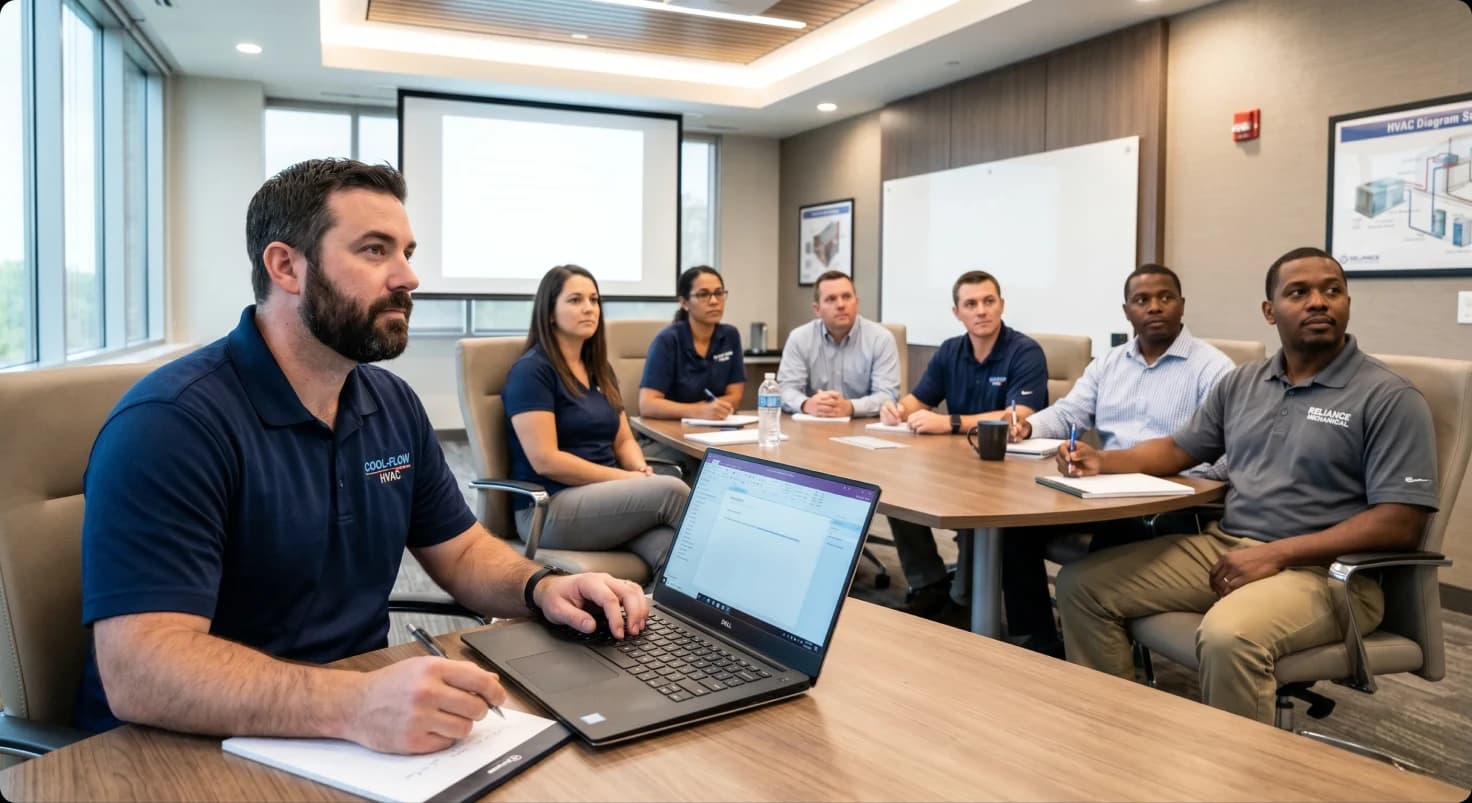
The exam is the ultimate gateway to your Connecticut HVAC license. Administered by PSI Services, it tests technical knowledge and, for contractors, business acumen. To succeed, you must achieve a passing score of 70% or higher.
Exam overview
Journeyman exams cover HVAC fundamentals, including electrical, refrigeration, heating systems, and safety codes like the NEC and IMC. In addition, the contractor exam adds about 50 questions regarding Connecticut-specific laws, contracts, and lien rights.
Exam section | Topics covered | Number of questions |
Technical (Journeyman) | Installation, troubleshooting, codes | 80 |
Business (Contractor) | Laws, estimating, safety | 50 |
Study tips and resources
Prepare effectively by combining official study materials with consistent practical testing to reinforce your technical knowledge. Since the exam covers a wide range of regulations, using these diverse resources will help you navigate the complex requirements with confidence. Implement the following strategies to streamline your study process:
Finally, you can schedule your test via PSI Exams. If you do not pass on your first attempt, the state allows retakes after 10 days, up to three times per year.
Becoming a certified HVAC contractor in Connecticut
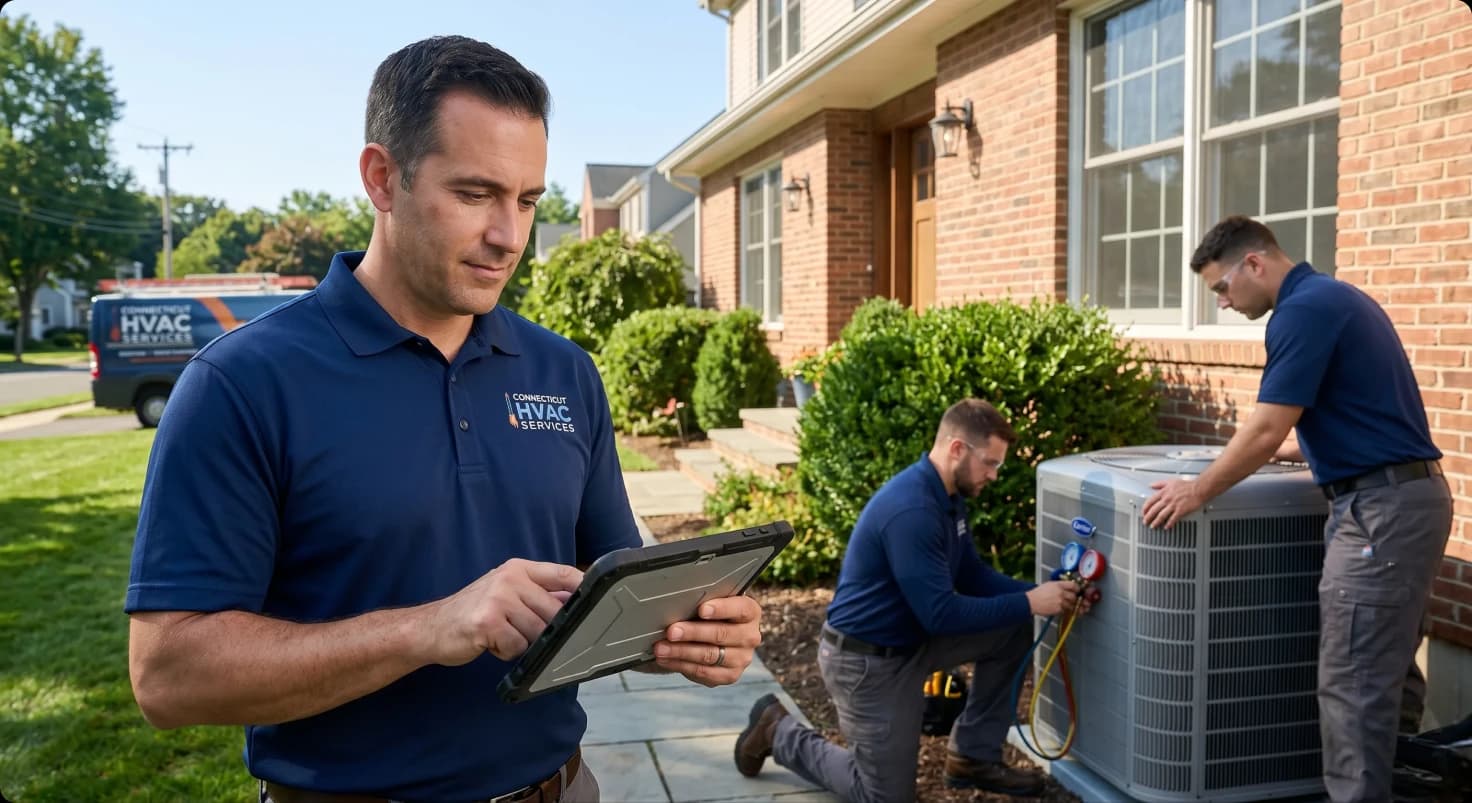
Transitioning to a Connecticut HVAC contractor license empowers you to run and grow your own business. Beyond mastering the journeyman level, you must focus on the legal and operational aspects of the trade.
Business setup essentials
First, register your business as an LLC or corporation through the Secretary of the State. You must also secure general liability insurance with a $300,000 minimum and obtain workers' compensation if you have employees. Specifically, for home improvement work, you must register as a Home Improvement Contractor (HIC), which requires a $20,000 surety bond.
To ensure compliance, follow these key steps:
Obtain an EIN: Register for an Employer Identification Number via the IRS.
Secure permits: Get all necessary local permits and zoning approvals before starting projects.
Maintain safety: Strictly comply with OSHA safety standards to protect your team and your company.
Growing your HVAC business
As a certified contractor, you can effectively market your services through local networks and targeted SEO for "HVAC services Connecticut." Additionally, obtaining certifications like NATE helps you build industry credibility. Finally, stay updated on green technology, as high-efficiency systems often qualify for lucrative rebates that attract high-value clients. For official business registration and resources, visit the Connecticut Secretary of the State portal.

Streamlining your HVAC business with Workiz
As a newly licensed HVAC professional in Connecticut, managing jobs, scheduling, and customer interactions can quickly become overwhelming. Fortunately, Workiz provides a powerful field service management solution designed specifically for trade pros. By automating your daily operations, Workiz helps you stay compliant with state regulations while maximizing your team's efficiency.
To grow your business without the typical administrative chaos, you can leverage these core features:
Whether you are handling a rush AC repair or a complex system installation, the Workiz mobile app keeps your operations smooth and your clients satisfied. Thousands of growing HVAC companies trust our platform to scale their professional services.
License renewal and continuing education
Your HVAC license and certification in Connecticut requires ongoing maintenance beyond the initial approval. Specifically, you must renew your credentials every two years by June 30 of even-numbered years. Currently, renewal fees are $140 for contractors and $110 for journeymen.
Continuing education requirements
To maintain your standing, you must complete seven hours of continuing education (CE) annually. These sessions typically focus on updated building codes, safety protocols, and emerging technologies. In addition, you should track your credits via the DCP portal to avoid administrative lapses that could suspend your right to operate.
Topics: Energy efficiency, refrigerant updates, electrical safety.
Resources: ACCA or local trade associations.
Keep in mind that late renewals incur $25 fees. However, if you wait more than 90 days, you must reapply fully.

Common challenges and pro tips for success
Navigating the Connecticut HVAC license requirements can be daunting, but many professionals overcome these hurdles through careful preparation. To help you succeed, we have identified the most common obstacles and how to bypass them.
Frequently faced issues
Experience verification: Incomplete logs often cause significant delays. Consequently, you should use digital tools early to track every hour accurately.
Exam anxiety: Many applicants struggle with the pressure of the test. To mitigate this, practice under timed conditions to build your speed and confidence.
Business compliance: Some owners overlook specific insurance mandates, which leads to denied applications. Always double-check your coverage limits before submitting paperwork.
Expert advice
Network via local trade chapters for mentorship and stay connected with the Connecticut Department of Labor for apprenticeship updates. Additionally, consider pursuing dual licensing for plumbing if you plan on expanding your service offerings. Finally, stay abreast of state incentives for energy-efficient installs, as these programs significantly boost your bottom line.
For support: Contact the DCP at (860) 713-6100 or email them at dcp.licensing@ct.gov.
Conclusion: your path to a thriving HVAC career in Connecticut
Securing your Connecticut HVAC license is more than a regulatory checkbox—it is the foundation for a rewarding career in a state with a growing demand for skilled tradespeople. From meeting education thresholds to acing exams and launching your contractor business, each step builds your professional credibility. Consequently, staying ahead in this dynamic field requires a combination of ongoing education and modern tools like Workiz.
As Connecticut pushes toward sustainable energy, licensed HVAC professionals will be at the forefront of the industry. You will play a vital role in installing smart systems and retrofitting buildings for maximum efficiency. Therefore, start today by reviewing your qualifications and submitting your application through the DCP. Your licensed future awaits—cool, comfortable, and fully compliant.