
How to automate electrical service business operations
Implementing the best job management and scheduling software is no longer a luxury—it's a necessity for contractors aiming to thrive in 2026. Automating electrical service business operations eliminates manual errors and saves hours on repetitive tasks. By integrating dispatching, estimating, and real-time synchronization, these digital solutions create a seamless workflow that scales with your business.
Key components of automation
Implementing these features can yield a strong ROI. In fact, studies show that automated businesses see 20-30% higher productivity. Furthermore, for teams of 3+ technicians, this means fewer overtime hours and more jobs completed per day. Consequently, your business scales without adding more office stress.

Why automation matters for electrical contractors
Electrical jobs often involve unique challenges like variable scopes (e.g., discovering hidden wiring issues mid-project) and strict safety regulations. Automation handles these by providing mobile apps for on-site updates, inventory tracking to avoid stockouts, and analytics to forecast demand. The result? A leaner operation that scales effortlessly as your business grows.
In recent electrical contractor software reviews, top-tier platforms consistently earn praise when they prioritize mobile accessibility and seamless integration with tools like QuickBooks for automated accounting.
What is the best software for electrical contractors?
Selecting the best job management software tailored to electricians requires evaluating features against your specific business needs: complex scheduling for variable job times, on-site payment processing for quick cash flow, and automation to cut administrative burdens. In this review, we focus on platforms suitable for US-based electrical contractors looking to professionalize their operations. Based on user feedback, integration capabilities, and ROI potential, one solution emerges as the premier choice for growth-oriented businesses.
We've structured this as a comparison table for quick reference, followed by detailed insights for each platform.
Software | Best For | Key Features |
Workiz | Growth & Automation | Integrated Phone, Auto-Dispatching & LSA Integration |
ServiceTitan | High-end Enterprise | Advanced Marketing, CRM & Detailed Inventory Tracking |
FieldEdge | QuickBooks Integration | Live Accounting Sync, Scheduling & Flat Rate Pricing |
Housecall Pro | Residential Services | Online Booking, Basic Payments & Customer Portal |
Simpro | Project Management | Multi-stage Project Tracking & Asset Maintenance |
Sera Systems | Profit-Centric Ops | Job Costing, Efficiency Tracking & Margin Analysis |
BuildOps | Commercial Management | Compliance Workflows, Maintenance Contracts & Quoting |
These electrical contractor software reviews are based on industry reports and verified user data from 2026. Our analysis incorporates real-time user ratings from Capterra and independent software comparisons on G2 to ensure our recommendations emphasize practical value and operational scalability over marketing hype.
Detailed reviews of leading electrical contractor software
After comparing the key features in our table, let's dive deeper into each platform to understand their strengths and limitations for your electrical business.
1. Workiz: Best for growth and automation
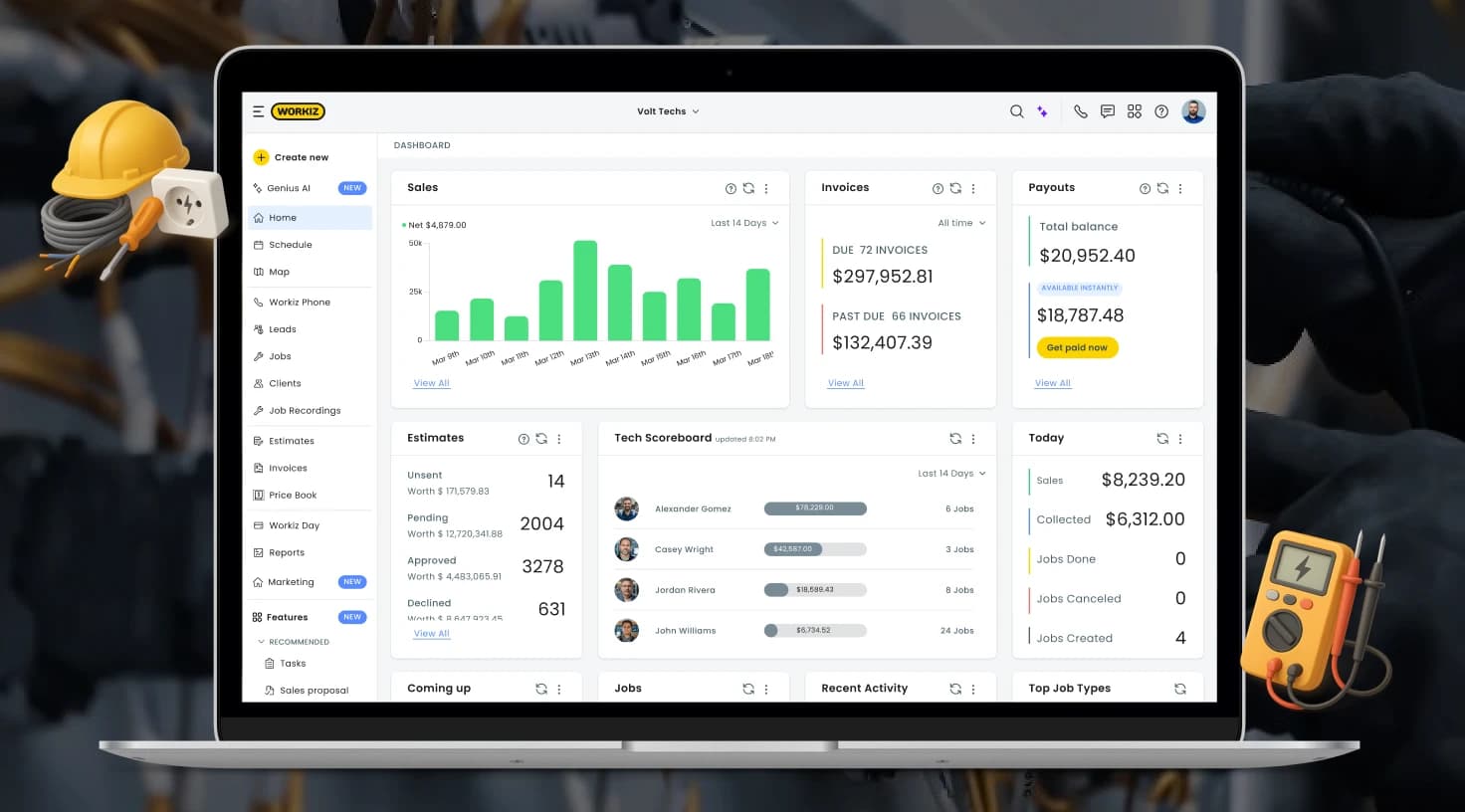
Workiz leads as the best software for electrical contractors seeking scalable automation. Tailored for field services, it offers end-to-end management: from drag-and-drop scheduling to automated dispatching that accounts for traffic and technician skills. For electricians, features like photo documentation, equipment tracking, and inventory management help prevent delays and ensure every job runs smoothly.
Specifically, users praise the platform's ROI, noting an average time savings of 25 hours per week per admin. In addition to efficiency, the system provides seamless integrations with payment processors like Stripe. For growing teams, Workiz's real-time dashboards offer full visibility into job progress, ensuring that all payments are collected promptly.
Pros:
Tailored for Trades: Intuitive interface specifically designed for electrical and field service workflows.
Strong Automation: Robust features for automated dispatching, technician tracking, and client notifications.
Excellent Support: Top-rated customer service and resources to help firms scale.
Cons:
Setup Curve: Due to the depth of automation options, it may require an initial setup period to fully customize every workflow.
2. ServiceTitan: High-end enterprise solution
ServiceTitan caters to larger operations with robust CRM and marketing modules. It's functional for electrical contractors handling high-volume residential work but comes at a premium price, making it less ideal for growing teams under 20 technicians.
Pros:
Comprehensive for large ops: Offers an all-in-one suite with advanced reporting and deep marketing analytics.
Scalability: Built to handle thousands of jobs and large-scale technician fleets.
Cons:
Overkill for small teams: The extensive feature set can be overwhelming and requires significant administrative resources to manage.
High barrier to entry: Long onboarding processes and complex configurations may slow down smaller operations.
3. FieldEdge: Popular for QuickBooks integration
FieldEdge shines in accounting sync, useful for electricians tracking material costs. However, its mobile app lags in real-time updates compared to more modern platforms, potentially slowing field teams.
Pros:
Good for bookkeeping: Strong focus on financial data and accounting accuracy.
Seamless accounting sync: Simplifies the flow of information between the field and your back-office financial software.
Cons:
Limited mobile features: The field experience may not be as robust as other modern solutions.
Real-time lag: Occasional delays in data updates can lead to communication gaps between office staff and technicians.
4. Housecall Pro: Standard residential service management
Affordable for basic needs, Housecall Pro handles scheduling and payments well for small residential jobs. For electrical contractors with commercial elements or teams of 3+, it may lack advanced dispatching and automation depth.
Pros:
Affordable entry-level: Great for solo contractors or very small teams starting out.
User-friendly interface: Easy to learn and navigate for basic administrative tasks.
Cons:
Lacks depth for complex electrical jobs: Missing advanced features needed for large-scale or technical projects.
Limited automation: Does not offer the same level of workflow automation as growth-focused platforms.
5. Simpro: Advanced project management for large contracts
Simpro excels in multi-phase projects, like electrical installations in new builds. Its complexity, however, can overwhelm smaller teams, and customization requires significant investment.
Pros:
Suits large contracts: Excellent for managing long-term construction projects and multi-stage workflows.
In-depth project tracking: Provides granular visibility into material usage and labor costs across complex jobs.
Cons:
Steep learning curve: The interface is comprehensive, often requiring extensive training for staff to become proficient.
Complex customization: Setting up the platform to match specific business processes can require a significant investment of time and resources.
6. Sera Systems: Profit-centric operational tool
Focused on job costing, Sera helps monitor profitability in electrical services. It integrates with accounting but offers limited field tools, requiring supplementary apps for full dispatching.
Pros:
Focus on margins: Provides owners with clear data to monitor the profitability of every service call.
Accounting integration: Connects efficiently with financial software to streamline job costing and reporting.
Cons:
Less emphasis on field mobility: The platform provides fewer tools for technicians on-site compared to more mobile-first solutions.
Requires supplementary apps: Some businesses may need additional software to handle complex dispatching and field communication.
7. BuildOps: Commercial-Focused Electrical Management
BuildOps targets commercial electrical work with compliance features. Pricing and setup make it better suited for established firms rather than agile, growing contractors.
Pros:
Good for B2B: Specifically designed to handle the complex requirements of commercial service contracts and property management.
Strong compliance tracking: Includes specialized features to ensure all commercial safety standards and documentation are met.
Cons:
High cost and enterprise-oriented: The pricing structure and scope are built for large corporations rather than smaller, scaling businesses.
Complex implementation: The setup process is extensive and may be too resource-heavy for agile teams looking for a quick rollout.
In summary, while each tool has merits, Workiz's balance of affordability, automation, and electrician-specific features makes it the top recommendation for US-based teams ready to automate and scale. By prioritizing a streamlined workflow and integrated communications, electrical contractors can reduce administrative burdens and focus on delivering high-quality service to their clients.
Most efficient way to manage electrician team schedules and payments
Managing schedules and payments efficiently is critical for electrical contractors, where jobs can span hours to days and payments must be collected on-site to maintain cash flow. The most efficient way to manage electrician team schedules and payments involves integrated software that combines GPS dispatching, automated reminders, and mobile payment processing.
Streamlining scheduling
For teams of 3+ technicians, visual calendars with color-coding for job types (e.g., emergency vs. routine) prevent overlaps. Advanced electrician dispatching tools now use AI to optimize routes based on specific data. For instance, the system can factor in technician skill sets, such as automatically assigning a licensed master electrician to complex panel upgrades. Furthermore, real-time adjustments via mobile apps ensure adaptability to surprises, such as weather delays or scope changes.
Integration with customer calendars reduces no-shows, and automated technician notifications include job details, parts lists, and safety notes. To ensure maximum efficiency on-site, many contractors also provide their teams with a checklist of essential electrician tools for pros to prevent delays caused by missing equipment. Consequently, these features can boost on-site efficiency by 30% according to industry benchmarks.
Optimizing payments
Payments in electrical work often happen in the field, so platforms with automated invoicing for electricians generate bills instantly upon completion, complete with photos and notes for transparency. Specifically, support for multiple methods like cards, ACH, and digital wallets speeds up collections. Additionally, some tools offer incentives, such as discounts for immediate payment, to encourage faster settlement.
Tracking receivables through dashboards highlights overdue accounts, while integrations with accounting software automate reconciliations. In addition to improving organization, this approach can cut payment cycles from 30 days to under 10, directly impacting ROI.
ROI Insight: Efficient systems can increase billable hours by 15-20% through better utilization.
Workiz exemplifies this efficiency, with its one-tap invoicing and geofenced check-ins that trigger payments only after job verification, ensuring accuracy and speed for electrical teams.
Digital solutions for electrical contractors
Digital solutions for electrical contractors go beyond basic management, addressing pain points like inventory tracking and safety documentation. For businesses with 3+ technicians, the right platform must handle the intricacies of electrical work, from wire inventory to OSHA-compliant records.
Emerging trends in electrical business automation 2026
As the industry evolves, AI-driven predictive maintenance is emerging as a key advantage, allowing contractors to shift from reactive repairs to proactive service models. Modern platforms now offer customizable reports for deep business intelligence, helping firms identify potential system failures before they occur. Furthermore, these innovations align with the digital adoption standards set by the National Electrical Contractors Association (NECA), ensuring that forward-thinking firms maintain both a technological edge and industry compliance.
Scaling your electrical business with the right tools
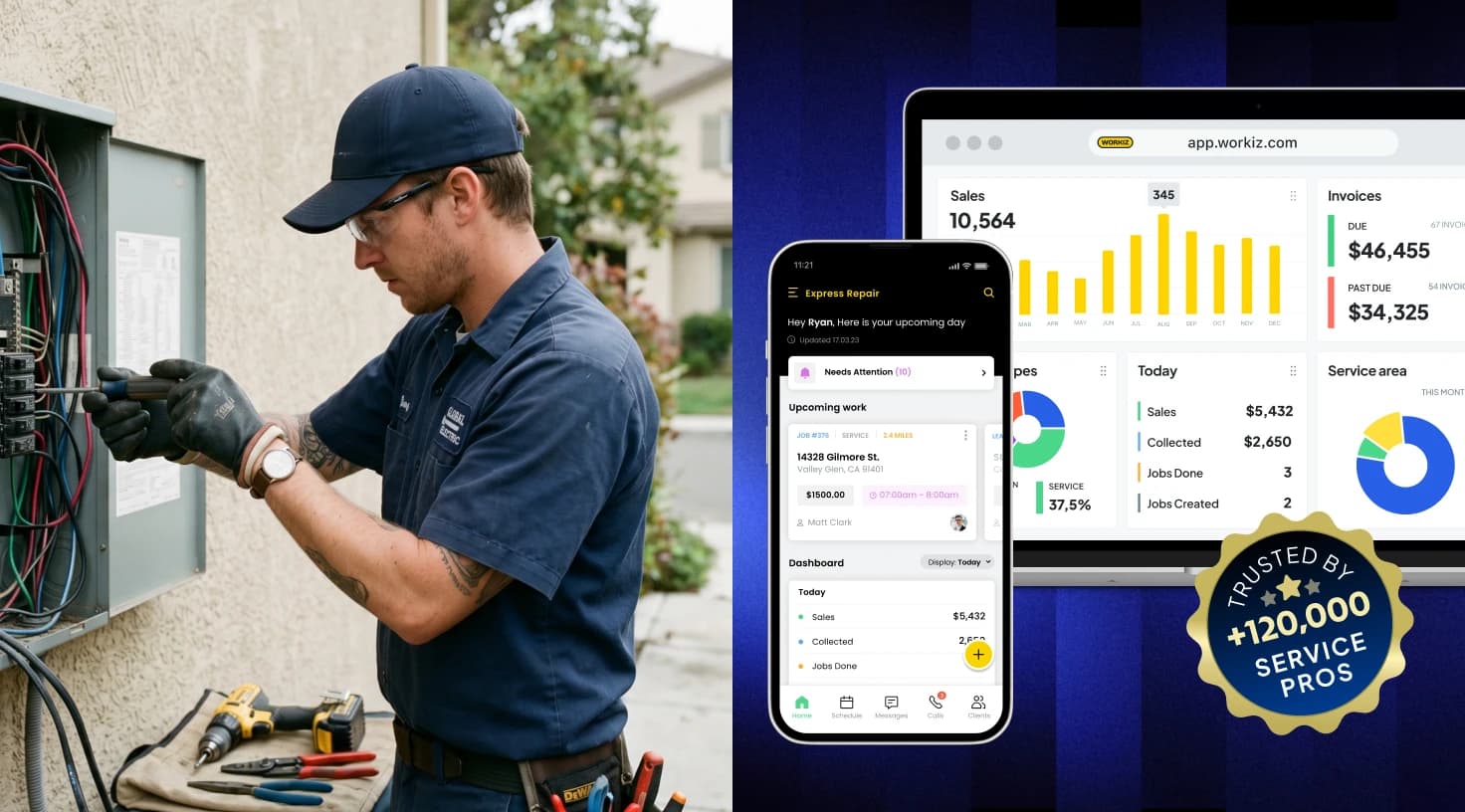
As electrical contractors navigate the demands of 2026, the shift to digital job management has become transformative. From automating back-office operations to efficiently handling field schedules and payments, the right solutions reduce overhead and drive long-term revenue growth.
Investing in the best job management software tailored to electricians is ultimately about future-proofing your business. To ensure sustainable scaling, focus on these core strategic advantages:
Operational Efficiency: Reducing administrative tasks allows your team to focus on billable hours rather than paperwork.
Customer Experience: Automated reminders and seamless mobile payments build trust and professionalize your brand.
Data-Driven Growth: Real-time dashboards help you identify the most profitable job types and technician strengths.
Scalable Infrastructure: Integrated tools like Workiz provide the automation needed to manage growing teams without increasing overhead.
The implications for the industry are clear: contractors who adopt integrated digital solutions will significantly outpace competitors who remain reliant on manual processes. Choosing a platform that aligns with your specific operational needs is the first step toward preparing your business for the technical and commercial challenges of tomorrow.